


Effects of the antipsychotic risperidone on dopamine synthesis in human brain measured by positron emission tomography with L-[beta-11C]DOPA: a stabilizing effect for dopaminergic neurotransmission?
- PMID: 19864585
- PMCID: PMC6665007
- DOI: 10.1523/JNEUROSCI.4172-09.2009
Effects of the antipsychotic risperidone on dopamine synthesis in human brain measured by positron emission tomography with L-[beta-11C]DOPA: a stabilizing effect for dopaminergic neurotransmission?
Abstract
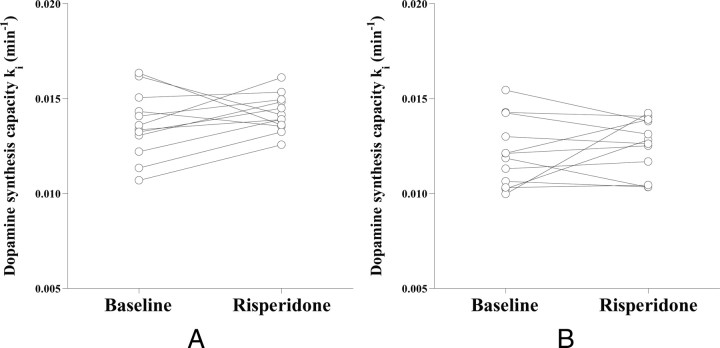
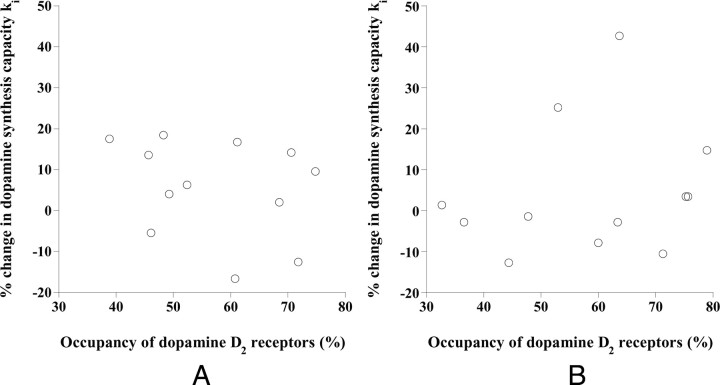
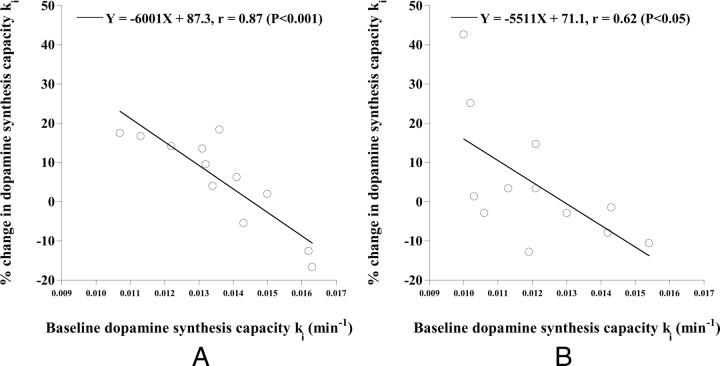
Effects of antipsychotic drugs have widely been considered to be mediated by blockade of postsynaptic dopamine D(2) receptors. Effects of antipsychotics on presynaptic functions of dopaminergic neurotransmission might also be related to therapeutic effects of antipsychotics. To investigate the effects of antipsychotics on presynaptic functions of dopaminergic neurotransmission in relation with occupancy of dopamine D(2) receptors, changes in dopamine synthesis capacity by antipsychotics and occupancy of dopamine D(2) receptors were measured by positron emission tomography (PET) in healthy men. PET studies using [(11)C]raclopride and L-[beta-(11)C]DOPA were performed under resting condition and oral administration of single dose of the antipsychotic drug risperidone on separate days. Although occupancy of dopamine D(2) receptors corresponding dose of risperidone was observed, the changes in dopamine synthesis capacity by the administration of risperidone were not significant, nor was the relation between the occupancy of dopamine D(2) receptors and these changes. A significant negative correlation was observed between the baseline dopamine synthesis capacity and the changes in dopamine synthesis capacity by risperidone, indicating that this antipsychotic can be assumed to stabilize the dopamine synthesis capacity. The therapeutic effects of risperidone in schizophrenia might be related to such stabilizing effects on dopaminergic neurotransmission responsivity.
Figures
References
-
- Balsara JJ, Jadhav JH, Chandorkar AG. Effect of drugs influencing central serotonergic mechanisms on haloperidol-induced catalepsy. Psychopharmacology (Berl) 1979;62:67–69. - PubMed
-
- Baron JC, Martinot JL, Cambon H, Boulenger JP, Poirier MF, Caillard V, Blin J, Huret JD, Loc'h C, Maziere B. Striatal dopamine receptor occupancy during and following withdrawal from neuroleptic treatment: correlative evaluation by positron emission tomography and plasma prolactin levels. Psychopharmacology (Berl) 1989;99:463–472. - PubMed
-
- Brix G, Zaers J, Adam LE, Bellemann ME, Ostertag H, Trojan H, Haberkorn U, Doll J, Oberdorfer F, Lorenz WJ. Performance evaluation of a whole-body PET scanner using the NEMA protocol. J Nucl Med. 1997;38:1614–1623. - PubMed
-
- Brown RM, Crane AM, Goldman PS. Regional distribution of monoamines in the cerebral cortex and subcortical structures of the rhesus monkey: concentrations and in vivo synthesis rates. Brain Res. 1979;168:133–150. - PubMed
-
- Carlsson A, Lindqvist M. Effect of chlorpromazine or haloperidol on formation of 3-methoxytyramine and normetanephrine in mouse brain. Acta Pharmacol Toxicol (Copenh) 1963;20:140–144. - PubMed
Publication types
MeSH terms
Substances
LinkOut - more resources
Full Text Sources
