


Biodegradability of plastics
- PMID: 19865515
- PMCID: PMC2769161
- DOI: 10.3390/ijms10093722
Biodegradability of plastics
Abstract
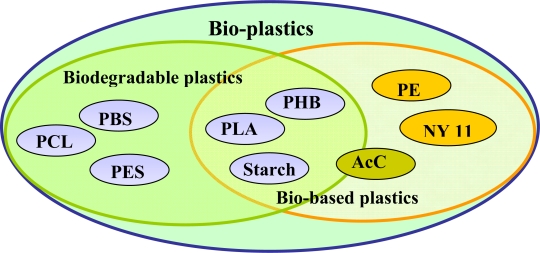
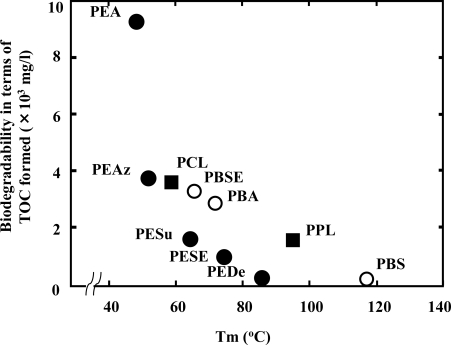
Plastic is a broad name given to different polymers with high molecular weight, which can be degraded by various processes. However, considering their abundance in the environment and their specificity in attacking plastics, biodegradation of plastics by microorganisms and enzymes seems to be the most effective process. When plastics are used as substrates for microorganisms, evaluation of their biodegradability should not only be based on their chemical structure, but also on their physical properties (melting point, glass transition temperature, crystallinity, storage modulus etc.). In this review, microbial and enzymatic biodegradation of plastics and some factors that affect their biodegradability are discussed.
Keywords: aliphatic polyesters; bio-based plastics; biodegradability; enzymatic degradation; microbial degradation.
Figures
References
-
- Tokiwa Y, Ugwu CU. Biotechnological production of (R)-3-hydroxybutyric acid monomer. J. Biotechnol. 2007;132:264–272. - PubMed
-
- Tokiwa Y, Calabia BP. Biological production of functional chemicals from renewable resources. Can. J. Chem. 2008;86:548–555.
-
- Tokiwa Y, Ando T, Suzuki T. Degradation of polycaprolactone by a fungus. J. Ferm. Technol. 1976;54:603–608.
-
- Tokiwa Y, Suzuki T. Purification of polyethylene adipate-degrading enzyme produced by Penicillium sp. strain 14–3. Agric. Biol. Chem. 1977a;41:265–274.
Publication types
MeSH terms
Substances
LinkOut - more resources
Full Text Sources
Other Literature Sources
