


Protein kinase C promotes restoration of calcium homeostasis to platelet activating factor-stimulated human neutrophils by inhibition of phospholipase C
- PMID: 19874629
- PMCID: PMC2777896
- DOI: 10.1186/1476-9255-6-29
Protein kinase C promotes restoration of calcium homeostasis to platelet activating factor-stimulated human neutrophils by inhibition of phospholipase C
Abstract
Background: The role of protein kinase C (PKC) in regulating the activity of phospholipase C (PLC) in neutrophils activated with the chemoattractant, platelet-activating factor (PAF, 20 and 200 nM), was probed in the current study using the selective PKC inhibitors, GF10903X (0.5 - 1 muM) and staurosporine (400 nM).
Methods: Alterations in cytosolic Ca2+, Ca2+ influx, inositol triphosphate (IP3), and leukotriene B4 production were measured using spectrofluorimetric, radiometric and competitive binding radioreceptor and immunoassay procedures, respectively.
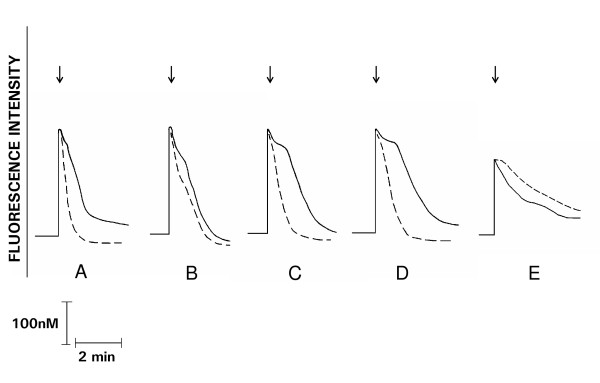
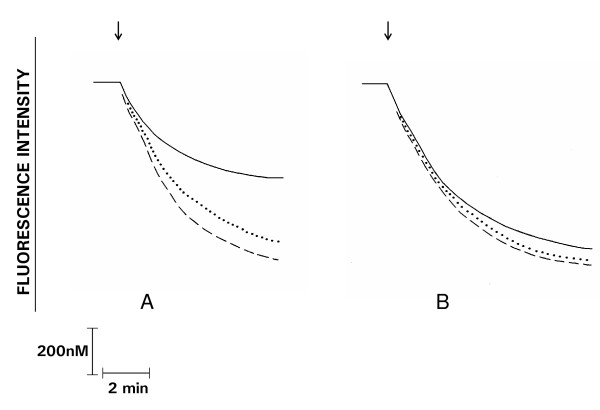
Results: Activation of the cells with PAF was accompanied by an abrupt increase in cytosolic Ca2+ followed by a gradual decline towards basal levels. Pretreatment of neutrophils with the PKC inhibitors significantly increased IP3 production with associated enhanced Ca2+ release from storage vesicles, prolongation of the peak cytosolic Ca2+ transients, delayed clearance and exaggerated reuptake of the cation, and markedly increased synthesis of LTB4. The alterations in Ca2+ fluxes observed with the PKC inhibitors were significantly attenuated by U73122, a PLC inhibitor, as well as by cyclic AMP-mediated upregulation of the Ca2+-resequestering endomembrane ATPase.Taken together, these observations are compatible with a mechanism whereby PKC negatively modulates the activity of PLC, with consequent suppression of IP3 production and down-regulation of Ca2+ mediated pro-inflammatory responses of PAF-activated neutrophils.
Conclusion: Although generally considered to initiate and/or amplify intracellular signalling cascades which activate and sustain the pro-inflammatory activities of neutrophils and other cell types, the findings of the current study have identified a potentially important physiological, anti-inflammatory function for PKC, at least in neutrophils.
Figures

References
-
- Fruman DA, Gamache DA, Ernest MJ. Changes in inositol 1, 4, 5 - triphosphate mass in agonist-stimulated human neutrophils. Agents Actions. 1991;34:16–9. - PubMed
-
- Scharff O, Foder B. Regulation of cytosolic calcium in blood cells. Physiol Rev. 1993;73:547–82. - PubMed
-
- Sklar LA. Ligand-receptor dynamics and signal amplification in the neutrophil. Adv Immunol. 1986;39:95–143. - PubMed
-
- Berridge MJ. Inositol triphosphate, calcium, lithium and cell signalling. JAMA. 1986;262:1834–41. - PubMed
LinkOut - more resources
Full Text Sources
Miscellaneous
