


Prediction of solubility and permeability class membership: provisional BCS classification of the world's top oral drugs
- PMID: 19876745
- PMCID: PMC2782078
- DOI: 10.1208/s12248-009-9144-x
Prediction of solubility and permeability class membership: provisional BCS classification of the world's top oral drugs
Abstract
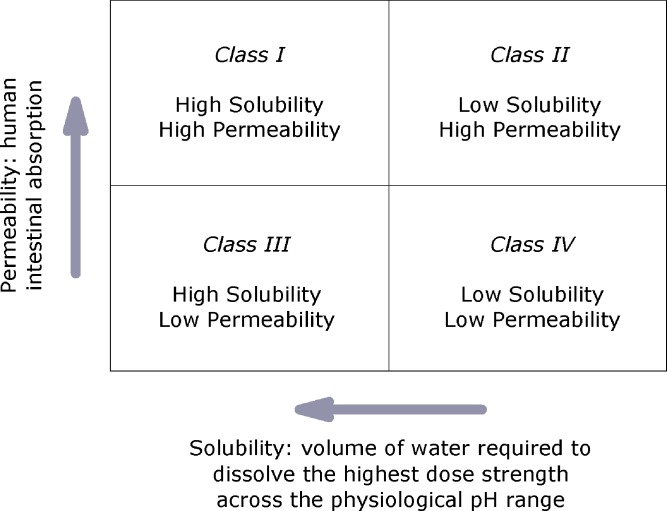
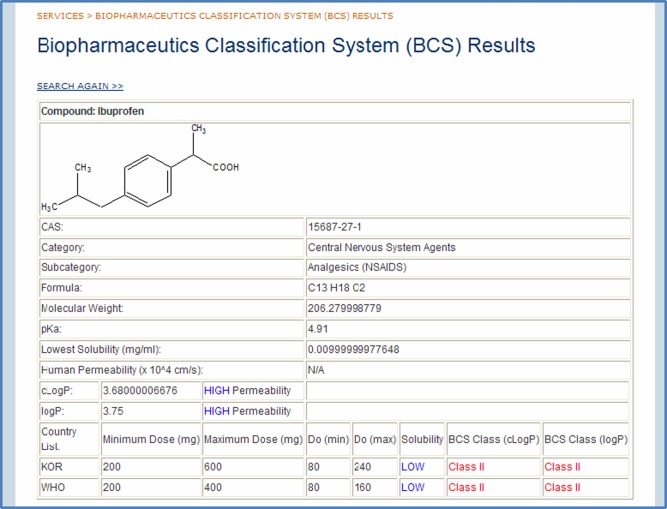
The Biopharmaceutics Classification System (BCS) categorizes drugs into one of four biopharmaceutical classes according to their water solubility and membrane permeability characteristics and broadly allows the prediction of the rate-limiting step in the intestinal absorption process following oral administration. Since its introduction in 1995, the BCS has generated remarkable impact on the global pharmaceutical sciences arena, in drug discovery, development, and regulation, and extensive validation/discussion/extension of the BCS is continuously published in the literature. The BCS has been effectively implanted by drug regulatory agencies around the world in setting bioavailability/bioequivalence standards for immediate-release (IR) oral drug product approval. In this review, we describe the BCS scientific framework and impact on regulatory practice of oral drug products and review the provisional BCS classification of the top drugs on the global market. The Biopharmaceutical Drug Disposition Classification System and its association with the BCS are discussed as well. One notable finding of the provisional BCS classification is that the clinical performance of the majority of approved IR oral drug products essential for human health can be assured with an in vitro dissolution test, rather than empirical in vivo human studies.
Figures


References
-
- Dahan A, Amidon GL. Gastrointestinal dissolution and absorption of class II drugs. In: Van de Waterbeemdand H, Testa B, editors. Drug bioavailability: estimation of solubility, permeability, absorption and bioavailability. Weinheim: Wiley-VCH; 2008. pp. 33–51.
-
- Sun D, Yu L, Hussain M, Wall D, Smith R, Amidon G. In vitro testing of drug absorption for drug ‘developability’ assessment: forming an interface between in vitro preclinical data and clinical outcome. Curr Opin Drug Discov Devel. 2004;7:75–85. - PubMed
Publication types
MeSH terms
Substances
LinkOut - more resources
Full Text Sources
Other Literature Sources
Medical
