


Airway trefoil factor expression during naphthalene injury and repair
- PMID: 19880587
- PMCID: PMC2807036
- DOI: 10.1093/toxsci/kfp268
Airway trefoil factor expression during naphthalene injury and repair
Abstract
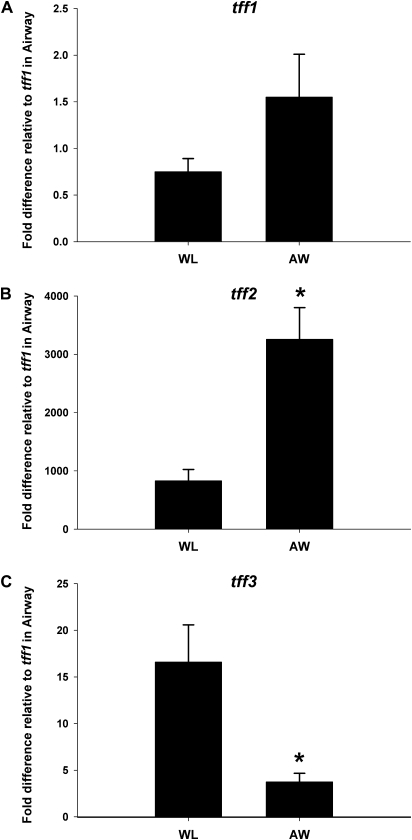
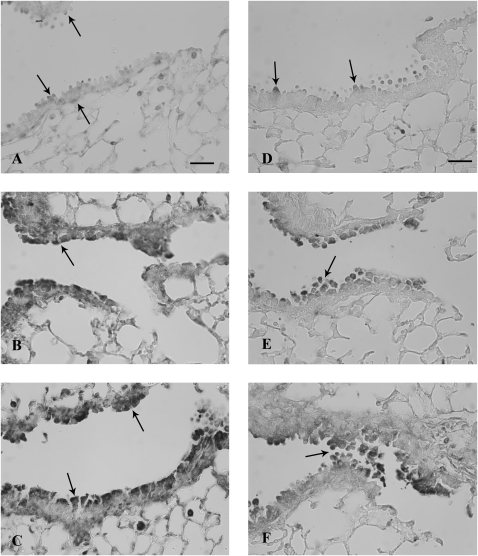
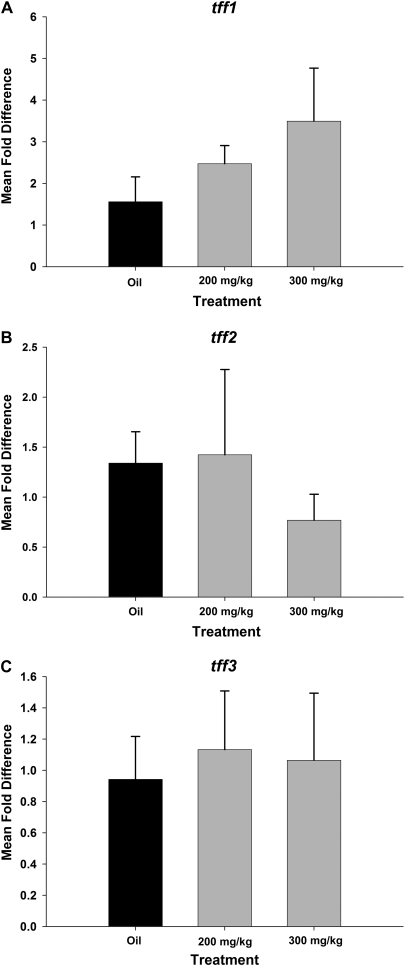
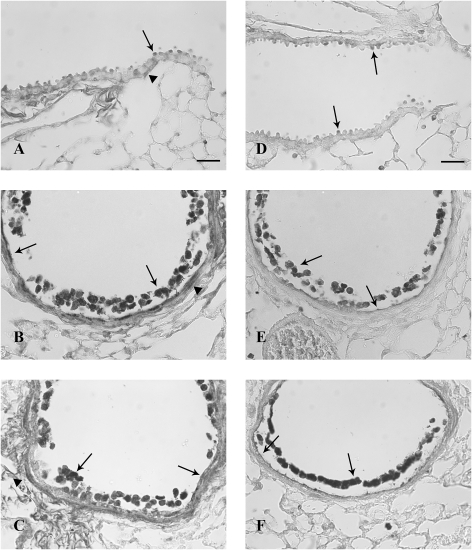
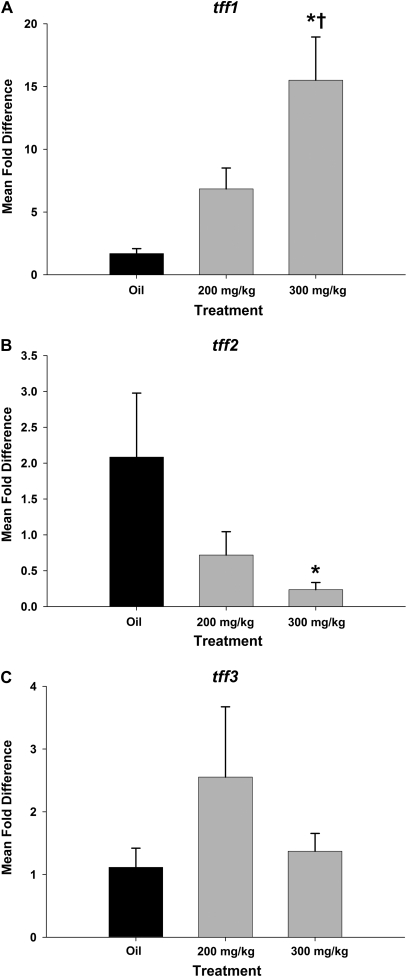
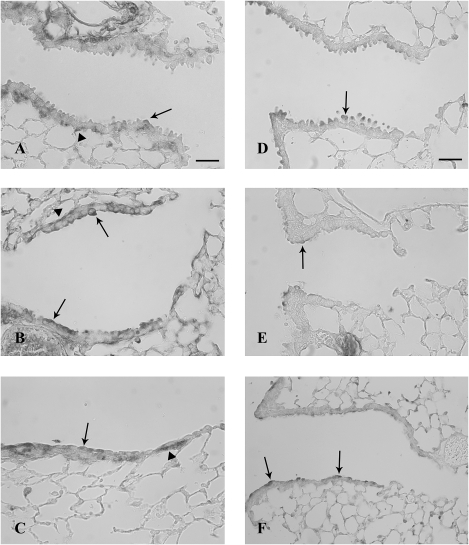
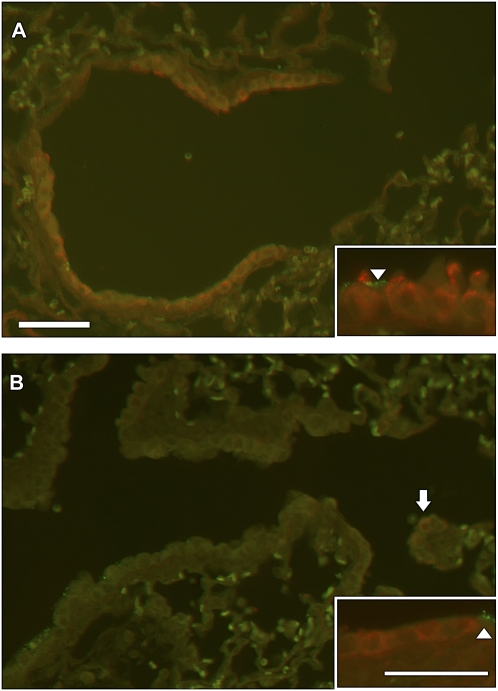
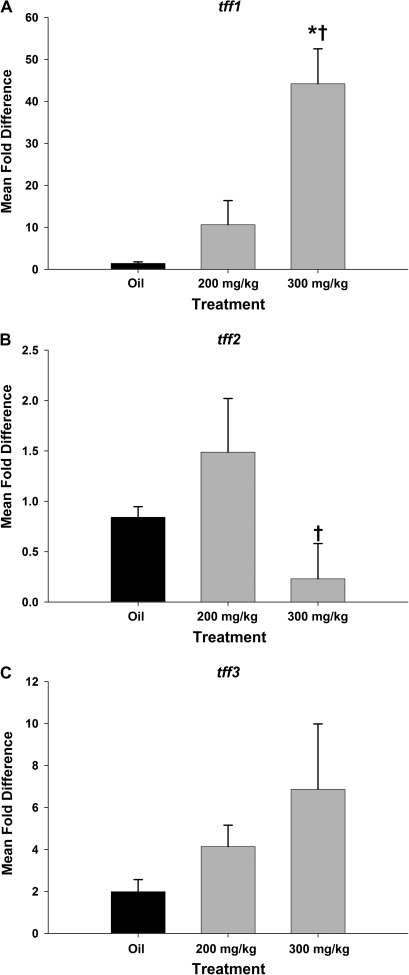
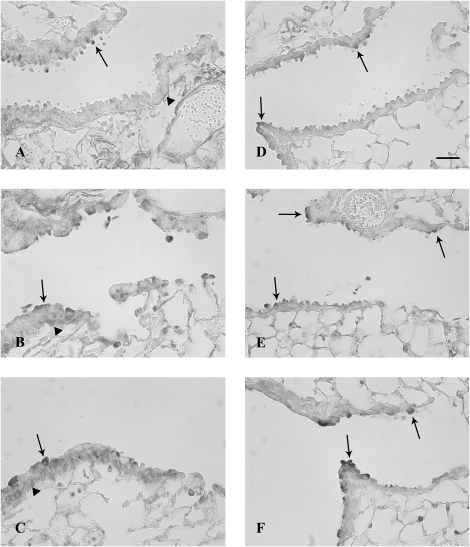
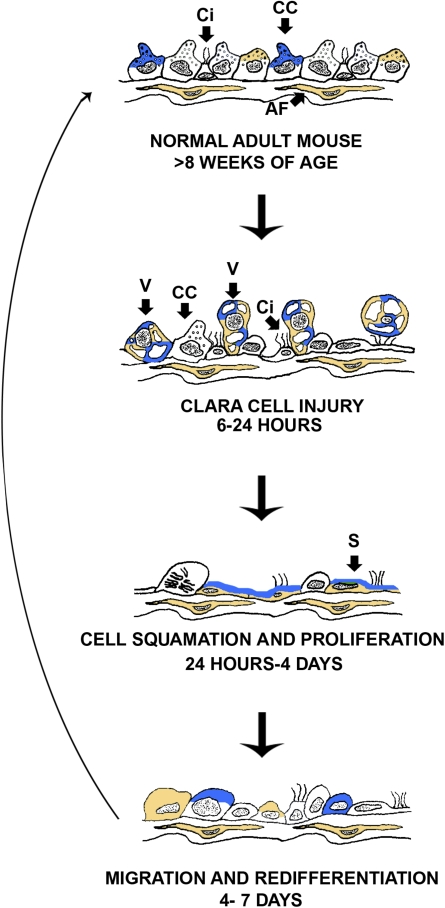
While the role of trefoil factors (TFF) in the maintenance of epithelial integrity in the gastrointestinal tract is well known, their involvement in wound healing in the conducting airway is less well understood. We defined the pattern of expression of TFF1, TFF2, and TFF3 in the airways of mice during repair of both severe (300 mg/kg) and moderate (200 mg/kg) naphthalene-induced Clara cell injury. Quantitative real-time PCR for tff messenger RNA expression and immunohistochemistry for protein expression were applied to airway samples obtained by microdissection of airway trees or to fixed lung tissue from mice at 6 and 24 h and 4 and 7 days after exposure to either naphthalene or an oil (vehicle) control. All three TFF were expressed in normal whole lung and airways. TFF2 was the most abundant and was enriched in airways. Injury of the airway epithelium by 300 mg/kg naphthalene caused a significant induction of tff1 gene expression at 24 h, 4 days, and 7 days. In contrast, tff2 was decreased in the high-dose group at 24 h and 4 days but returned to baseline levels by 7 days. tff3 gene expression was not significantly changed at any time point. Protein localization via immunohistochemistry did not directly correlate with the gene expression measurements. TFF1 and TFF2 expression was most intense in the degenerating Clara cells in the injury target zone at 6 and 24 h. Following the acute injury phase, TFF1 and TFF2 were localized to the luminal apices of repairing epithelial cells and to the adjacent mesenchyme in focal regions that correlated with bifurcations and the bronchoalveolar duct junction. The temporal pattern of increases in TFF1, TFF2, and TFF3 indicate a role in cell death as well as proliferation, migration, and differentiation phases of airway epithelial repair.
Figures

References
-
- Baker GL, Shultz MA, Fanucchi MV, Morin DM, Buckpitt AR, Plopper CG. Assessing gene expression in lung subcompartments utilizing in situ RNA preservation. Toxicol. Sci. 2004;77:135–141. - PubMed
-
- Buckpitt A, Buonarati M, Avey LB, Chang AM, Morin D, Plopper CG. Relationship of cytochrome P450 activity to Clara cell cytotoxicity. II. Comparison of stereoselectivity of naphthalene epoxidation in lung and nasal mucosa of mouse, hamster, rat and rhesus monkey. J. Pharmacol. Exp. Ther. 1992;261:364–372. - PubMed
-
- Buckpitt A, Chang A, Weir A, Van Winkle L, Duan X, Philpot R, Plopper C. Relationship of cytochrome P450 activity to Clara cell cytotoxicity. IV. Metabolism of naphthalene and naphthalene oxide in microdissected airways from mice, rats and hamsters. Mol. Pharmacol. 1995;47:74–81. - PubMed
