


Pityriasis versicolor: a clinicomycological and epidemiological study from a tertiary care hospital
- PMID: 19882030
- PMCID: PMC2763761
- DOI: 10.4103/0019-5154.44791
Pityriasis versicolor: a clinicomycological and epidemiological study from a tertiary care hospital
Abstract
Background: Pityriasis versicolor is a mild, chronic, usually asymptomatic superficial fungal infection of the stratum corneum, caused by Malassezia yeasts. The purpose of the present study is to assess the clinical profile of a group of patients with pityriasis versicolor and to find out the epidemiological characteristics in this part of India as well as any association, if any, with other diseases.
Materials and methods: For this purpose, 110 consecutive patients of pityriasis versicolor were evaluated clinically and diagnosis was confirmed mycologically at a tertiary care hospital in Kolkata. All data were recorded in a predesigned, pretested semi-structured schedule. The total duration of study period was 12 months.
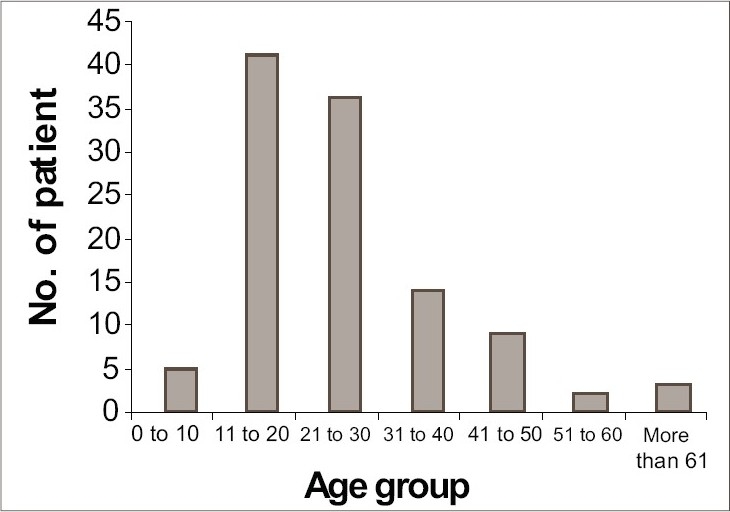
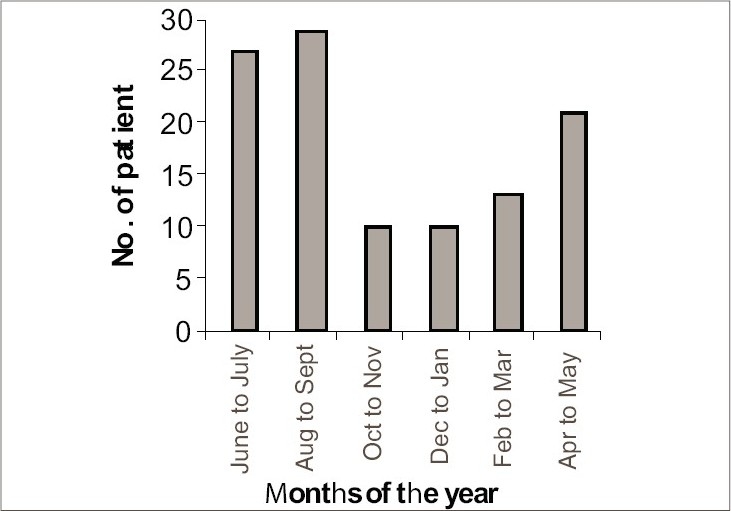
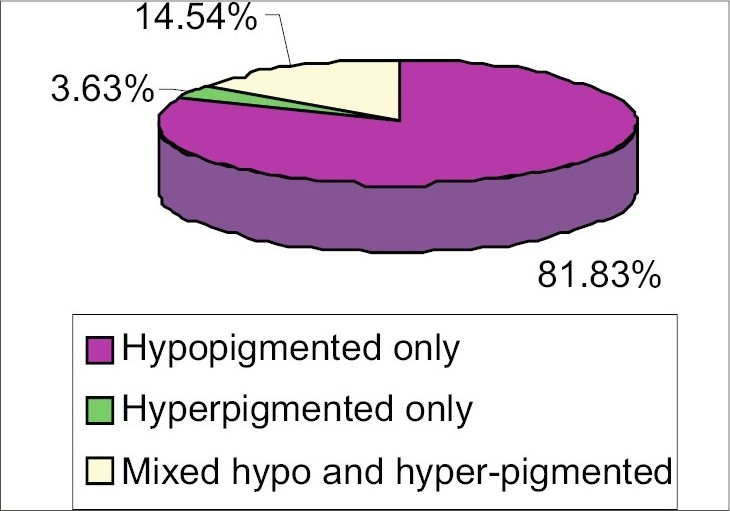
Results: Majority of the patients were young adults. Most of the patients were asymptomatic. There is prominent seasonal variation of the patients with a peak in August and September months. Most of the lesions were hypopigmented scaly macules and were KOH positive. Most commonly involved sites were chest, face and back. Seborrheic dermatitis sometimes coexisted with pityriasis versicolor and a number of patients also had diabetes mellitus and immunosuppressive conditions.
Conclusions: Overall, the clinicomycological and epidemiological profile of pityriasis versicolor infection as observed in a tertiary care setting in eastern India does not differ significantly from those observed by previous workers elsewhere.
Keywords: Clinicomycology; KOH test; epidemiology; pityriasis versicolor.
Conflict of interest statement
Figures
References
-
- Hay RJ, Moore MK. Mycology. In: Burns T, Breathnach S, Cox N, Griffiths C, editors. Rook's Textbook of Dermatology. 6th ed. Oxford: Blackwell Science; 2004. pp. 31.1–101.
-
- Gueho E, Guillot J. Disease caused by Malassezia species. In: Hay RJ, Ajellol, editors. Medical Mycology. Topley and Wilsons microbiology and microbial infections, 4(IV) (superficial Basidiomycetous Yeasts) London: Arnold; 1997. pp. 201–11.
-
- Klenk AS, Martin AG, Heffernan MP. Yeast infections: Candidiasis, pityriasis (tinea) versicolor. In: Freedberg IM, Eisen AZ, Wolf K, Austen KF, Goldsmith LA, Katz SI, editors. Fitzpatrick's Dermatology in General Medicine. 6th ed. New York: McGraw-Hill; 2003. pp. 2006–18.
-
- Savin R. Diagnosis and treatment of tinea versicolor. J Fam Pract. 1996;43:127. - PubMed
-
- Gupta AK, Batra R, Bluhm R, Faergemann J. Pityriasis versicolor. Dermatol Clin. 2003;21:413–29. - PubMed
LinkOut - more resources
Full Text Sources