


Anti-inflammatory polymeric coatings for implantable biomaterials and devices
- PMID: 19885288
- PMCID: PMC2769825
- DOI: 10.1177/193229680800200628
Anti-inflammatory polymeric coatings for implantable biomaterials and devices
Abstract
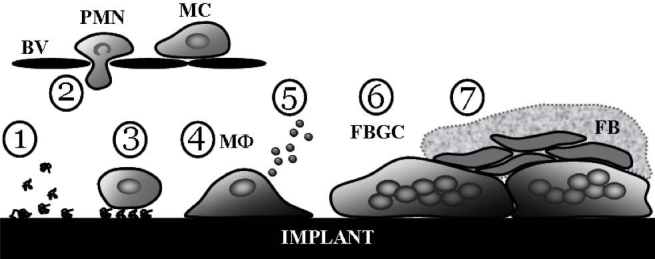
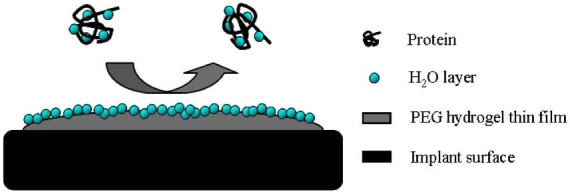
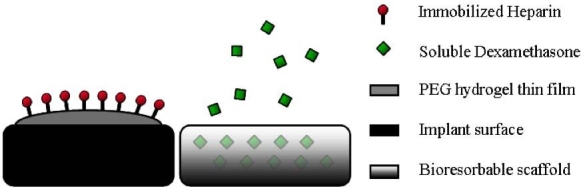
Synthetic polymer coatings are used extensively in modern medical devices and implants because of their material versatility and processability. These coatings are designed for specific applications by controlling composition and physical and chemical properties, and they can be formed into a variety of complex structures and shapes. However, implantation of these materials into the body elicits a strong inflammatory host response that significantly limits the integration and biological performance of devices. Biomaterial-mediated inflammation is a complex reaction involving protein adsorption, leukocyte recruitment and activation, secretion of inflammatory mediators, and fibrous encapsulation of the implant. Significant research efforts have focused on modifying material properties using various anti-inflammatory polymeric surface coatings to generate more biocompatible implants. This minireview provides a brief background on the events of biomaterial-mediated inflammation and highlights various approaches used for modifying material surfaces to modulate inflammatory responses. These include both passive and active strategies, such as nonfouling surface treatments and delivery of anti-inflammatory agents, respectively. Novel approaches will be needed to extend the in vivo lifetime and performance of devices and reduce the need for multiple implantation surgeries.
Keywords: anti-inflammatory; biomaterial; coating; host response; implant; polymer.
Figures
References
-
- Anderson JM. Biological responses to materials. Annu Rev Mater Res. 2001;31:81–110.
-
- Gorbet MB, Sefton MV. Biomaterial-associated thrombosis: roles of coagulation factors, complement, platelets and leukocytes. Biomaterials. 2004;25:5681–5703. - PubMed
-
- Kottke-Marchant K, Anderson JM, Umemura Y, Marchant RE. Effect of albumin coating on the in vitro blood compatibility of Dacron arterial prostheses. Biomaterials. 1989;10(3):147–155. - PubMed
-
- Zhao Q, Topham N, Anderson JM, Hiltner A, Lodoen G, Payet CR. Foreign-body giant cells and polyurethane biostability: in vivo correlation of cell adhesion and surface cracking. J Biomed Mater Res. 1991;25(2):177–183. - PubMed
LinkOut - more resources
Full Text Sources
Other Literature Sources
