


How much do forgotten insulin injections matter to hemoglobin a1c in people with diabetes? A simulation study
- PMID: 19885347
- PMCID: PMC2771482
- DOI: 10.1177/193229680800200209
How much do forgotten insulin injections matter to hemoglobin a1c in people with diabetes? A simulation study
Abstract
Background: Forgotten or omitted insulin injections are an important contributing factor to poor glycemic control in people with type 1 diabetes. This study uses mathematical modeling and examines the impact on hemoglobin A1c (HbA1c) levels if insulin injections are forgotten. The simulation concerns people with type 1 diabetes on intensive insulin therapy.
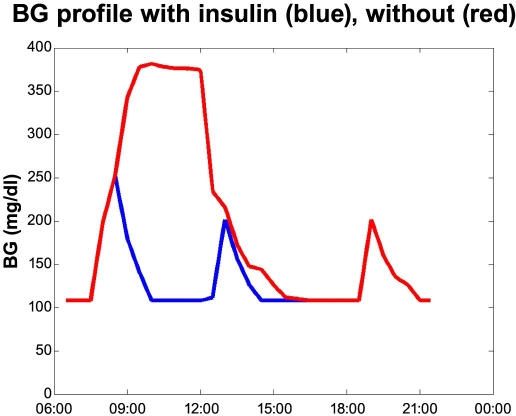
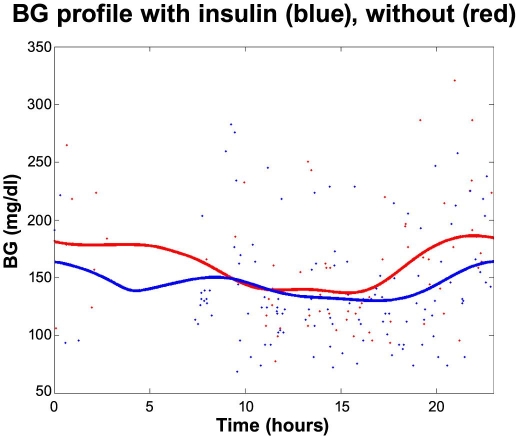
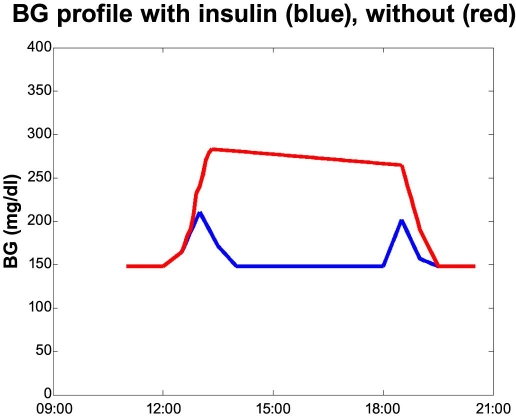
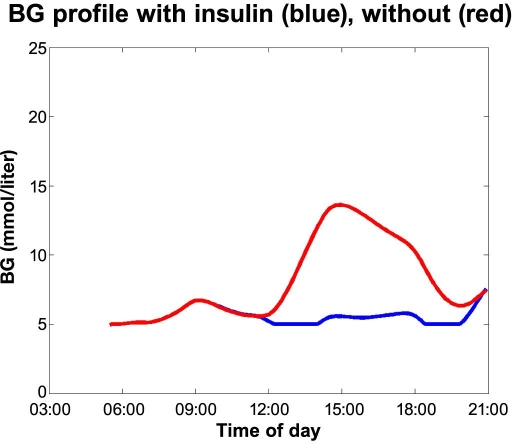
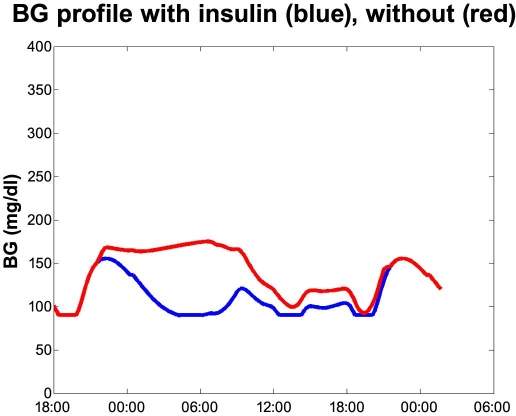
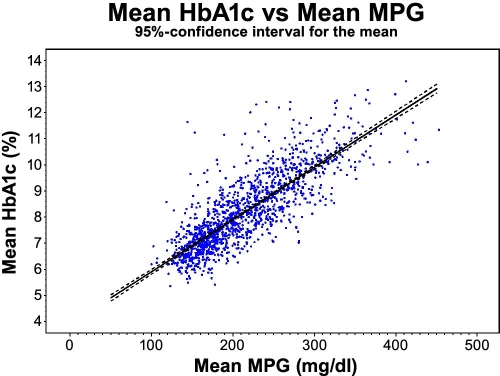
Methods: Five sets of blood glucose profiles with and without a forgotten injection were obtained. The difference to HbA1c was calculated using an HbA1c estimator on the profiles and was multiplied by the frequency of forgotten events. A frequency of 2.1 forgotten injections per week was found in the literature.
Results: Calculations showed that forgetting 2.1 meal-related injections per week would lead to an increase in HbA1c of at least 0.3-0.4% points, and similarly 0.2-0.3% points related to forgotten injections of the long-acting insulin. In case of even more pronounced nonadherence (e.g., if 39% of all injections are forgotten) there is a possible increase of HbA1c of 1.8% points.
Conclusions: The magnitude of the possible improvement in HbA1c agrees well with other studies in the relation between adherence and HbA1c levels. The estimated numbers suggest that missing injections are an important reason for suboptimal treatment.
Keywords: HbA1c; adherence; compliance; self-treatment.
Figures
References
-
- DCCT Research Group. The effect of intensive treatment of diabetes on the development and progression of long-term complications in insulin-dependent diabetes mellitus. N Engl J Med. 1993;329:977–986. - PubMed
-
- Burdick J, Chase HP, Slover RH, Knievel K, Scrimgeour L, Maniatis AK, Klingensmith GJ. Missed insulin meal boluses and elevated hemoglobin A1c levels in children receiving insulin pump therapy. Pediatrics. 2004 Mar;113(3 Pt 1):e221–224. - PubMed
-
- Morris AD, Boyle DI, McMahon AD, Greene SA, MacDonald TM, Newton RW. Adherence to insulin treatment, glycaemic control, and ketoacidosis in insulin-dependent diabetes mellitus. The DARTS/MEMO Collaboration. Diabetes Audit and Research in Tayside Scotland. Medicines Monitoring Unit. Lancet. 1997;350(9090):1505–1510. - PubMed
-
- Cramer JA. A systematic review of adherence with medications for diabetes. Diabetes Care. 2004;27(5):1218–1224. - PubMed
-
- Anderson RT, Marrero D, Skovlund SE, Cramer J, Schwartz S. Self-reported compliance with insulin injection therapy in subjects with type 1 and 2 diabetes. 18th Congress of the International Diabetes Federation; Diabetologia. 2003. p. A 275.
LinkOut - more resources
Full Text Sources
Other Literature Sources
