


Randomized controlled pilot study of cognitive-behavioral therapy in a sample of incarcerated women with substance use disorder and PTSD
- PMID: 19892078
- PMCID: PMC3031094
- DOI: 10.1016/j.beth.2008.09.004
Randomized controlled pilot study of cognitive-behavioral therapy in a sample of incarcerated women with substance use disorder and PTSD
Abstract
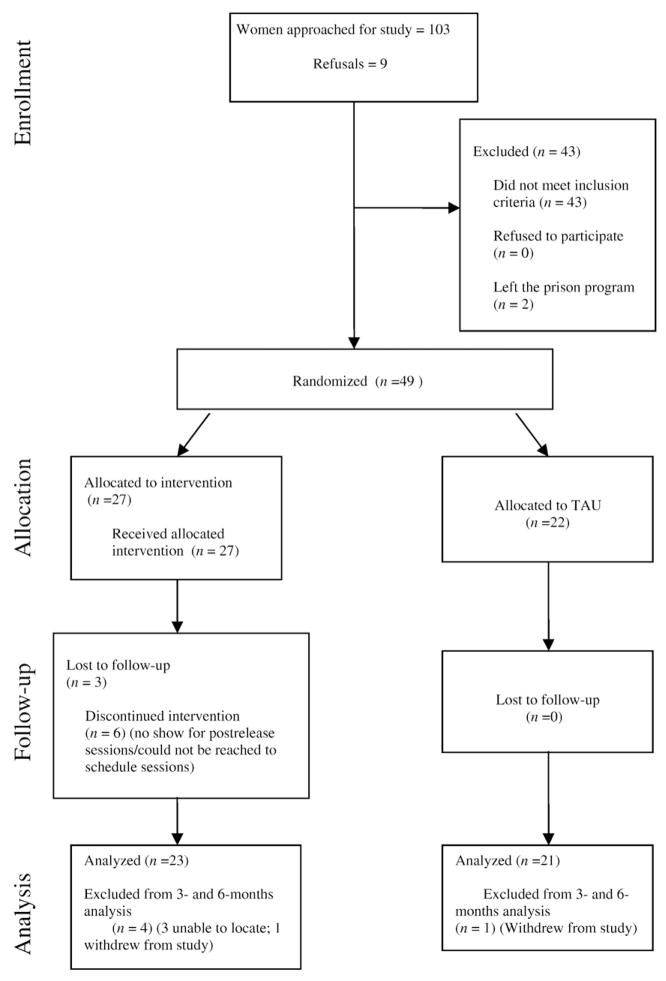
This randomized controlled pilot study compared a cognitive-behavioral therapy (Seeking Safety; SS) plus treatment-as-usual (TAU) to TAU-alone in 49 incarcerated women with substance use disorder (SUD) and posttraumatic stress disorder (PTSD; full or subthreshold). Seeking Safety consisted of a voluntary group treatment during incarceration and individual treatment after prison release. TAU was required in the prison and comprised 180 to 240 hours of individual and group treatment over 6 to 8 weeks. Assessments occurred at intake, 12 weeks after intake, and 3 and 6 months after release from prison. There were no significant differences between conditions on all key domains (PTSD, SUD, psychopathology, and legal problems); but both conditions showed significant improvements from intake to later time points on all of these outcomes across time. Secondary analyses at follow-up found trends for SS participants improving on clinician-rated PTSD symptoms and TAU participants worsening on self-reported PTSD symptoms. Also, SS demonstrated continued improvement on psychopathology at 3 and 6 months, whereas TAU did not. However, alcohol use improved more for TAU during follow-up. Satisfaction with SS was high, and a greater number of SS sessions was associated with greater improvement on PTSD and drug use. Six months after release from prison, 53% of the women in both conditions reported a remission in PTSD. Study limitations include lack of assessment of SS outcomes at end of group treatment; lack of blind assessment; omission of the SS case management component; and possible contamination between the two conditions. The complex needs of this population are discussed.
Figures
References
-
- Attkisson CC, Zwick R. The Client Satisfaction Questionnaire: Psychometric properties and correlations with service utilization and psychotherapy outcome. Evaluation and Program Planning. 1982;5:233–237. - PubMed
-
- Alexander DA. Trauma research: A new era. Journal of Psychosomatic Research. 1996;4:1–5. - PubMed
-
- Barthwell AG, Bokos P, Bailey J, Nisenbaum M, Devereux J, Senay EC. A continuum of care for substance abusers in the criminal justice system. Journal of Psychoactive Drugs. 1995;27:39–47. - PubMed
-
- Battle CL, Zlotnick C, Najavits LM, Winsor C. Posttraumatic stress disorder and substance use disorder among incarcerated women. In: Ouimette P, Brown PJ, editors. Trauma and substance abuse: Causes, consequences, and treatment of comorbid disorders. Washington, DC: American Psychological Association; 2002. pp. 209–226.
-
- Blake DD, Weathers FW, Nagy LM, Kaloupek DG, Klauminzer G, Charney D. A clinician rating scale for assessing current and lifetime PTSD: The CAPS-I. Behavior Therapy. 1990;18:187–188.
