The prevalence of quadriceps weakness in COPD and the relationship with disease severity
- PMID: 19897554
- PMCID: PMC3039205
- DOI: 10.1183/09031936.00104909
The prevalence of quadriceps weakness in COPD and the relationship with disease severity
Abstract
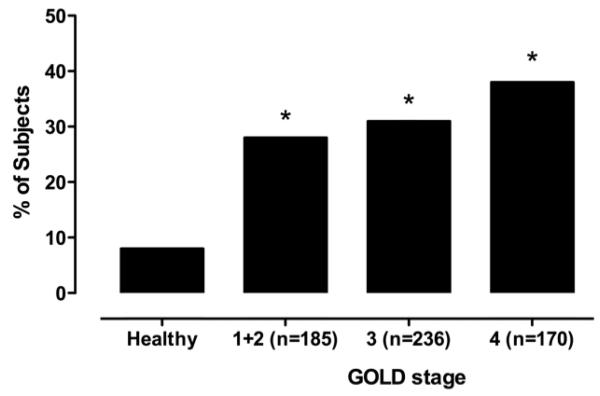
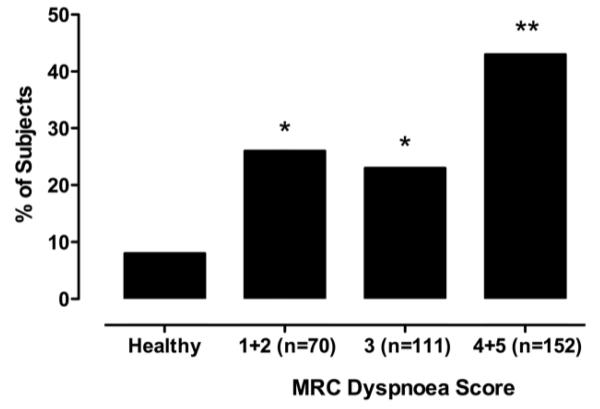
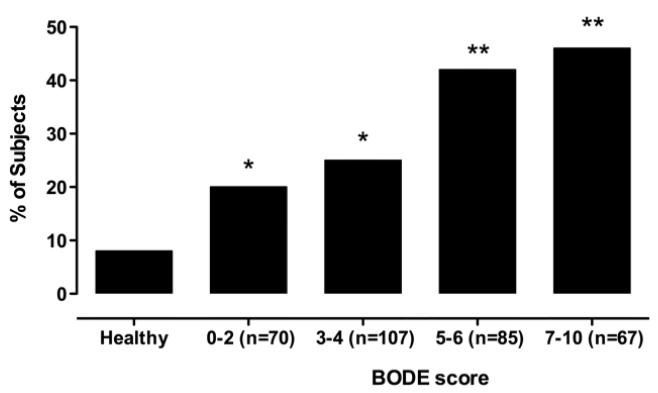
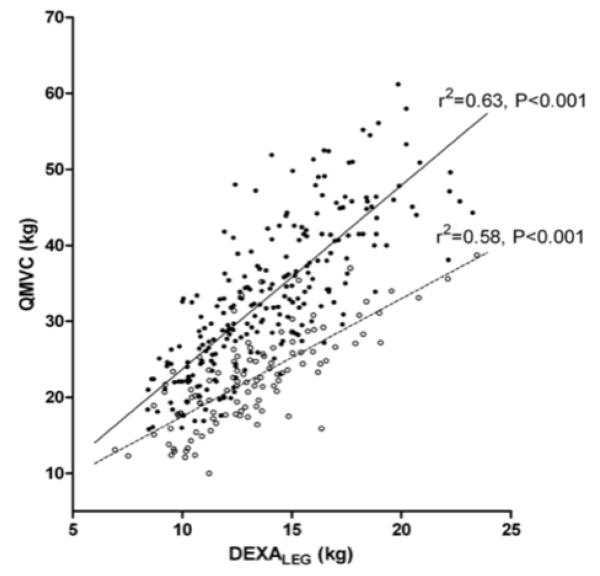
Quadriceps strength relates to exercise capacity and prognosis in chronic obstructive pulmonary disease (COPD). We wanted to quantify the prevalence of quadriceps weakness in COPD and hypothesised that it would not be restricted to patients with severe airflow obstruction or dyspnoea. Predicted quadriceps strength was calculated using a regression equation (incorporating age, sex, height and fat-free mass), based on measurements from 212 healthy subjects. The prevalence of weakness (defined as observed values 1.645 standardised residuals below predicted) was related to Global Initiative for Chronic Obstructive Lung Disease (GOLD) stage and Medical Research Council (MRC) dyspnoea score in two cohorts of stable COPD outpatients recruited from the UK (n = 240) and the Netherlands (n = 351). 32% and 33% of UK and Dutch COPD patients had quadriceps weakness. A significant proportion of patients in GOLD stages 1 and 2, or with an MRC dyspnoea score of 1 or 2, had quadriceps weakness (28 and 26%, respectively). These values rose to 38% in GOLD stage 4, and 43% in patients with an MRC Score of 4 or 5. Quadriceps weakness was demonstrable in one-third of COPD patients attending hospital respiratory outpatient services. Quadriceps weakness exists in the absence of severe airflow obstruction or breathlessness.
References
-
- Skeletal muscle dysfunction in chronic obstructive pulmonary disease. A statement of the american thoracic society and european respiratory society. Am J Respir Crit Care Med. 1999;159:S1-40. - PubMed
-
- Gosselink R, Troosters T, Decramer M. Peripheral muscle weakness contributes to exercise limitation in copd. Am J Respir Crit Care Med. 1996;153:976–980. - PubMed
-
- Decramer M, Gosselink R, Troosters T, Verschueren M, Evers G. Muscle weakness is related to utilization of health care resources in copd patients. Eur Respir J. 1997;10:417–423. - PubMed
Publication types
MeSH terms
Grants and funding
LinkOut - more resources
Full Text Sources
Medical