


Systematic comparison of the human saliva and plasma proteomes
- PMID: 19898684
- PMCID: PMC2773554
- DOI: 10.1002/prca.200800140
Systematic comparison of the human saliva and plasma proteomes
Abstract
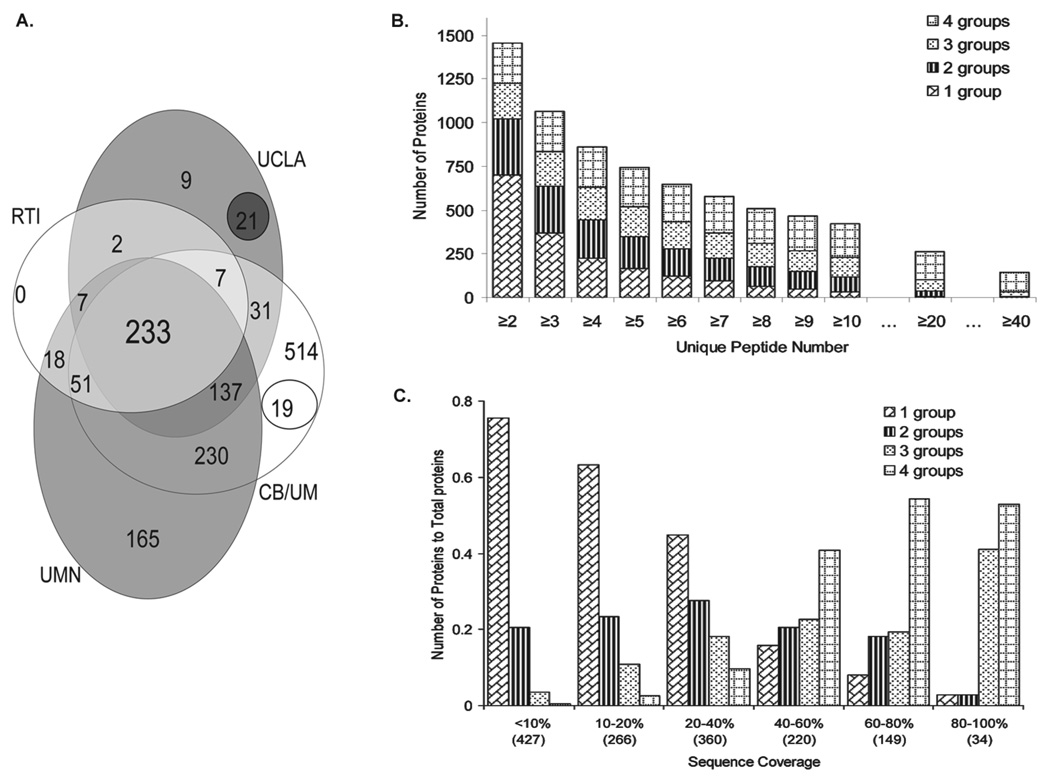
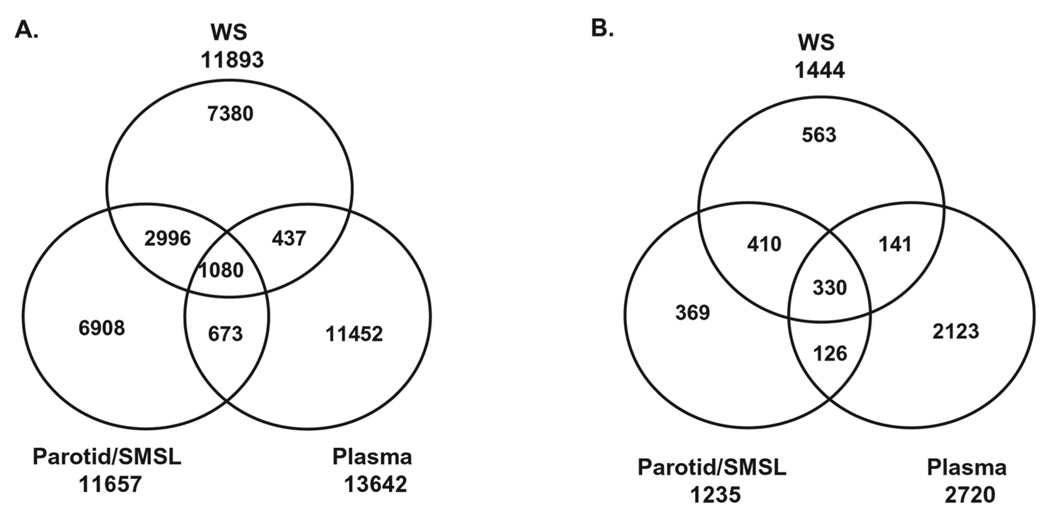
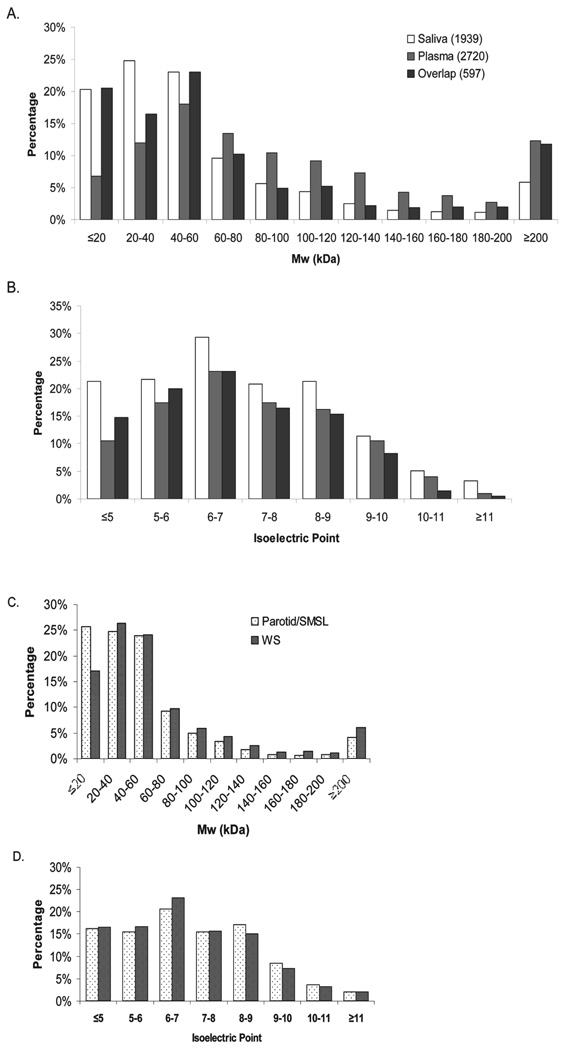
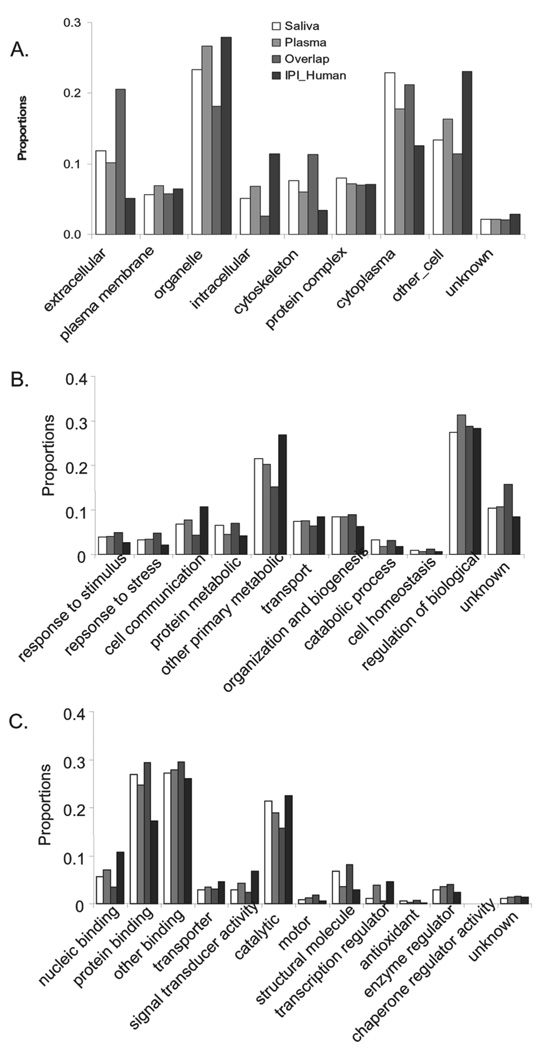
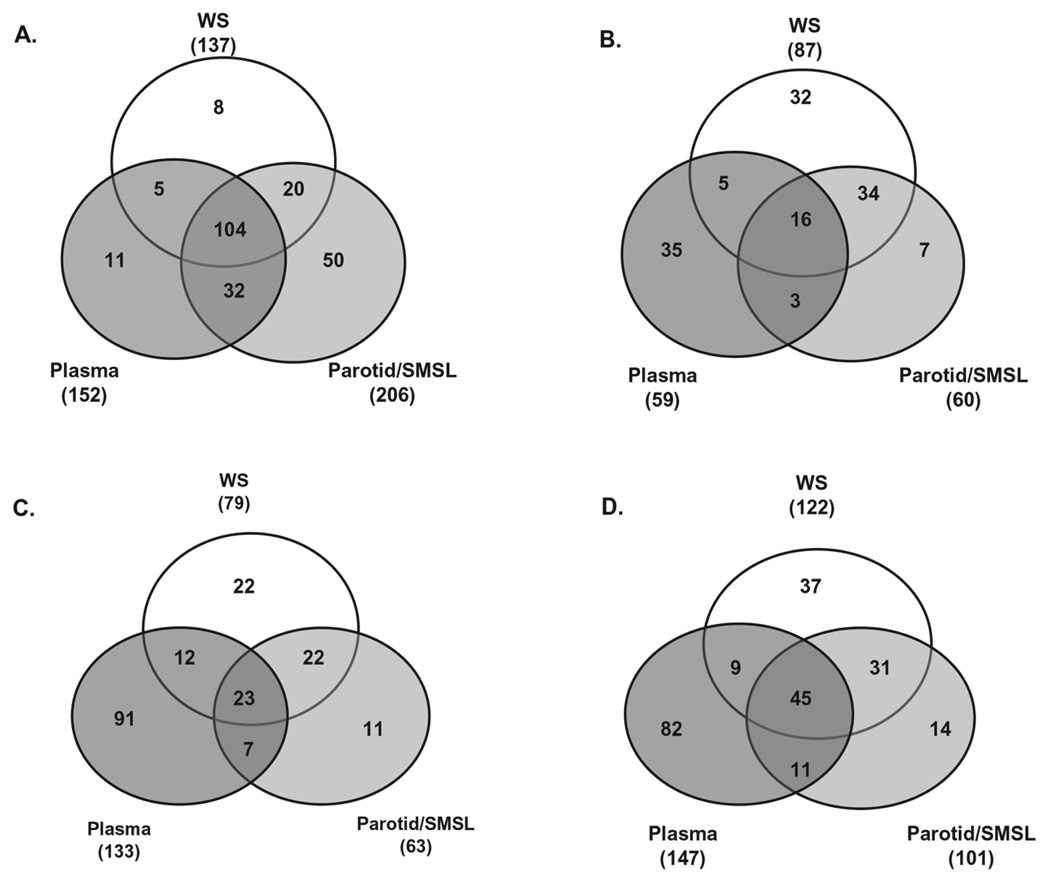
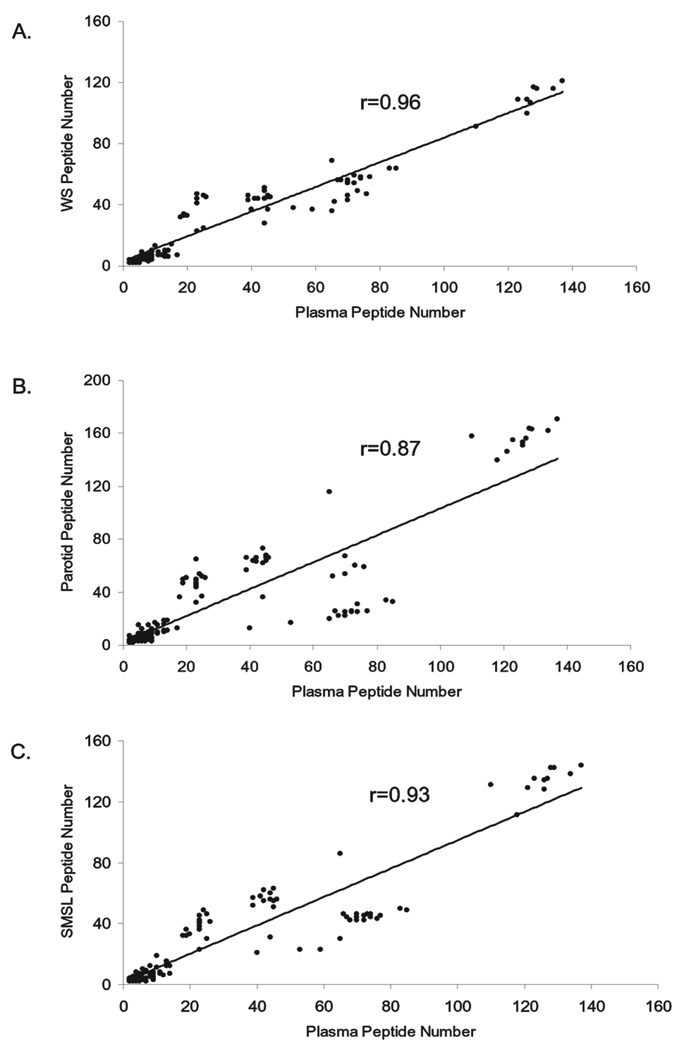
The proteome of human salivary fluid has the potential to open new doors for disease biomarker discovery. A recent study to comprehensively identify and catalog the human ductal salivary proteome led to the compilation of 1166 proteins. The protein complexity of both saliva and plasma is large, suggesting that a comparison of these two proteomes will provide valuable insight into their physiological significance and an understanding of the unique and overlapping disease diagnostic potential that each fluid provides. To create a more comprehensive catalog of human salivary proteins, we have first compiled an extensive list of proteins from whole saliva (WS) identified through MS experiments. The WS list is thereafter combined with the proteins identified from the ductal parotid, and submandibular and sublingual (parotid/SMSL) salivas. In parallel, a core dataset of the human plasma proteome with 3020 protein identifications was recently released. A total of 1939 nonredundant salivary proteins were compiled from a total of 19 474 unique peptide sequences identified from whole and ductal salivas; 740 out of the total 1939 salivary proteins were identified in both whole and ductal saliva. A total of 597 of the salivary proteins have been observed in plasma. Gene ontology (GO) analysis showed similarities in the distributions of the saliva and plasma proteomes with regard to cellular localization, biological processes, and molecular function, but revealed differences which may be related to the different physiological functions of saliva and plasma. The comprehensive catalog of the salivary proteome and its comparison to the plasma proteome provides insights useful for future study, such as exploration of potential biomarkers for disease diagnostics.
Conflict of interest statement
The authors have declared no conflict of interest.
Figures
References
-
- Humphrey SP, Williamson RT. A review of saliva: Normal composition, flow, and function. J. Prosthet. Dent. 2001;85:162–169. - PubMed
-
- Turner RJ, Sugiya H. Understanding salivary fluid and protein secretion. Oral Dis. 2002;8:3–11. - PubMed
-
- Defabianis P, Re F. The role of saliva in maintaining oral health. Minerva Stomatol. 2003;52:301–308. - PubMed
-
- Streckfus CF, Bigler LR. Saliva as a diagnostic fluid. Oral Dis. 2002;8:69–76. - PubMed
-
- Drake RR, Cazare LH, Semmes OJ, Wadsworth JT. Serum, salivary and tissue proteomics for discovery of biomarkers for head and neck cancers. Expert Rev. Mol. Diagn. 2005;5:93–100. - PubMed
Grants and funding
LinkOut - more resources
Full Text Sources
Other Literature Sources
