


CD44 deficiency is associated with enhanced Escherichia coli-induced proinflammatory cytokine and chemokine release by peritoneal macrophages
- PMID: 19901064
- PMCID: PMC2798194
- DOI: 10.1128/IAI.00949-09
CD44 deficiency is associated with enhanced Escherichia coli-induced proinflammatory cytokine and chemokine release by peritoneal macrophages
Abstract
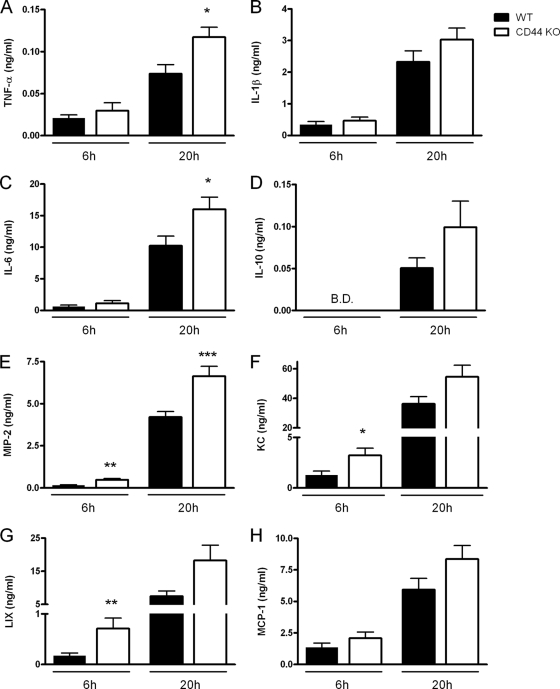
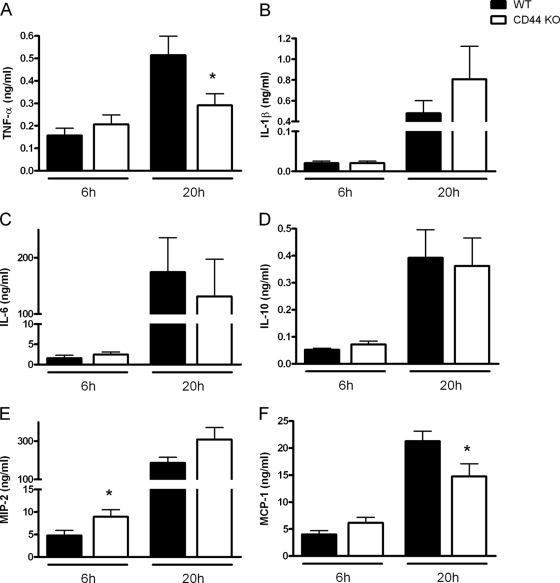
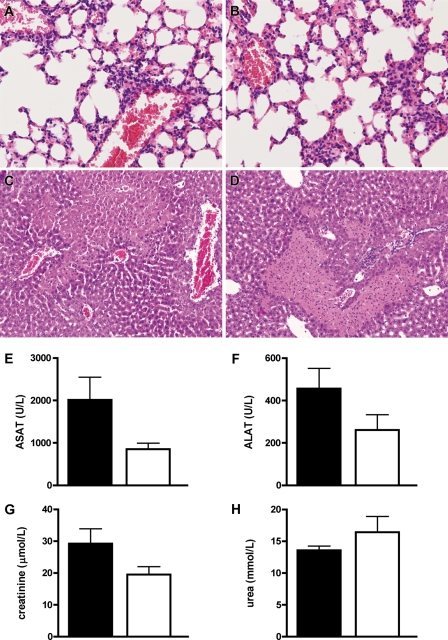
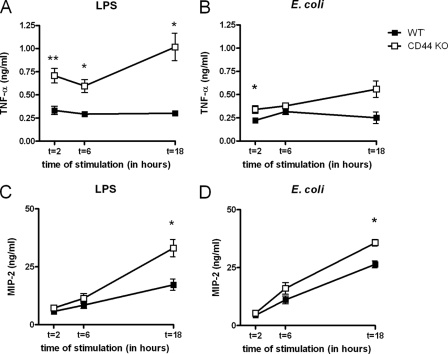
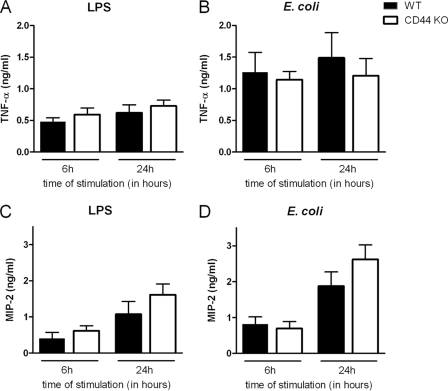
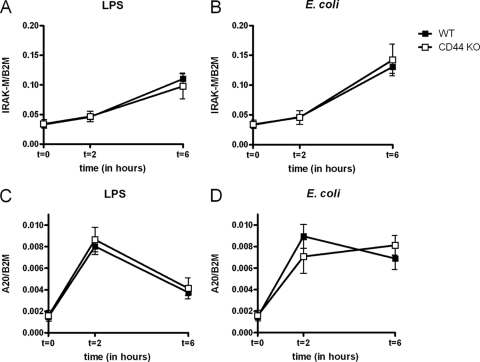
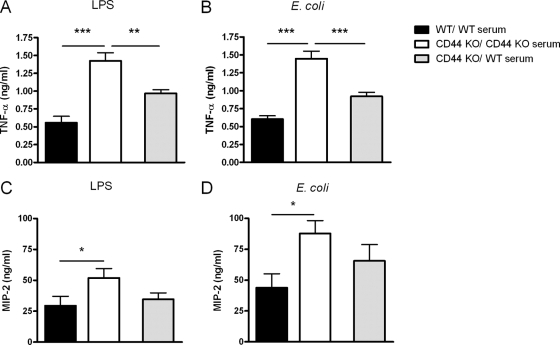
CD44 is involved in several immune responses, such as cellular adhesion, migration, proliferation, and activation. Peritonitis is an important cause of sepsis, and Escherichia coli is one of the major pathogens involved therein. We sought to determine the role of CD44 in the host response to E. coli-induced abdominal sepsis and to assess the function of CD44 in the activation of primary peritoneal macrophages by E. coli or lipopolysaccharide (LPS) purified from this bacterium by using wild-type (WT) and CD44 knockout (KO) mice. CD44 KO mice already demonstrated enhanced CXC chemokine levels in peritoneal lavage fluid at 6 h after infection, whereas tumor necrosis factor alpha (TNF-alpha) and interleukin-6 levels were elevated at 20 h postinfection. In line with this, CD44 KO mouse peritoneal macrophages released more TNF-alpha and macrophage inflammatory protein 2 (MIP-2) than did WT cells upon stimulation with E. coli or LPS in the presence of autologous serum. In contrast, plasma TNF-alpha levels were lower in CD44 KO mice and CD44 KO blood leukocytes secreted similar amounts of TNF-alpha and MIP-2 upon ex vivo incubation with E. coli or LPS. The proinflammatory phenotype of CD44 KO macrophages was not associated with an altered expression of inhibitors of Toll-like receptor signaling, whereas it could be partially reversed by addition of WT serum. CD44 deficiency did not impact on leukocyte recruitment into the peritoneal cavity or organ failure. These data suggest that CD44 differentially influences cytokine and chemokine release by different leukocyte subsets.
Figures
References
-
- Alstergren, P., B. Zhu, M. Glogauer, T. W. Mak, R. P. Ellen, and J. Sodek. 2004. Polarization and directed migration of murine neutrophils is dependent on cell surface expression of CD44. Cell. Immunol. 231:146-157. - PubMed
-
- Billadeau, D. D. 2008. PTEN gives neutrophils direction. Nat. Immunol. 9:716-718. - PubMed
-
- Broche, F., and J. M. Tellado. 2001. Defense mechanisms of the peritoneal cavity. Curr. Opin. Crit. Care 7:105-116. - PubMed
-
- DeGrendele, H. C., P. Estess, and M. H. Siegelman. 1997. Requirement for CD44 in activated T cell extravasation into an inflammatory site. Science 278:672-675. - PubMed
MeSH terms
Substances
LinkOut - more resources
Full Text Sources
Medical
Molecular Biology Databases
Research Materials
Miscellaneous
