


GPR30 and estrogen receptor expression: new insights into hormone dependence of inflammatory breast cancer
- PMID: 19902352
- PMCID: PMC2904403
- DOI: 10.1007/s10549-009-0631-7
GPR30 and estrogen receptor expression: new insights into hormone dependence of inflammatory breast cancer
Abstract
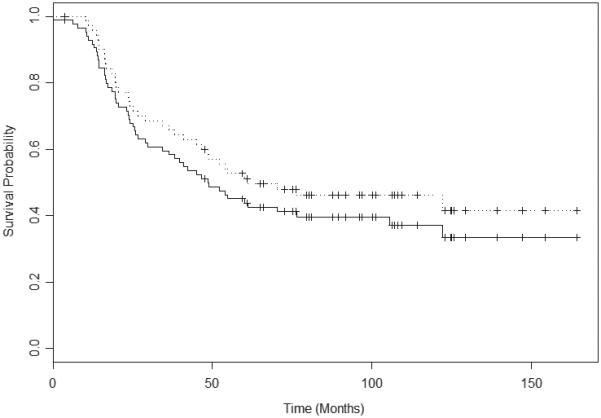
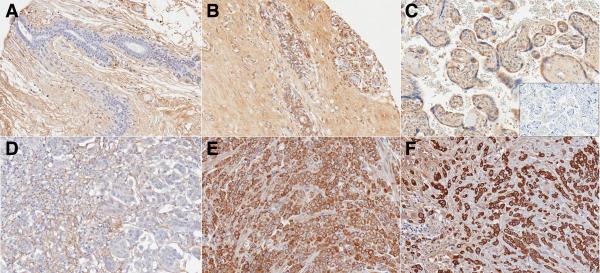
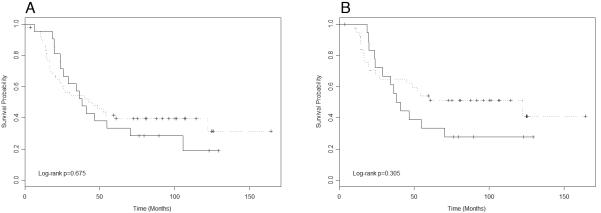
GPR30 is a novel G protein-coupled estrogen receptor (ER) associated with metastases in breast cancer (BC) and poor survival in endometrial and ovarian tumors. The association of GPR30 expression with inflammatory breast cancer (IBC), an aggressive and commonly hormone-independent form of BC, has not been studied. GPR30, ER, progesterone receptor (PR), epidermal growth factor receptor (EGFR), and HER-2 expression were assessed by immunohistochemistry (and FISH for HER-2) in 88 primary IBCs. GPR30 expression was correlated with patient overall survival (OS), disease-free survival (DFS), pathologic variables, and other biomarkers. GPR30 expression was found in 69% of IBC cases. ER, PR, HER-2, and EGFR were found in 43, 35, 39, and 34% of IBC cases, respectively. GPR30 expression correlated inversely with ER expression (P = 0.02). Co-expression of ER and GPR30 was found in 24% of IBC samples; 19% expressed only ER and 46% expressed only GPR30. Univariate analysis showed no association between GPR30 expression and OS or DFS. However, co-expression of ER and GPR30 was associated with improved OS (P < 0.03) and marginally with DFS (P < 0.06); the absence of both ER and GPR30 was associated with worse OS and DFS (P = 0.03 for both). Multivariate analysis identified ER as an independent prognostic factor of OS (P = 0.008) and DFS (P = 0.02). The majority of IBC tumors are GPR30-positive, suggesting that estrogen signaling may be active in ER-negative IBC patients. These findings suggest potential new therapeutic targets for IBC such as novel endocrine agents or direct modulation of GPR30.
Figures
References
-
- Levine PH, Veneroso C. The epidemiology of inflammatory breast cancer. Semin Oncol. 2008;35:11–16. - PubMed
-
- Singletary SE, Cristofanilli M. Defining the clinical diagnosis of inflammatory breast cancer. Semin Oncol. 2008;35:7–10. - PubMed
-
- Kerlikowske K, Miglioretti DL, Buist DSM, Walker R, Carney PA. Declines in Invasive Breast Cancer and Use of Postmenopausal Hormone Therapy in a Screening Mammography Population. J Natl Cancer Inst. 2007;99:1335–1339. - PubMed
Publication types
MeSH terms
Substances
Grants and funding
LinkOut - more resources
Full Text Sources
Medical
Research Materials
Miscellaneous
