


Immunosuppressive CD14+HLA-DRlow/- monocytes in prostate cancer
- PMID: 19902470
- PMCID: PMC2935631
- DOI: 10.1002/pros.21078
Immunosuppressive CD14+HLA-DRlow/- monocytes in prostate cancer
Abstract
Objective: To determine if the levels of circulating myeloid-derived suppressor cells increase with progression of prostate cancer (PCa); to determine if such cells could contribute to the relative inefficiency of PCa immunotherapy.
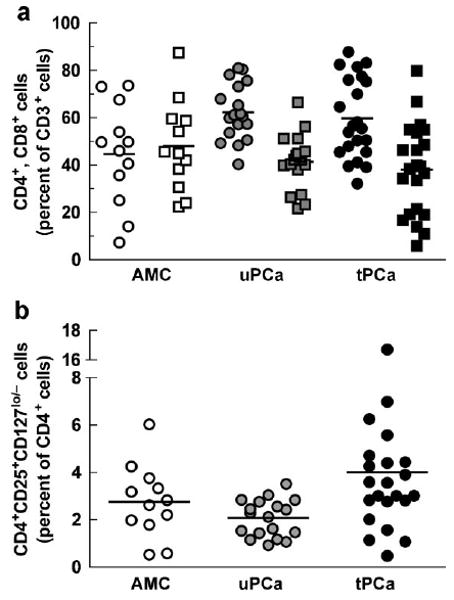
Materials and methods: We analyzed peripheral blood mononuclear cells isolated from untreated PCa patients (uPCa; N = 18; mean age +/- SD: 72.1 +/- 6.9 years), tPCa (N = 22; 72.8 +/- 9.8 years) and age matched controls (AMC; N = 12; 68.8 +/- 7.5 years). We quantified surface marker phenotype, differentiation potential, effects on T cell proliferation and intracellular cytokines.
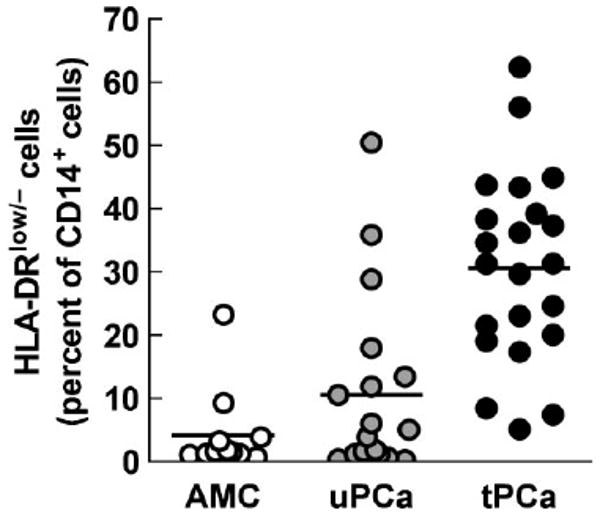
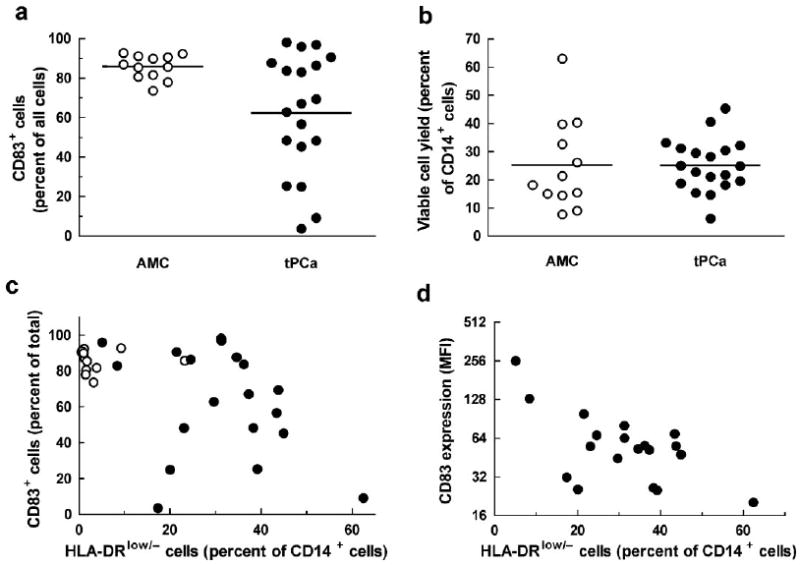
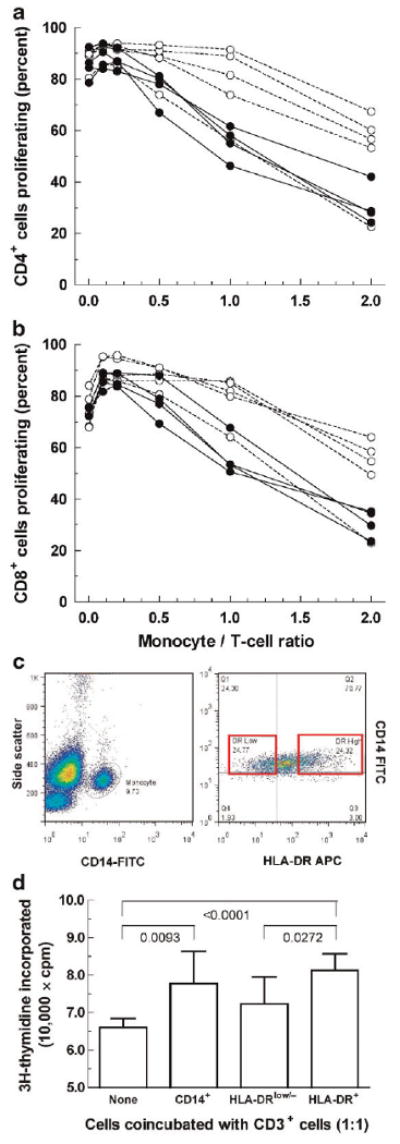
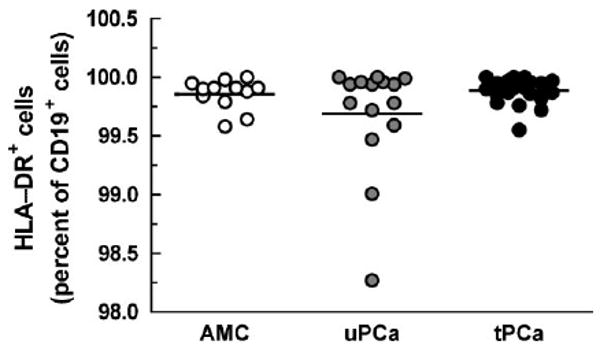
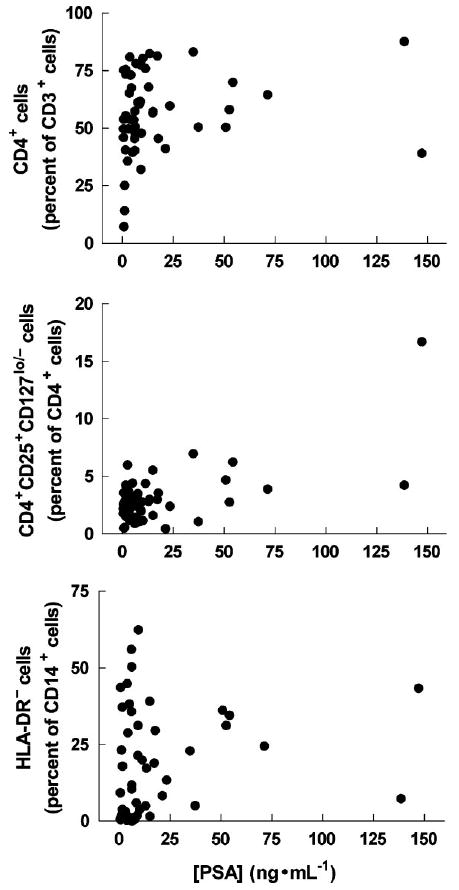
Results: We observed an unexpectedly high percentage of a type of myeloid-derived suppressor cells, CD14(+)HLA-DR(low/-) monocytes, in tPCa (30.7 +/- 15.0% of CD14(+) cells) relative to AMC (4.1 +/- 6.5%, P < 0.0001) and uPCa (10.6 +/- 14.3%, P = 0.0001). The levels of CD14(+) HLA-DR(low/-) cells were significantly correlated with circulating PSA levels and treatment with LHRH-agonist leuprolide in combination with either an antiandrogen or dexamethasone. Monocytes from tPCa inhibited autologous T cell proliferation statistically significantly more effectively than AMC monocytes and were defective in their ability to differentiate into phenotypically mature dendritic cells. Isolated CD14(+)HLA-DR(low/-) cells expressed higher levels of intracellular interleukin-10 and suppressed T cell proliferation more effectively than isolated CD14(+)HLA-DR(+) cells.
Conclusions: This is the first report of CD14(+) cells exhibiting reduced expression of HLA-DR molecules in PCa patients. These cells suppress immune cell function in vitro and, plausibly, in vivo, a finding that must be factored into the design of immunotherapy protocols for PCa patients.
Prostate 70: 443-455, 2010. (c) 2009 Wiley-Liss, Inc.
Conflict of interest statement
The authors have declared no financial conflict of interest in regards to this work.
Figures
References
-
- Banchereau J, Steinman RM. Dendritic cells and the control of immunity. Nature. 1998;392:245–252. - PubMed
-
- Thomas-Kaskel AK, Waller CF, Schultze-Seemann W, Veelken H. Immunotherapy with dendritic cells for prostate cancer. Int J Cancer. 2007;121:467–473. - PubMed
-
- Sciarra A, Lichtner M, Autran Gomez AM, Mastroianni C, Rossi R, Mengoni F, Cristini C, Gentilucci A, Vullo V, Di Silverio F. Characterization of circulating blood dendritic cell subsets DC123+ (lymphoid) and DC11c+ (myeloid) in prostate adenocarcinoma patients. Prostate. 2007;67:1–7. - PubMed
-
- Aalamian-Matheis M, Chatta GS, Shurin MR, Huland E, Huland H, Shurin GV. Inhibition of dendritic cell generation and function by serum from prostate cancer patients: Correlation with serum-free PSA. Adv Exp Med Biol. 2007;601:173–182. - PubMed
Publication types
MeSH terms
Substances
Grants and funding
LinkOut - more resources
Full Text Sources
Other Literature Sources
Medical
Research Materials
Miscellaneous
