


Effects of VEGF temporal and spatial presentation on angiogenesis
- PMID: 19906422
- PMCID: PMC2813952
- DOI: 10.1016/j.biomaterials.2009.10.052
Effects of VEGF temporal and spatial presentation on angiogenesis
Abstract
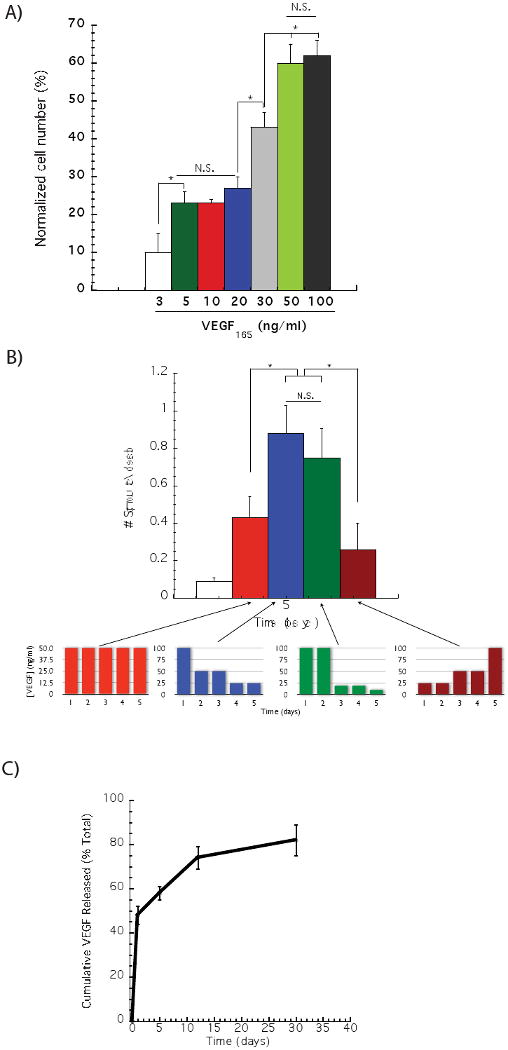
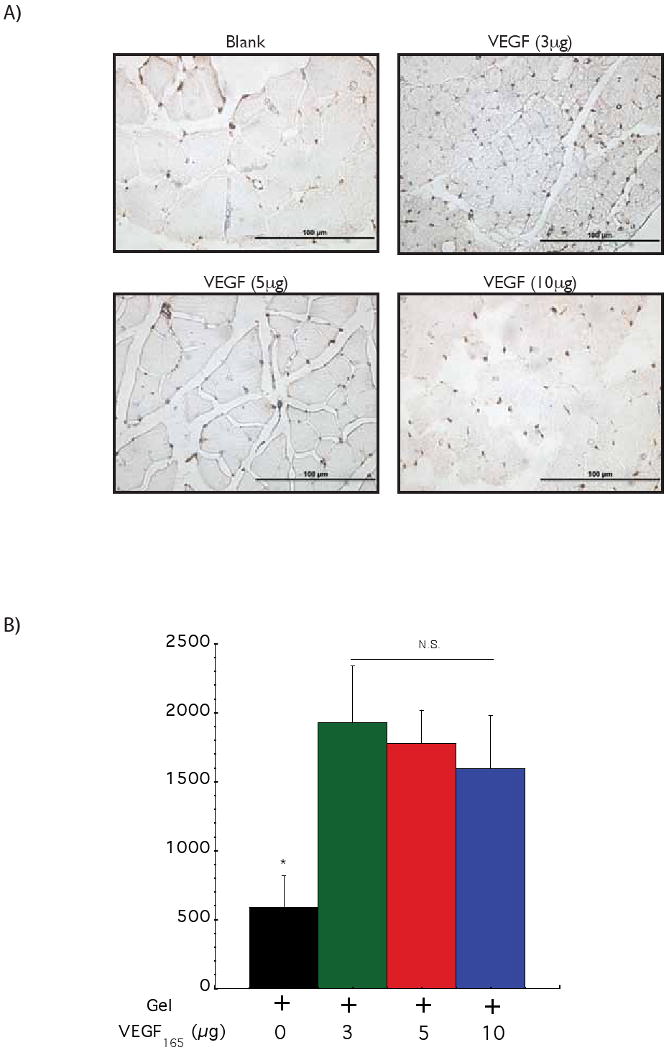
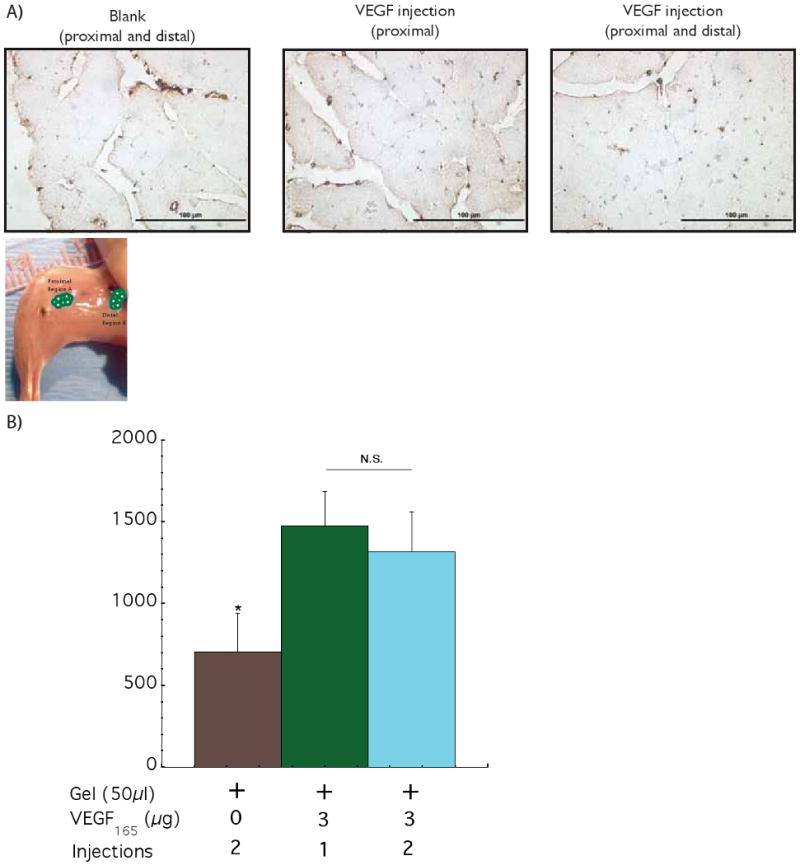
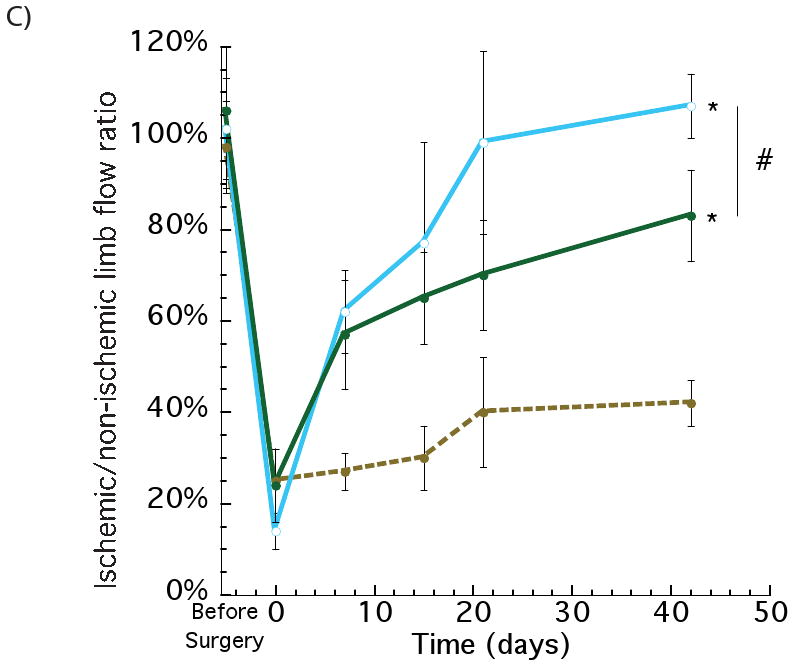
Therapeutic angiogenesis relies on the delivery of angiogenic factors capable of reversing tissue ischemia. Polymeric materials that can provide spatial and temporal over vascular endothelial growth factor (VEGF) presentation provide clear benefit, but the influence of VEGF dose, temporal, and spatial presentation on the resultant angiogenic process are largely unknown. The influence of the temporal profile of VEGF concentration, dose, and the impact of VEGF spatial distribution on angiogenesis in in vitro models of angiogenesis and ischemic murine limbs was analyzed in this study. Importantly, a profile consisting of a high VEGF concentration initially, followed by a decreasing concentration over time was found to yield optimal angiogenic sprouting. A total VEGF dose 0.1 microg/g, when delivered with kinetics found to be optimal in vitro, provided a favorable therapeutic dose in murine hindlimb ischemia model, and distributing this VEGF dose in two spatial locations induces a higher level of vascularization and perfusion than a single location. These findings suggest that material systems capable of controlling and regulating the temporal and spatial presentation of VEGF maybe useful to achieve a robust and potent therapeutic angiogenic effect in vivo.
(c) 2009 Elsevier Ltd. All rights reserved.
Figures

References
-
- Abegunde DO, Mathers CD, Adam T, Ortegon M, Strong K. The burden and costs of chronic diseases in low-income and middle-income countries. Lancet. 2007;370:1929–1938. - PubMed
-
- Place ES, Evans ND, Stevens MM. Complexity in biomaterials for tissue engineering. Nat Mater. 2009;8:457–470. - PubMed
-
- Carmeliet P. Angiogenesis in life, disease and medicine. Nature. 2005;438:932–936. - PubMed
-
- Folkman J. Angiogenesis: an organizing principle for drug discovery? Nat Rev Drug Discov. 2007;6:273–286. - PubMed
Publication types
MeSH terms
Substances
Grants and funding
LinkOut - more resources
Full Text Sources
Other Literature Sources
