


Promoting directional axon growth from neural progenitors grafted into the injured spinal cord
- PMID: 19908250
- PMCID: PMC2844860
- DOI: 10.1002/jnr.22288
Promoting directional axon growth from neural progenitors grafted into the injured spinal cord
Abstract
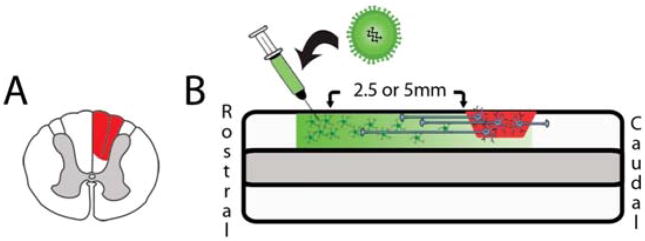
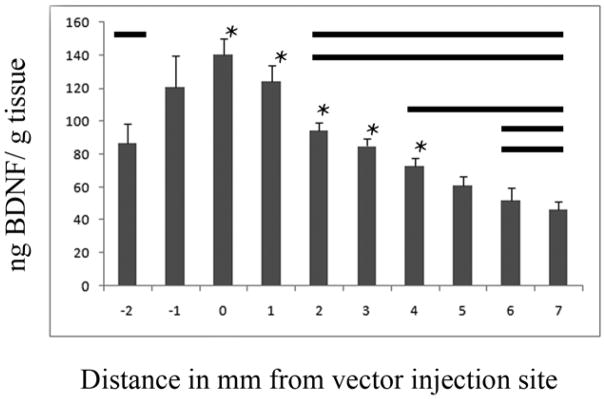
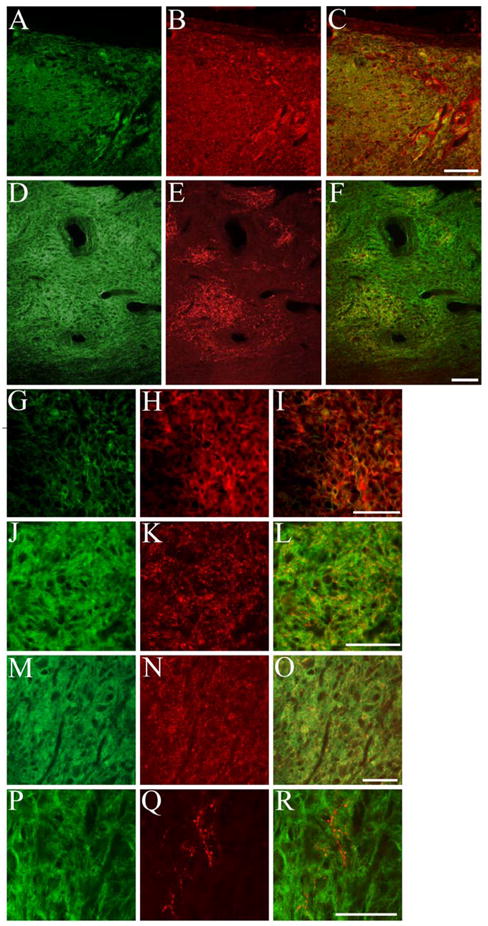
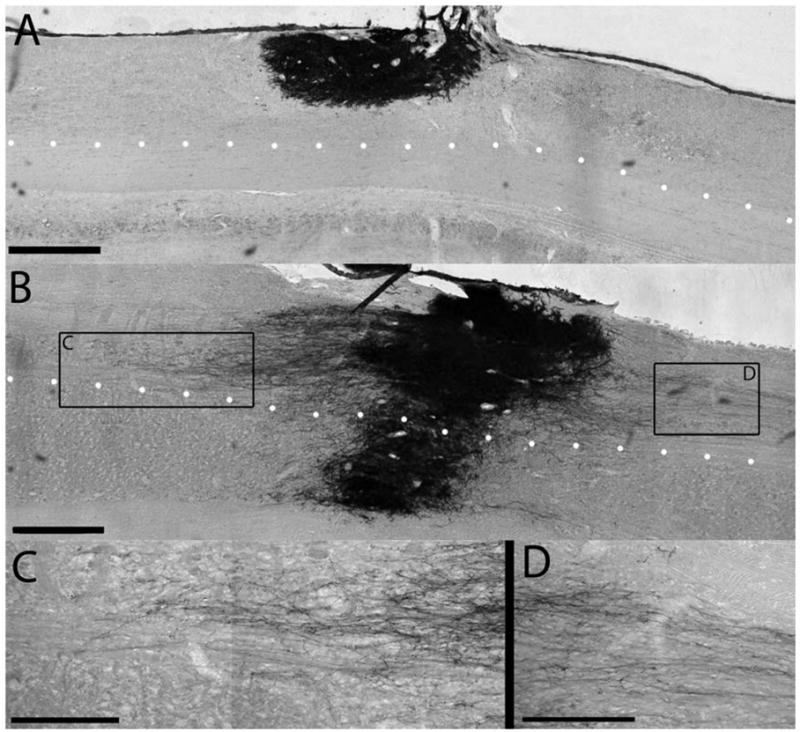
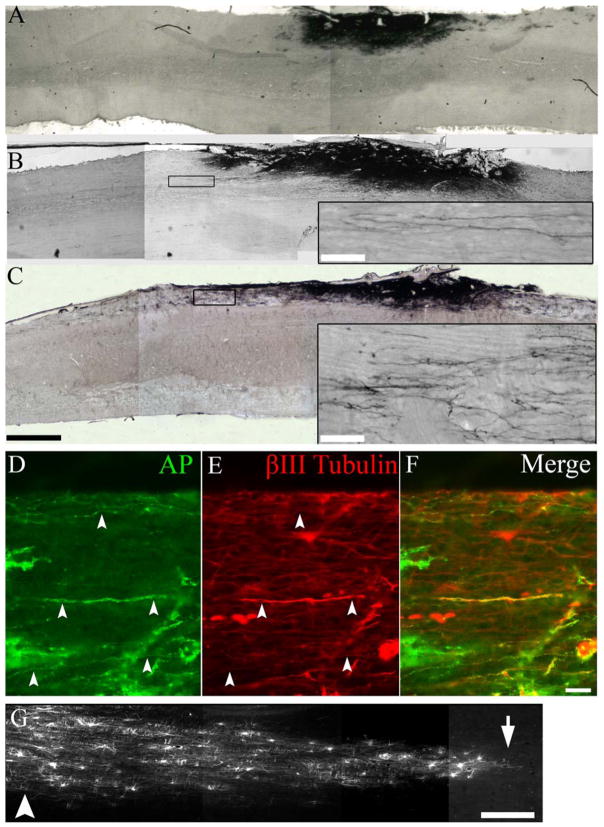
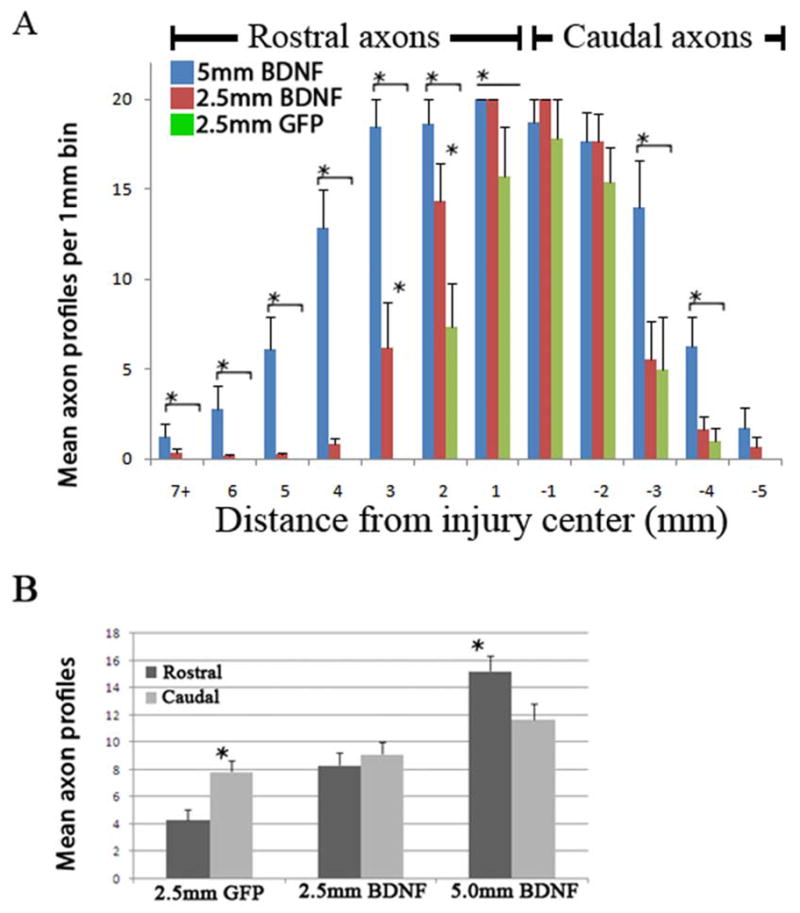
Spinal cord injury (SCI) is a devastating condition characterized by disruption of axonal connections, failure of axonal regeneration, and loss of motor and sensory function. The therapeutic promise of neural stem cells has been focused on cell replacement, but many obstacles remain in obtaining neuronal integration following transplantation into the injured CNS. This study investigated the neurotransmitter identity and axonal growth potential of neural progenitors following grafting into adult rats with a dorsal column lesion. We found that using a combination of neuronal and glial restricted progenitors (NRP and GRP) produced graft-derived glutamatergic and GABAergic neurons within the injury site, with minimal axonal extension. Administration of brain-derived neurotrophic factor (BDNF) with the graft promoted modest axonal growth from grafted cells. In contrast, injecting a lentiviral vector expressing BDNF rostral into the injured area generated a neurotrophin gradient and promoted directional growth of axons for up to 9 mm. Animals injected with BDNF lentivirus (at 2.5 and 5.0 mm) showed significantly more axons and significantly longer axons than control animals injected with GFP lentivirus. However, only the 5.0-mm-BDNF group showed a preference for extension in the rostral direction. We concluded that NRP/GRP grafts can be used to produce excitatory and inhibitory neurons, and neurotrophin gradients can guide axonal growth from graft-derived neurons toward putative targets. Together they can serve as a building block for neuronal cell replacement of local circuits and formation of neuronal relays.
(c) 2009 Wiley-Liss, Inc.
Figures
References
-
- Belegu V, Oudega M, Gary DS, McDonald JW. Restoring function after spinal cord injury: promoting spontaneous regeneration with stem cells and activity-based therapies. Neurosurg Clin N Am. 2007;18(1):143–168. xi. - PubMed
-
- Blesch A. Lentiviral and MLV based retroviral vectors for ex vivo and in vivo gene transfer. Methods. 2004;33(2):164–172. - PubMed
-
- Bolsover S, Fabes J, Anderson PN. Axonal guidance molecules and the failure of axonal regeneration in the adult mammalian spinal cord. Restor Neurol Neurosci. 2008;26(2–3):117–130. - PubMed
-
- Charron F, Tessier-Lavigne M. Novel brain wiring functions for classical morphogens: a role as graded positional cues in axon guidance. Development. 2005;132(10):2251–2262. - PubMed
Publication types
MeSH terms
Substances
Grants and funding
LinkOut - more resources
Full Text Sources
Other Literature Sources
Medical
Miscellaneous
