


Modulation of the cytochrome P450 reductase redox potential by the phospholipid bilayer
- PMID: 19908820
- PMCID: PMC2797566
- DOI: 10.1021/bi9011435
Modulation of the cytochrome P450 reductase redox potential by the phospholipid bilayer
Abstract
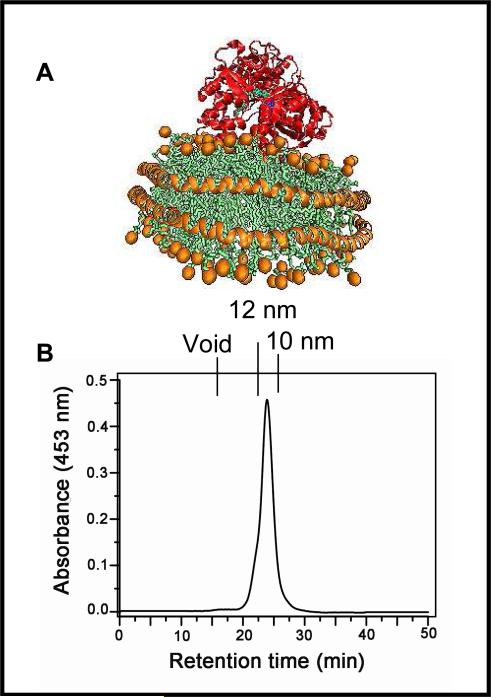
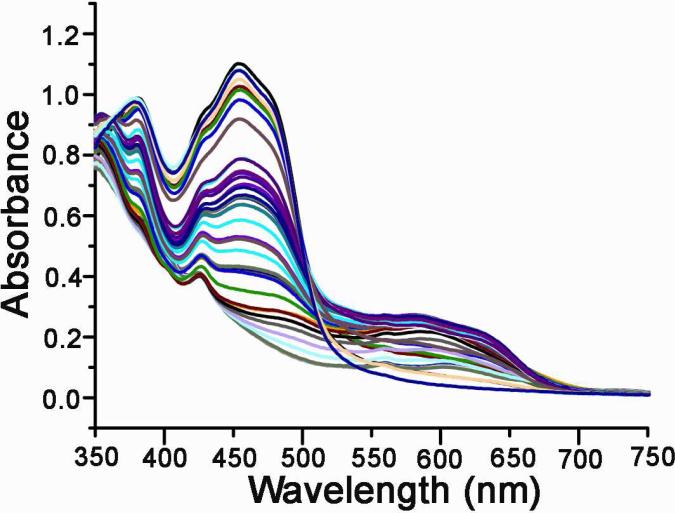
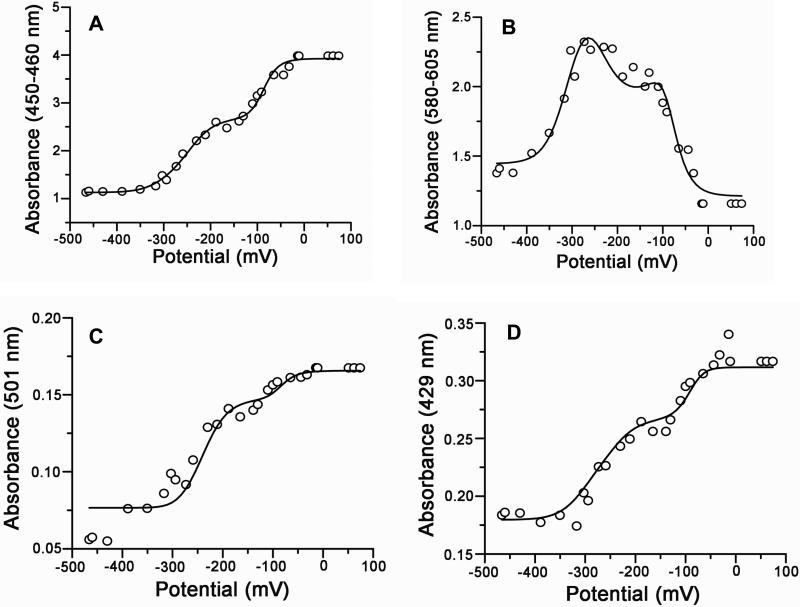
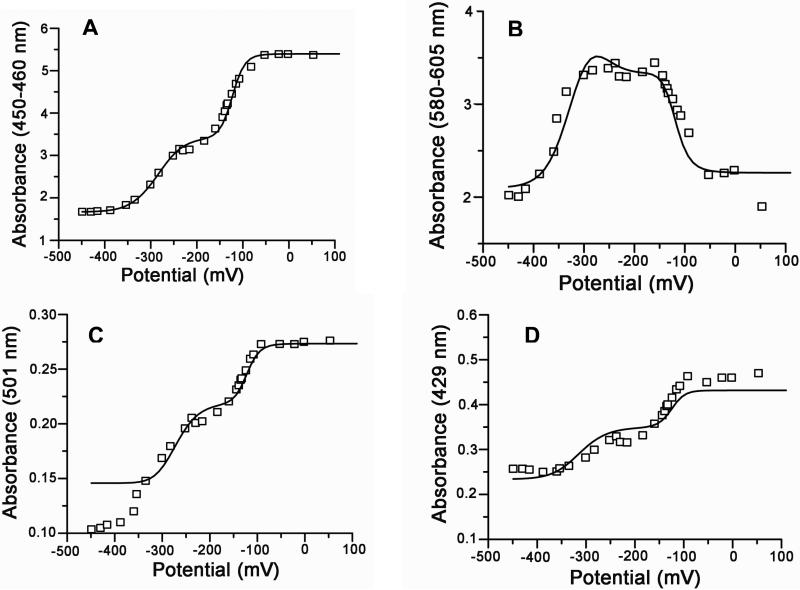
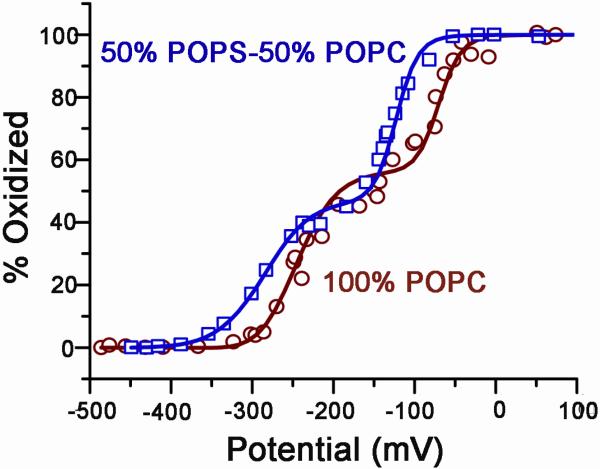
Cytochrome P450 reductase (CPR) is a tethered membrane protein which transfers electrons from NADPH to microsomal P450s. We show that the lipid bilayer has a role in defining the redox potential of the CPR flavin domains. In order to quantitate the electrochemical behavior of this central redox protein, full-length CPR was incorporated into soluble nanometer scale discoidal membrane bilayers (nanodiscs), and potentials were measured using spectropotentiometry. The redox potentials of both FMN and FAD were found to shift to more positive values when in a membrane bilayer as compared to a solubilized version of the reductase. The potentials of the semiquinone/hydroquinone couple of both FMN and FAD are altered to a larger extent than the oxidized/semiquinone couple which is understood by a simple electrostatic model. When anionic lipids were used to change the membrane composition of the CPR-nanodisc, the redox potential of both flavins became more negative, favoring electron transfer from CPR to cytochrome P450.
Figures
References
-
- Denisov IG, Makris TM, Sligar SG, Schlichting I. Structure and chemistry of cytochrome P450. Chem. Rev. 2005;105:2253–2277. - PubMed
-
- Iyanagi T. Structure and function of NADPH-cytochrome P450 reductase and nitric oxide synthase reductase domain. Biochem. Biophy. Res. Comm. 2005;338:520–528. - PubMed
-
- Hannemann F, Bichet A, Ewen KM, Bernhardt R. Cytochrome P450 systems--biological variations of electron transport chains. Biochim. Biophys. Acta (BBA) - General Subjects. 2007;1770:330–344. - PubMed
-
- Murataliev MB, Feyereisen R, Walker FA. Electron transfer by diflavin reductases. Biochim.Biophys. Acta (BBA) - Proteins & Proteomics. 2004;1698:1–26. - PubMed
-
- Guengerich FP. Cytochrome p450 and chemical toxicology. Chem. Res. Toxicol. 2008;21:70–83. - PubMed
Publication types
MeSH terms
Substances
Grants and funding
LinkOut - more resources
Full Text Sources
