Third generation antipsychotic drugs: partial agonism or receptor functional selectivity?
- PMID: 19909227
- PMCID: PMC2958217
- DOI: 10.2174/138161210790361461
Third generation antipsychotic drugs: partial agonism or receptor functional selectivity?
Abstract
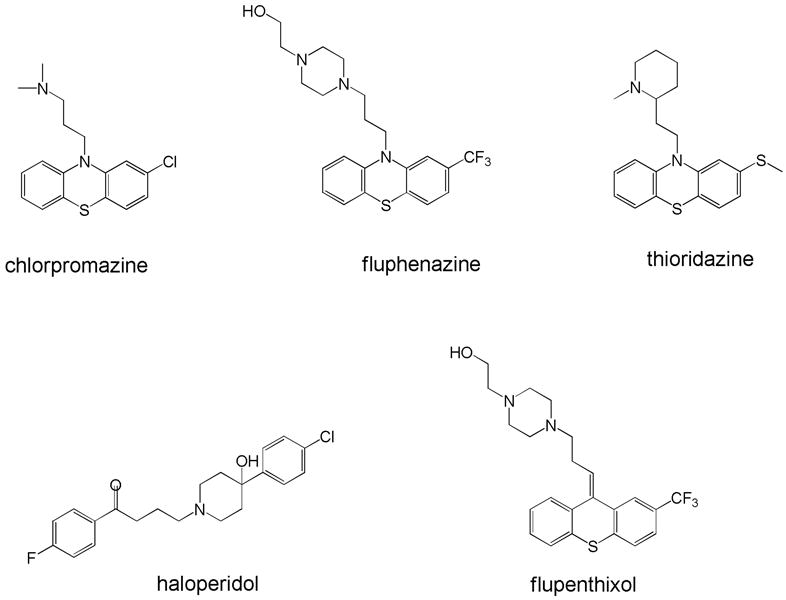
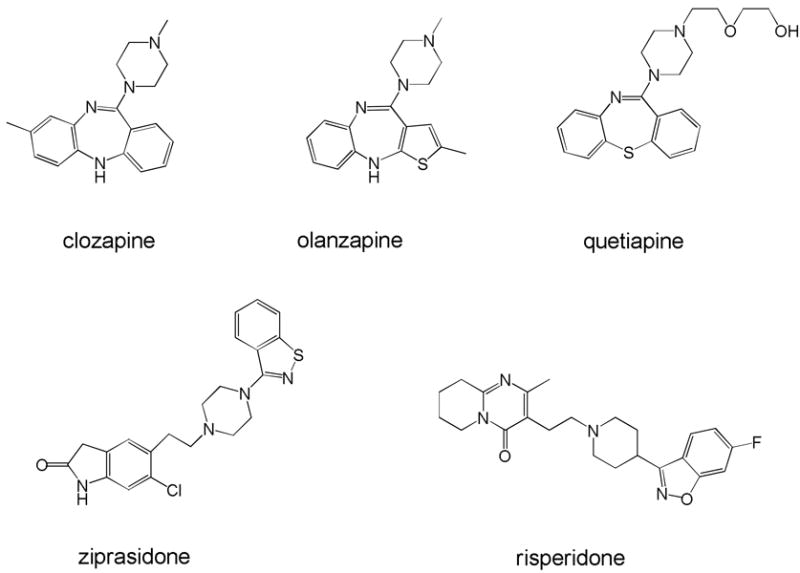
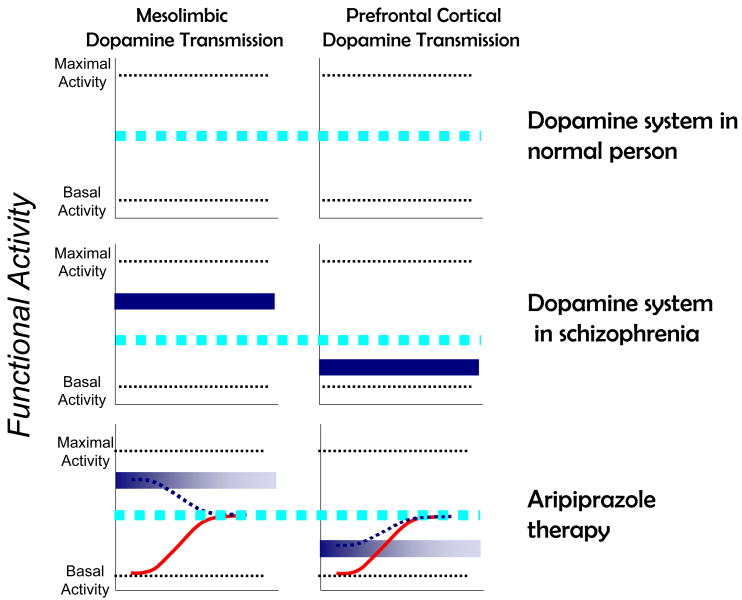
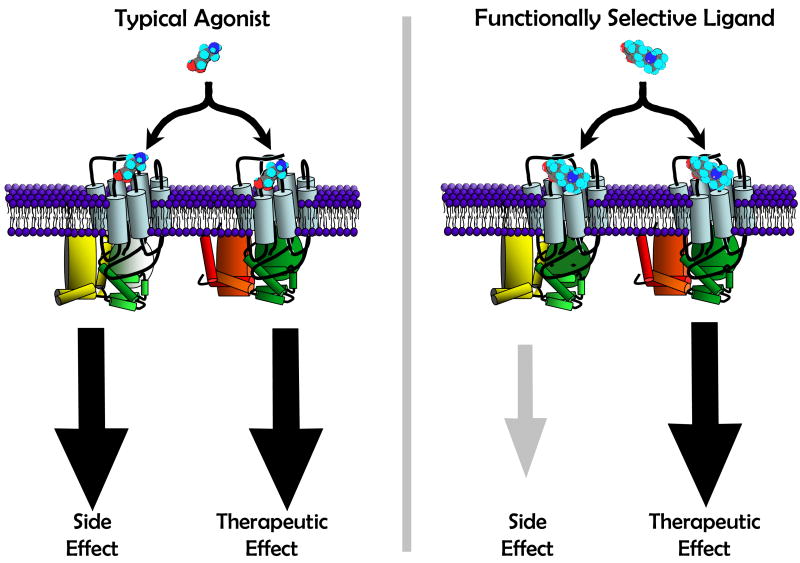
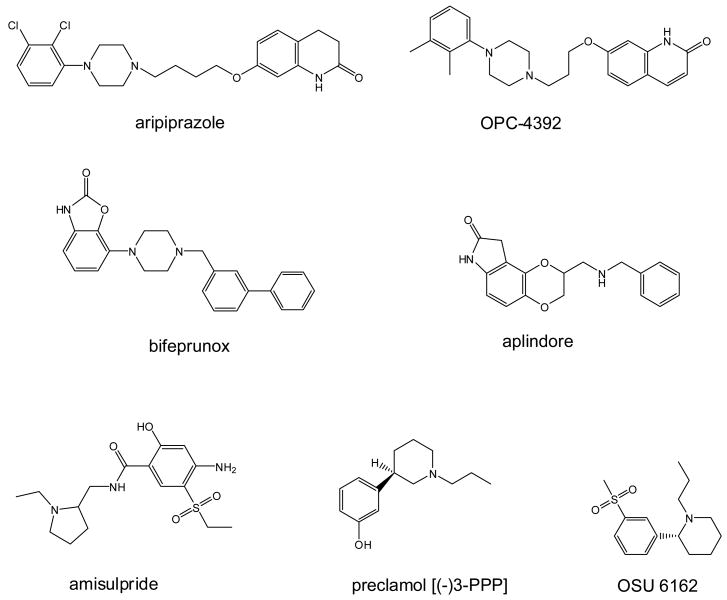
Functional selectivity is the term that describes drugs that cause markedly different signaling through a single receptor (e.g., full agonist at one pathway and antagonist at a second). It has been widely recognized recently that this phenomenon impacts the understanding of mechanism of action of some drugs, and has relevance to drug discovery. One of the clinical areas where this mechanism has particular importance is in the treatment of schizophrenia. Antipsychotic drugs have been grouped according to both pattern of clinical action and mechanism of action. The original antipsychotic drugs such as chlorpromazine and haloperidol have been called typical or first generation. They cause both antipsychotic actions and many side effects (extrapyramidal and endocrine) that are ascribed to their high affinity dopamine D(2) receptor antagonism. Drugs such as clozapine, olanzapine, risperidone and others were then developed that avoided the neurological side effects (atypical or second generation antipsychotics). These compounds are divided mechanistically into those that are high affinity D(2) and 5-HT(2A) antagonists, and those that also bind with modest affinity to D(2), 5-HT(2A), and many other neuroreceptors. There is one approved third generation drug, aripiprazole, whose actions have been ascribed alternately to either D(2) partial agonism or D(2) functional selectivity. Although partial agonism has been the more widely accepted mechanism, the available data are inconsistent with this mechanism. Conversely, the D(2) functional selectivity hypothesis can accommodate all current data for aripiprazole, and also impacts on discovery compounds that are not pure D(2) antagonists.
Conflict of interest statement
Figures
References
-
- Delay J, Deniker P, Harl JM. Therapeutic method derived from hiberno-therapy in excitation and agitation states. Ann Med Psychol (Paris) 1952;110:267–273. - PubMed
-
- Carlsson A, Lindqvist M. Effect of chlorpromazine and haloperidol on formation of 3-methoxytyramine and normetanephrine in mouse brain. Acta Pharmacol Toxicol (Copenh) 1963;20:140–144. - PubMed
-
- Creese I, Burt DR, Snyder SH. Dopamine receptor binding predicts clinical and pharmacological potencies of antischizophrenic drugs. Science. 1976;192:481–483. - PubMed
-
- Ungerstedt U. Stereotaxic mapping of the monoamine pathways in the rat brain. Acta Physiol Scand Suppl. 1971;367:1–48. - PubMed
Publication types
MeSH terms
Substances
Grants and funding
LinkOut - more resources
Full Text Sources
Other Literature Sources
Molecular Biology Databases