


Mitochondrial-targeted fluorescent probes for reactive oxygen species
- PMID: 19910238
- PMCID: PMC2830890
- DOI: 10.1016/j.cbpa.2009.10.014
Mitochondrial-targeted fluorescent probes for reactive oxygen species
Abstract
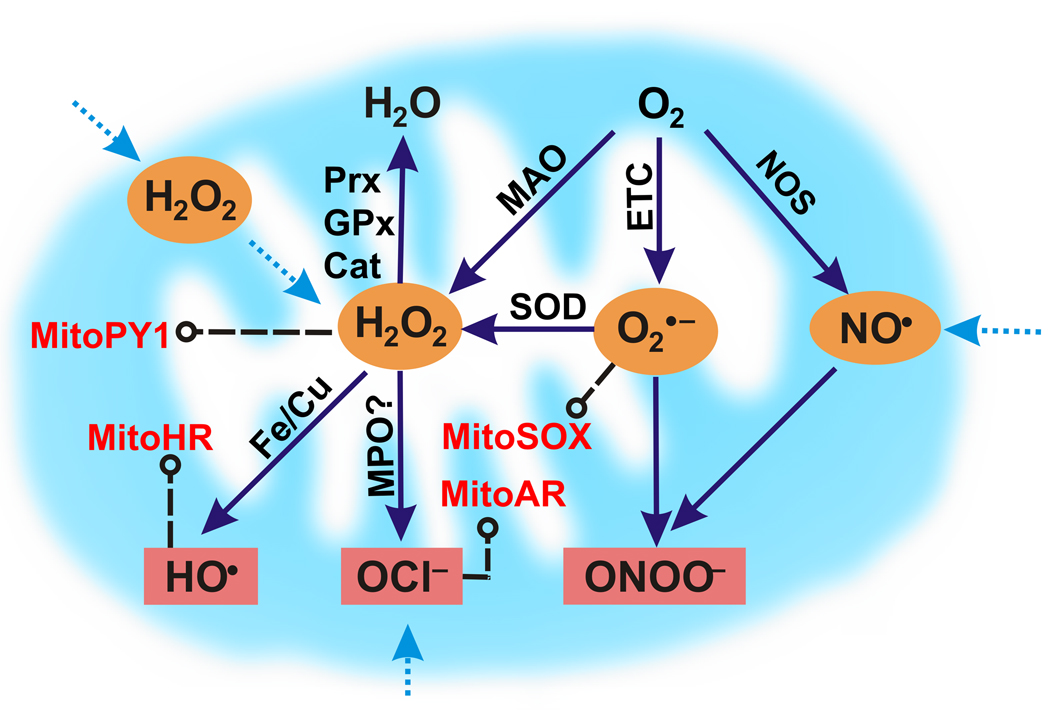
As the primary consumers of oxygen within all aerobic organisms, mitochondria are a major source of cellular reactive oxygen species (ROS) derived from the in vivo chemistry of oxygen metabolism. Mitochondrial ROS have been traditionally implicated in aging and in a variety of pathologies, including cancer, neurodegeneration, and diabetes, but recent studies also link controlled mitochondrial ROS fluxes to cell regulation and signaling events. Progress in the development of mitochondrial-targeted fluorescent small-molecule indicators that detect specific ROS with high selectivity offers a promising approach for interrogating mitochondrial ROS production, trafficking, and downstream biological effects.
2009 Elsevier Ltd. All rights reserved.
Figures
References
-
- Stone JR, Yang S. Hydrogen peroxide: a signaling messenger. Antioxid Redox Sign. 2006;8:243–270. - PubMed
-
- Rhee SG. Cell signaling: H2O2, a necessary evil for cell signaling. Science. 2006;312:1882–1883. - PubMed
-
- Veal EA, Day AM, Morgan BA. Hydrogen peroxide sensing and signaling. Mol Cell. 2007;26:1–14. - PubMed
-
- D'AutrEaux B, Toledano MB. ROS as signalling molecules: mechanisms that generate specificity in ROS homeostasis. Nat Mol Cell Biol. 2007;8:813–824. - PubMed
-
- Giorgio M, Trinei M, Migliaccio E, Pelicci PG. Hydrogen peroxide: a metabolic by-product or a common mediator of ageing signals? Nat Mol Cell Biol. 2007;8:722–728. - PubMed
Publication types
MeSH terms
Substances
Grants and funding
LinkOut - more resources
Full Text Sources
Other Literature Sources
Research Materials
