Fluorodeoxyglucose-positron-emission tomography imaging of head and neck squamous cell cancer
- PMID: 19910448
- PMCID: PMC7964245
- DOI: 10.3174/ajnr.A1760
Fluorodeoxyglucose-positron-emission tomography imaging of head and neck squamous cell cancer
Abstract
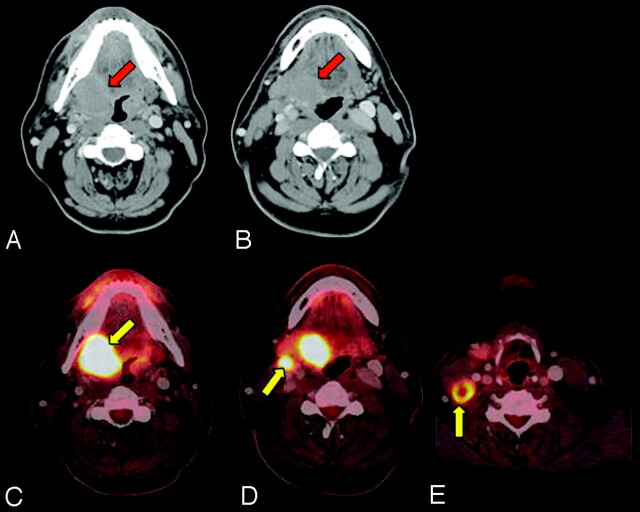
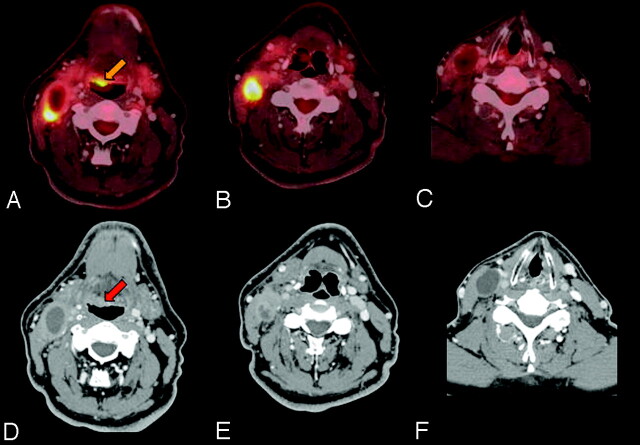
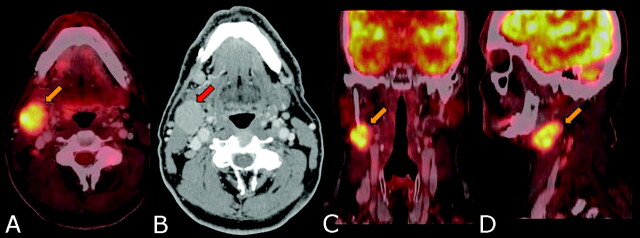
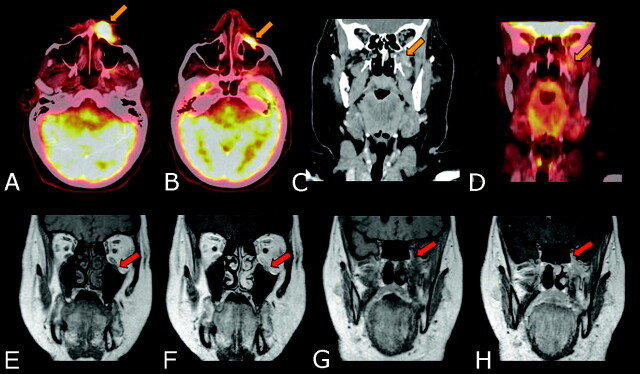
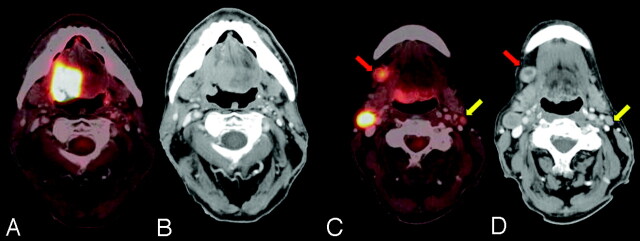
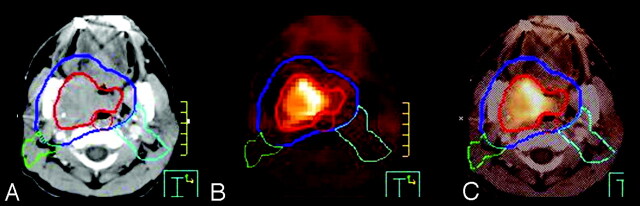
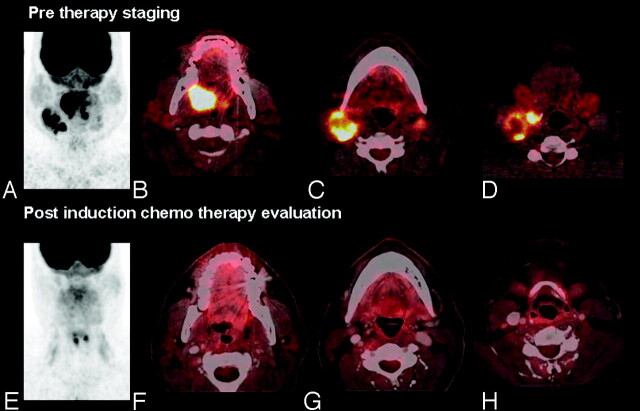
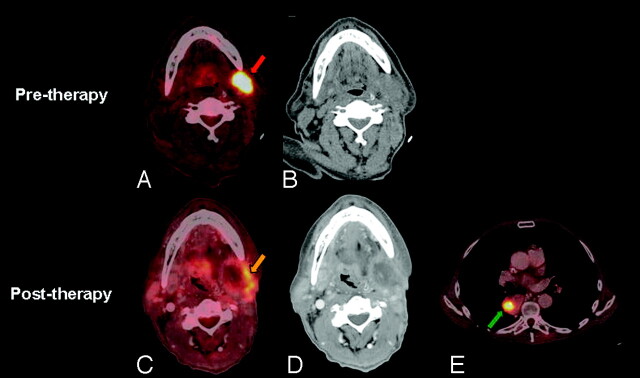
The hybrid technique of PET/CT has significantly impacted the imaging and management of HNSCC since its introduction in 2001 and has become the technique of choice for imaging of this cancer. Diagnostic FDG-PET/CT is useful for identification of an unknown primary tumor, delineation of extent of primary tumor, detection of regional lymph node involvement even in a normal-sized node, detection of distant metastases and occasional synchronous primary tumor, assessment of therapy response, and long-term surveillance for recurrence and metastases. The role of PET/CT is evolving in radiation therapy planning. Combined diagnostic PET/CT provides the best anatomic and metabolic in vivo information for the comprehensive management of HNSCC.
Figures
References
-
- Carvalho A, Nishimoto I, Califano J, et al. Trends in incidence and prognosis for head and neck cancer in the United States: a site-specific analysis of the SEER database. Int J Cancer 2005; 114: 806–16 - PubMed
-
- Canto MT, Devesa SS. Oral cavity and pharynx cancer incidence rates in the United States, 1975–1998. Oral Oncol 2002; 38: 610–17 - PubMed
-
- Forastiere A, Koch W, Trotti A, et al. Head and neck cancer. N Engl J Med 2001; 345: 1890–900 - PubMed
-
- Cooper JS, Pajak TF, Forastiere AA, et al. Postoperative concurrent radiotherapy and chemotherapy for high-risk squamous-cell carcinoma of the head and neck. N Engl J Med 2004; 350: 1937–44 - PubMed
-
- Bernier J, Domenge C, Ozsahin M, et al. Postoperative irradiation with or without concomitant chemotherapy for locally advanced head and neck cancer. N Engl J Med 2004; 350: 1945–52 - PubMed
MeSH terms
Substances
LinkOut - more resources
Full Text Sources
Medical