


Peer support and pager messaging to promote antiretroviral modifying therapy in Seattle: a randomized controlled trial
- PMID: 19911481
- PMCID: PMC2795576
- DOI: 10.1097/qai.0b013e3181b9300c
Peer support and pager messaging to promote antiretroviral modifying therapy in Seattle: a randomized controlled trial
Abstract
Objective: To determine the relative efficacy of peer support and pager messaging strategies versus usual care to improve medication adherence and clinical outcomes among HIV-positive outpatients initiating or switching to a new highly active antiretroviral therapy regimen.
Design: A 2 3 2 factorial randomized controlled trial of a 3-month intervention with computer-assisted self-interviews and blood draws administered at baseline, 3, 6, and 9 months.
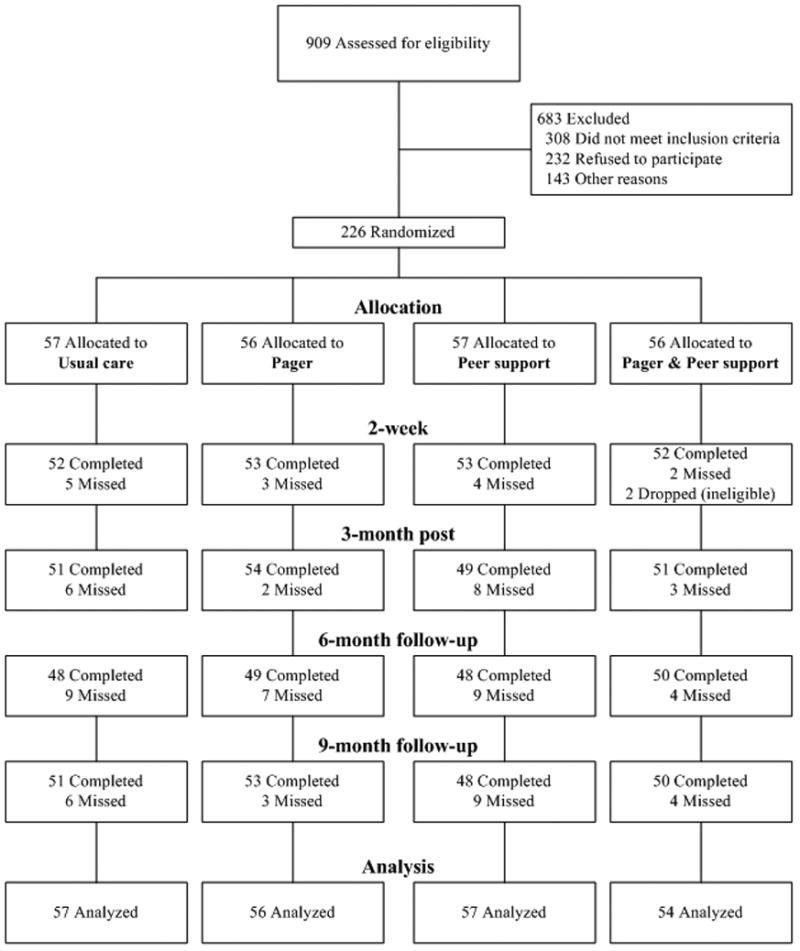
Methods: HIV-positive patients at a public HIV specialty clinic in Seattle,WA (N = 224) were randomly assigned to peer support, pager messaging, both strategies, or usual care. The main outcomes were adherence according to self-report and electronic drug monitoring, CD4 count, and HIV-1 RNA viral load.
Results: Intent-to-treat analyses suggested the peer intervention was associated with greater self-reported adherence at immediate postintervention. However, these effects were not maintained at follow-up assessment; nor were there significant differences in biological outcomes. The pager intervention, on the other hand, was not associated with greater adherence but was associated with improved biological outcomes at postintervention that were sustained at follow-up.
Conclusions: Analyses indicate the potential efficacy of peer support and pager messaging to promote antiretroviral adherence and biological outcomes, respectively. More potent strategies still are needed.
References
-
- Crum NF, Riffenburgh RH, Wegner S, et al. Comparisons of causes of death and mortality rates among HIV-infected persons: analysis of the pre-, early, and late HAART (highly active antiretroviral therapy) eras. J Acquir Immune Defic Syndr. 2006 Feb;41(2):194–200. - PubMed
-
- Jones J, Taylor B, Wilkin TJ, Hammer SM. Advances in antiretroviral therapy. Top HIV Med. 2007 Apr–May;15(2):48–82. - PubMed
-
- Walensky RP, Paltiel AD, Losina E, et al. The survival benefits of AIDS treatment in the United States. J Infect Dis. 2006 Jul;194(1):11–19. - PubMed
-
- Bartlett J. Addressing the challenges of adherence. J Acquir Immune Defic Syndr. 2002 Feb;29 (Suppl 1):S2–10. - PubMed
Publication types
MeSH terms
Substances
Grants and funding
LinkOut - more resources
Full Text Sources
Medical
Research Materials
