


Utilization of dental health care services in context of the HIV epidemic- a cross-sectional study of dental patients in the Sudan
- PMID: 19917090
- PMCID: PMC2784752
- DOI: 10.1186/1472-6831-9-30
Utilization of dental health care services in context of the HIV epidemic- a cross-sectional study of dental patients in the Sudan
Abstract
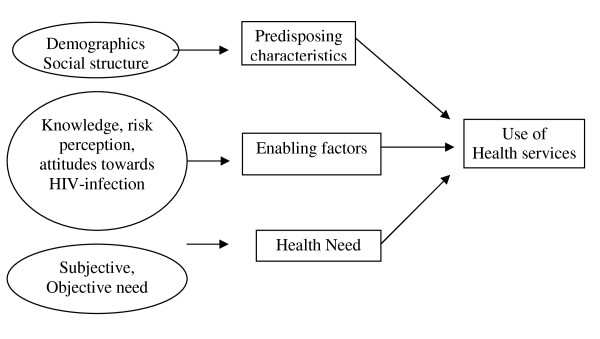
Background: HIV infected patients should be expected in the Sudanese dental health care services with an increasing frequency. Dental care utilization in the context of the HIV epidemic is generally poorly understood. Focusing on Sudanese dental patients with reported unknown HIV status, this study assessed the extent to which Andersen's model in terms of predisposing (socio-demographics), enabling (knowledge, attitudes and perceived risk related to HIV) and need related factors (oral health status) predict dental care utilization. It was hypothesized that enabling factors would add to the explanation of dental care utilization beyond that of predisposing and need related factors.
Methods: Dental patients were recruited from Khartoum Dental Teaching Hospital (KDTH) and University of Science and Technology (UST) during March-July 2008. A total of 1262 patients (mean age 30.7, 56.5% females and 61% from KDTH) were examined clinically (DMFT) and participated in an interview.
Results: A total of 53.9% confirmed having attended a dental clinic for treatment at least once in the past 2 years. Logistic regression analysis revealed that predisposing factors; travelling inside Sudan (OR = 0.5) were associated with lower odds and females were associated with higher odds (OR = 2.0) for dental service utilization. Enabling factors; higher knowledge of HIV transmission (OR = 0.6) and higher HIV related experience (OR = 0.7) were associated with lower odds, whereas positive attitudes towards infected people and high perceived risk of contagion (OR = 1.3) were associated with higher odds for dental care utilization. Among need related factors dental caries experience was strongly associated with dental care utilization (OR = 4.8).
Conclusion: Disparity in the history of dental care utilization goes beyond socio-demographic position and need for dental care. Public awareness of HIV infection control and confidence on the competence of dentists should be improved to minimize avoidance behaviour and help establish dental health care patterns in Sudan.
Figures
References
-
- National Health Information Centre. http://fmoh.gov.sd/yearlyReports/2007%20report.pdf
-
- UNGASS UNGASSoHA. United Nations General Assembly Special Session on HIV/AIDS (UNGASS) Report 2006 - 2007
-
- UNAIDS, UNICEF, WHO. assessment of the epidemiological situation. UNAIDS; 2004.
Publication types
MeSH terms
LinkOut - more resources
Full Text Sources
Medical
Miscellaneous
