


Circulating brain-reactive autoantibodies and behavioral deficits in the MRL model of CNS lupus
- PMID: 19919882
- PMCID: PMC2927526
- DOI: 10.1016/j.jneuroim.2009.10.008
Circulating brain-reactive autoantibodies and behavioral deficits in the MRL model of CNS lupus
Abstract
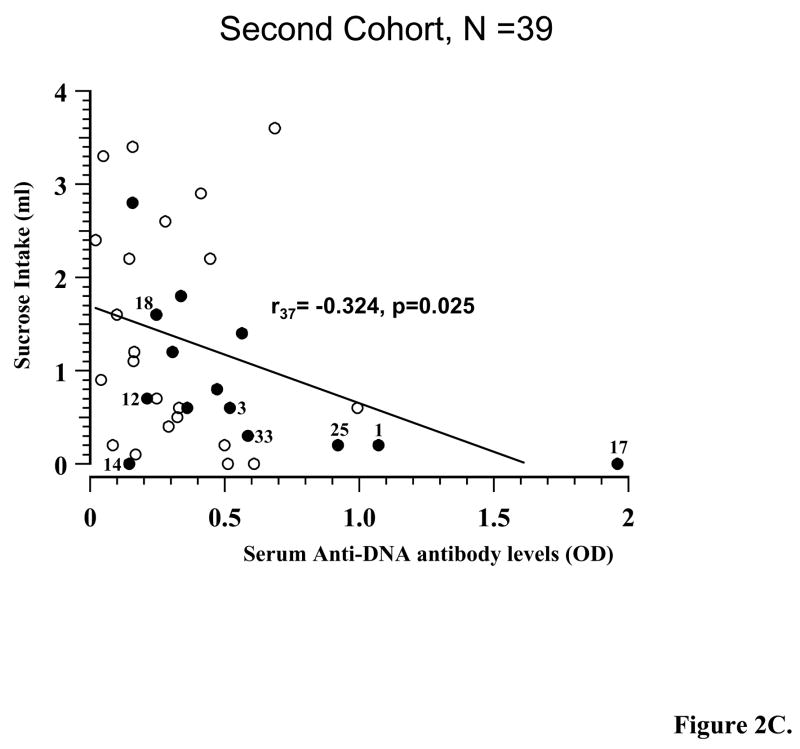
Brain-reactive autoantibodies (BRAA) are hypothesized to play a role in the neuropsychiatric manifestations that accompany systemic lupus erythematosus (SLE). The present study tests the proposed relation between circulating BRAA and behavioral deficits in lupus-prone MRL/lpr mice. Two age-matched cohorts born at different times were used to test the relationship in the context of altered disease severity. Significant correlations between autoimmunity and behavior were detected in both cohorts. These results are the first to report correlations between behavior and autoantibodies to integral membrane proteins of brain, supporting the hypothesis that BRAA contribute to the behavioral dysfunction seen in lupus.
Published by Elsevier B.V.
Figures




References
-
- Abbott NJ, Mendonca LL, Dolman DE. The blood-brain barrier in systemic lupus erythematosus. Lupus. 2003;12:908–915. - PubMed
-
- Alexander JJ, Jacob A, Vezina P, Sekine H, Gilkeson GS, Quigg RJ. Absence of functional alternative complement pathway alleviates lupus cerebritis. Eur J Immunol. 2007;37:1691–1701. - PubMed
-
- Aotsuka S, Okawa M, Ikebe K, Yokohari R. Measurement of anti-double stranded DNA antibodies in major immunoglobulin classes. J Immunol Methods. 1979;28:149–162. - PubMed
-
- Ballok DA, Millward JM, Sakic B. Neurodegeneration in autoimmune MRL-lpr mice as revealed by Fluoro Jade B staining. Brain Res. 2003;964:200–210. - PubMed
Publication types
MeSH terms
Substances
Grants and funding
LinkOut - more resources
Full Text Sources
Medical
