


The phenotypic spectrum of contiguous deletion of CYP21A2 and tenascin XB: quadricuspid aortic valve and other midline defects
- PMID: 19921645
- PMCID: PMC2963110
- DOI: 10.1002/ajmg.a.33092
The phenotypic spectrum of contiguous deletion of CYP21A2 and tenascin XB: quadricuspid aortic valve and other midline defects
Abstract
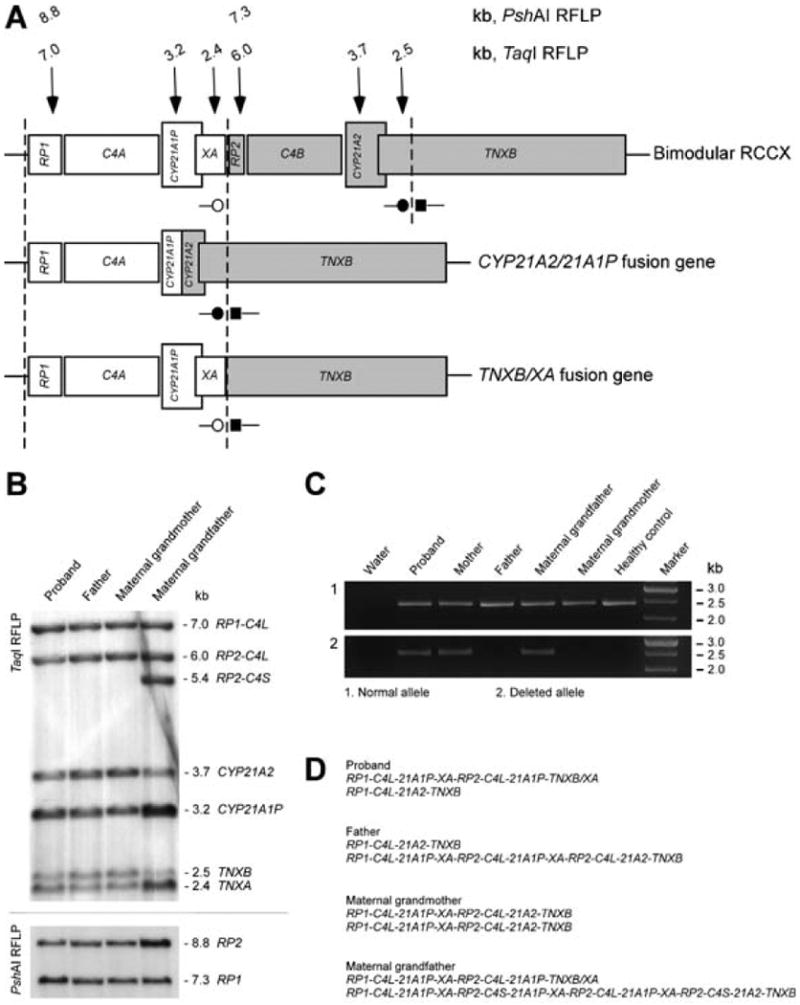
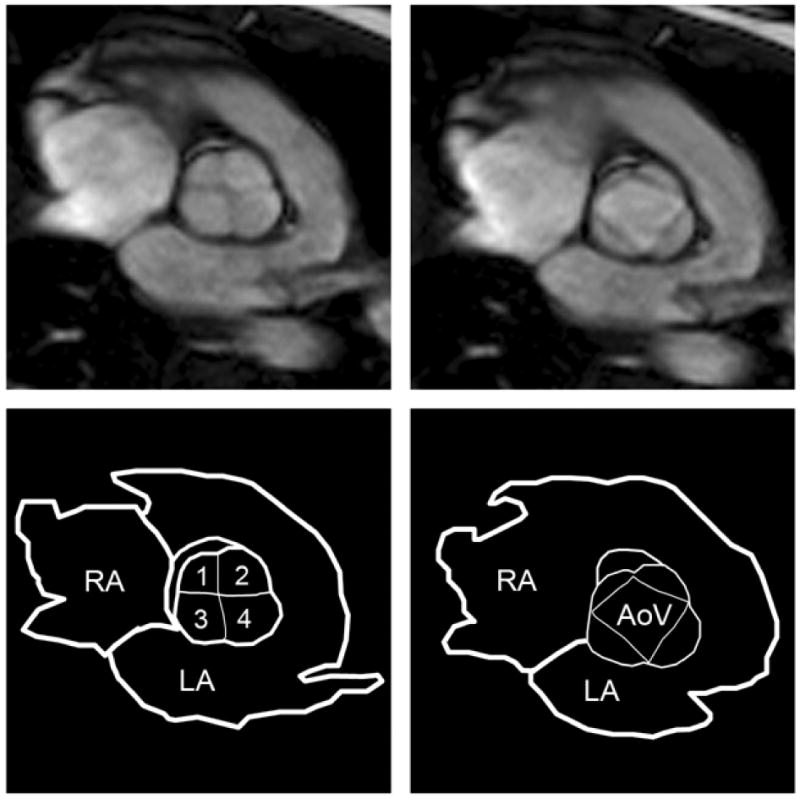
Congenital adrenal hyperplasia (CAH) due to 21-hydroxylase deficiency is an autosomal recessive disorder and is the most common cause of ambiguous genitalia in the newborn. The genes encoding 21-hydroxylase, CYP21A2, and tenascin-X (TNX), TNXB, are located within the HLA complex, in a region of high gene density termed the RCCX module. The module has multiple pseudogenes as well as tandem repeat sequences that promote misalignment during meiosis leading to complex gene rearrangements, deletions and gene conversion events. CYP21A2 mutations cause CAH, and TNX deficiency has been identified as a cause of hypermobility type Ehlers-Danlos syndrome (EDS). Here we report on a three-generation family with a heterozygous deletion encompassing CYP21A2 and TNXB that initially came to medical attention due to the diagnosis of CAH in the proposita. Southern blotting and PCR-based analysis of the RCCX module revealed a CYP21A2 deletion extending into TNXB in one allele and a CYP21A2 point mutation in the other allele. Family history is notable for joint hypermobility. Additional radiological and clinical investigations showed a quadricuspid aortic valve, single kidney, bicornuate uterus and a bifid uvula in the proposita, and mitral valve prolapse in her mother. These findings further delineate the phenotype of the CAH-TNX contiguous gene deletion syndrome and point to an intersection of connective tissue dysplasias with a common gene-mediated endocrine disorder.
Figures
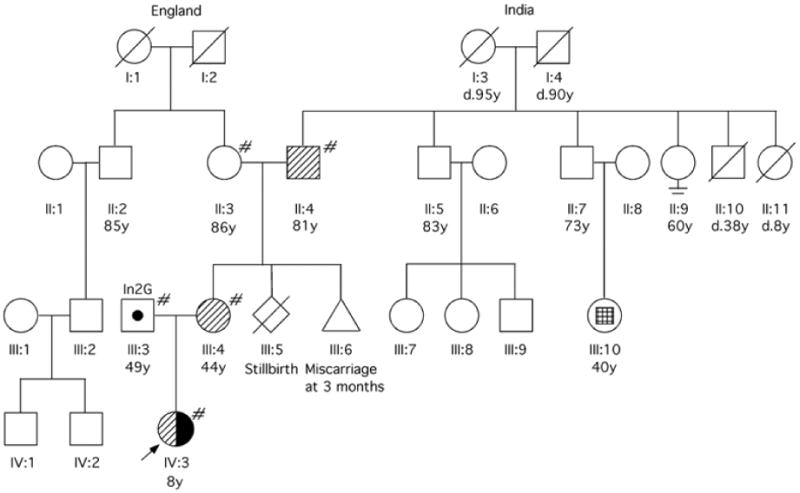
 Carrier of TNXB/XA fusion gene (CYP21A2 deletion);
  Carrier of CYP21A2 point mutation (In2G);
  Affected by CAH, compound heterozygote (TNXB/XA, In2G).
  Facial asymmetry with ipsilateral ear dysplasia and unilateral deafness, but normal intelligence.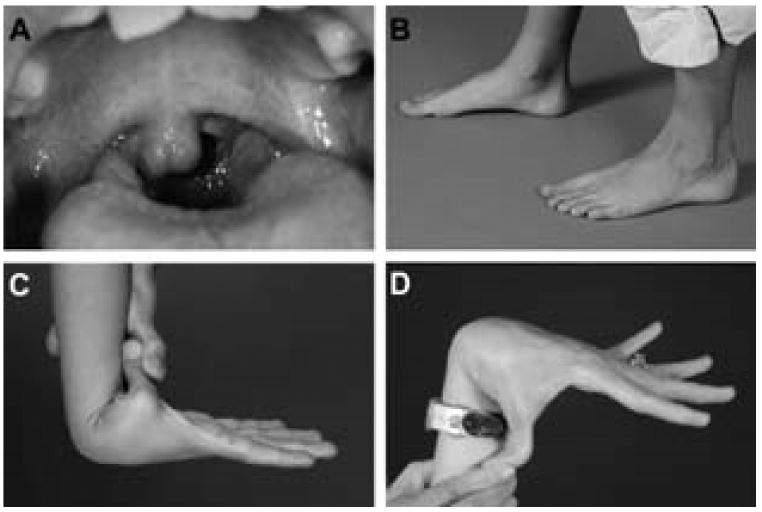
References
-
- Armen TA, Vandse R, Bickle K, Nathan N. Three-dimensional echocardiographic evaluation of an incidental quadricuspid aortic valve. Eur J Echocardiogr. 2008;9(2):318–20. - PubMed
-
- Beighton P, De Paepe A, Steinmann B, Tsipouras P, Wenstrup RJ. Ehlers-Danlos syndromes: revised nosology, Villefranche, 1997. Ehlers-Danlos National Foundation (USA) and Ehlers-Danlos Support Group (UK) Am J Med Genet. 1998;77(1):31–7. - PubMed
-
- Bristow J, Carey W, Egging D, Schalkwijk J. Tenascin-X, collagen, elastin, and the Ehlers-Danlos syndrome. Am J Med Genet C Semin Med Genet. 2005;139C(1):24–30. - PubMed
-
- Burch GH, Bedolli MA, McDonough S, Rosenthal SM, Bristow J. Embryonic expression of tenascin-X suggests a role in limb, muscle, and heart development. Dev Dyn. 1995;203(4):491–504. - PubMed
-
- Burch GH, Gong Y, Liu W, Dettman RW, Curry CJ, Smith L, Miller WL, Bristow J. Tenascin-X deficiency is associated with Ehlers-Danlos syndrome. Nat Genet. 1997;17(1):104–8. - PubMed
Publication types
MeSH terms
Substances
Grants and funding
LinkOut - more resources
Full Text Sources
Medical
Molecular Biology Databases
Research Materials
Miscellaneous
