


Pharmacokinetics and brain uptake of a genetically engineered bifunctional fusion antibody targeting the mouse transferrin receptor
- PMID: 19921848
- PMCID: PMC2858389
- DOI: 10.1021/mp900235k
Pharmacokinetics and brain uptake of a genetically engineered bifunctional fusion antibody targeting the mouse transferrin receptor
Abstract
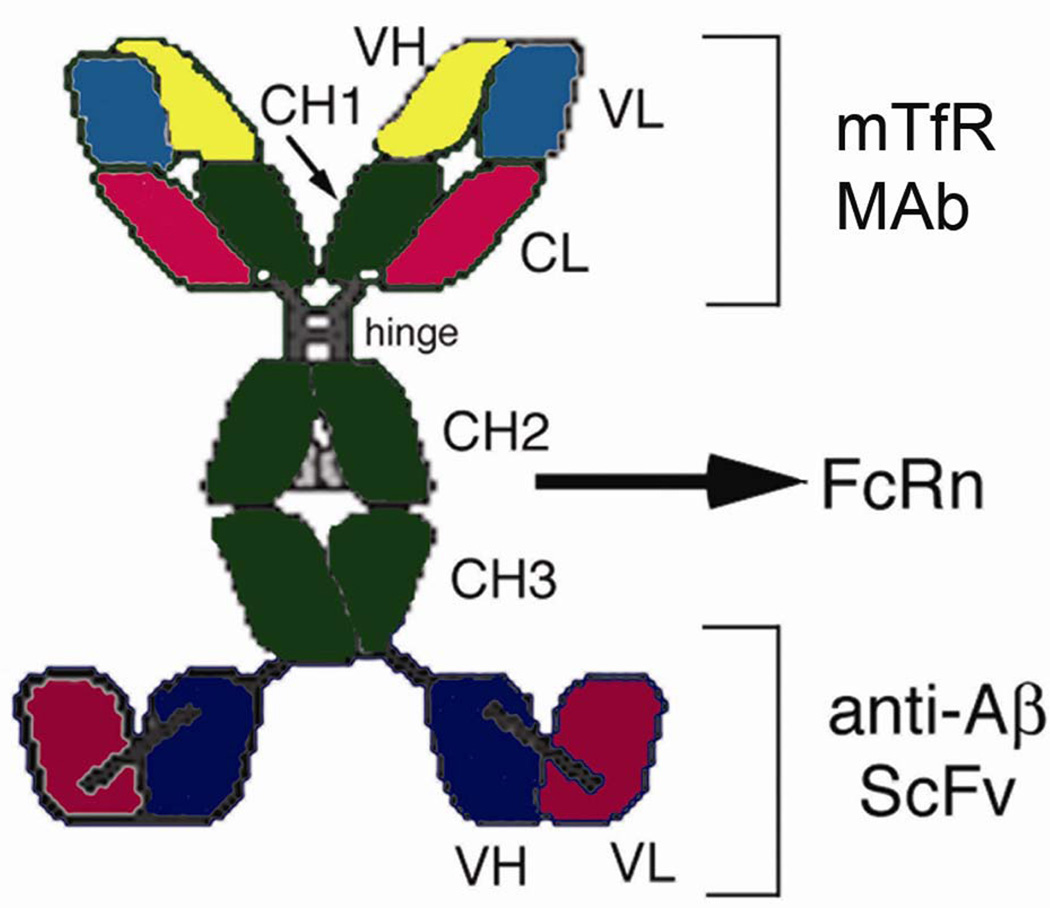
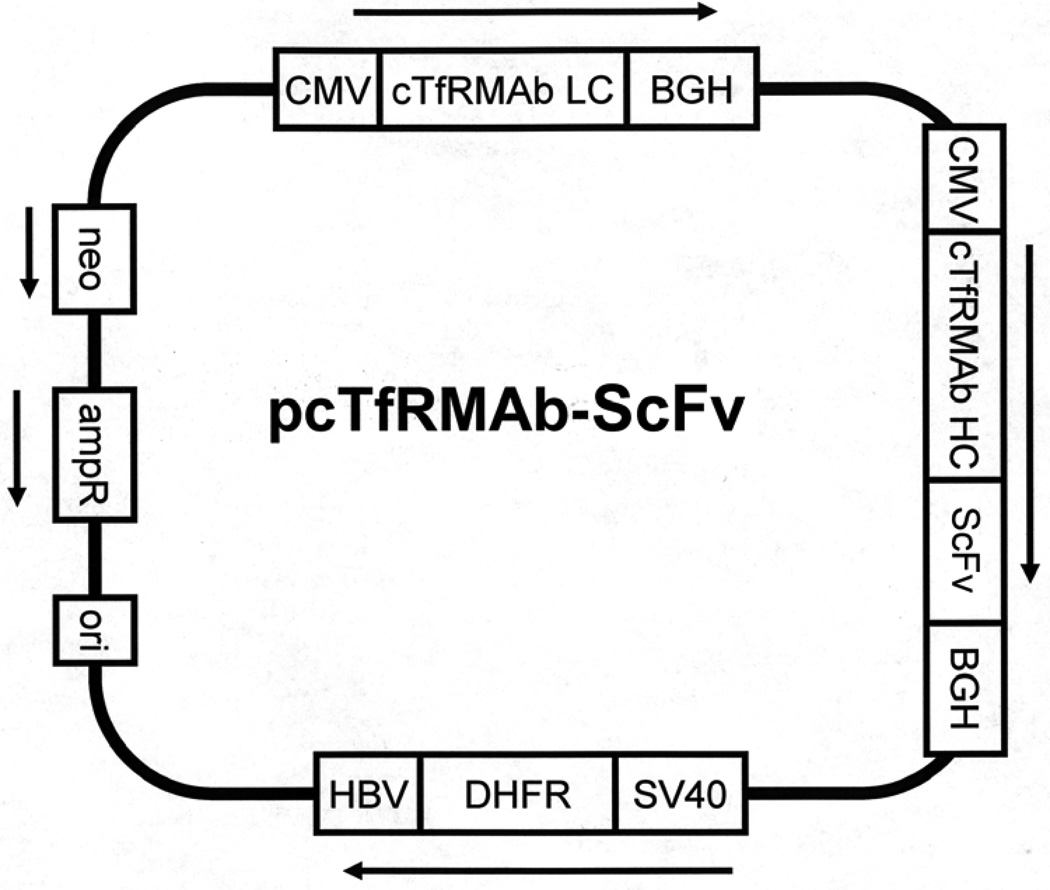
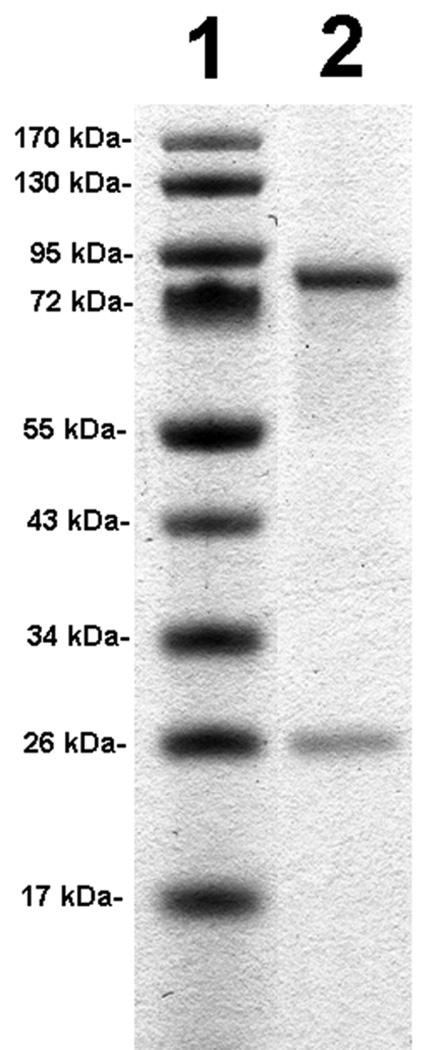
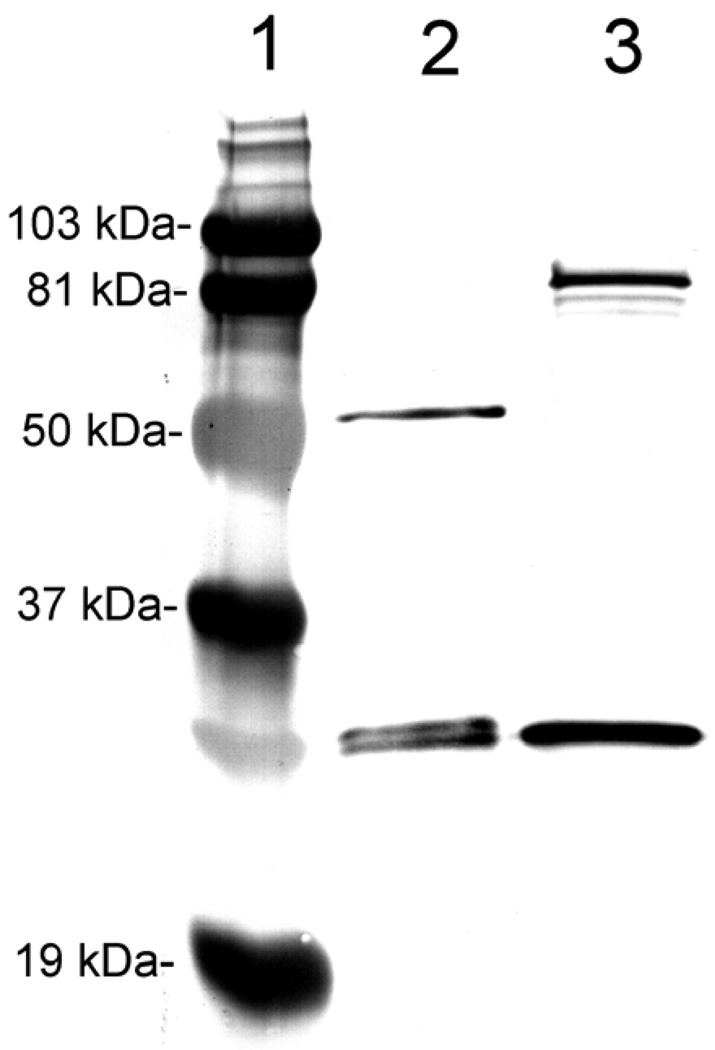
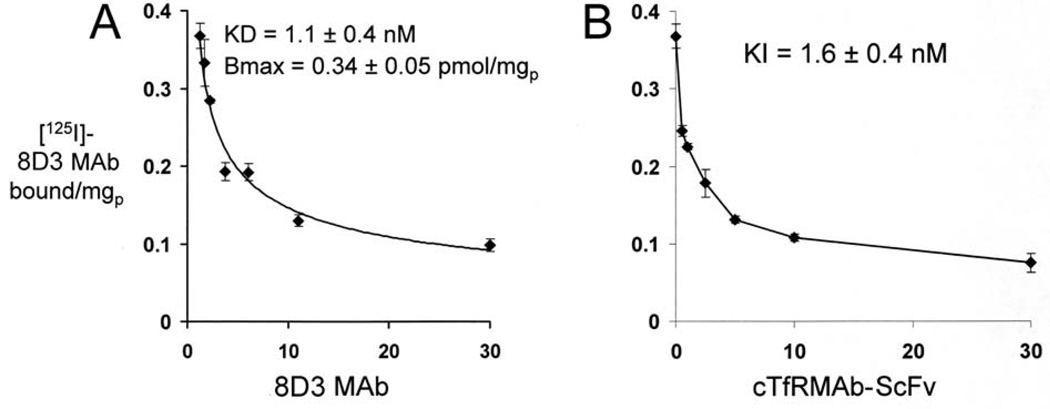
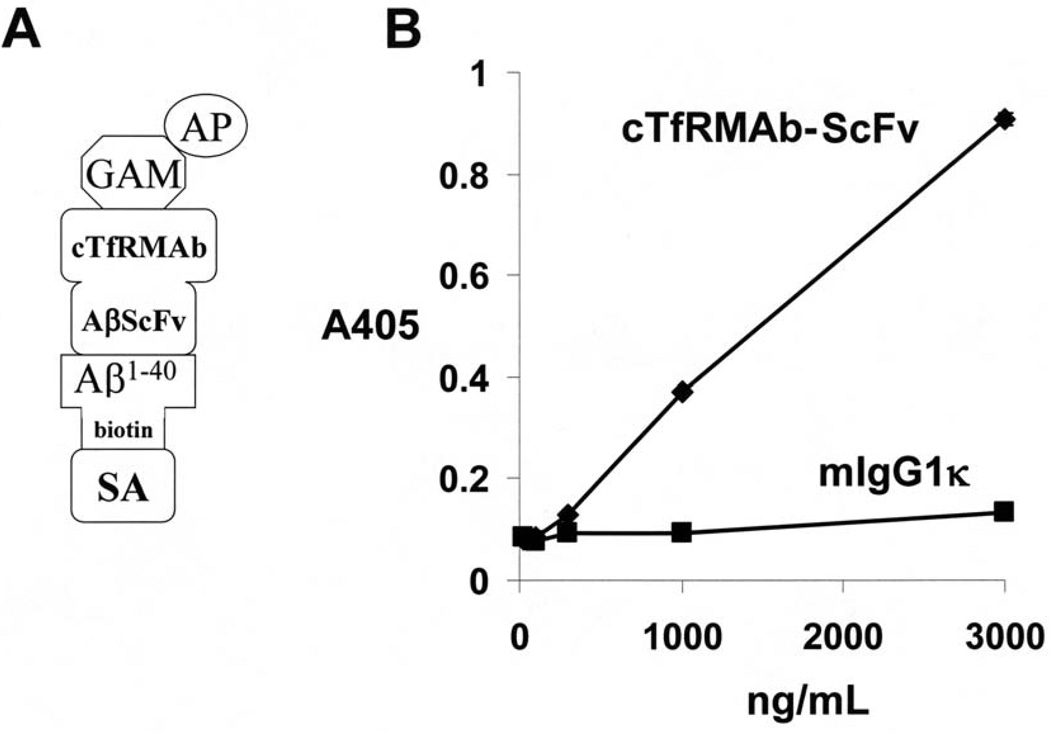
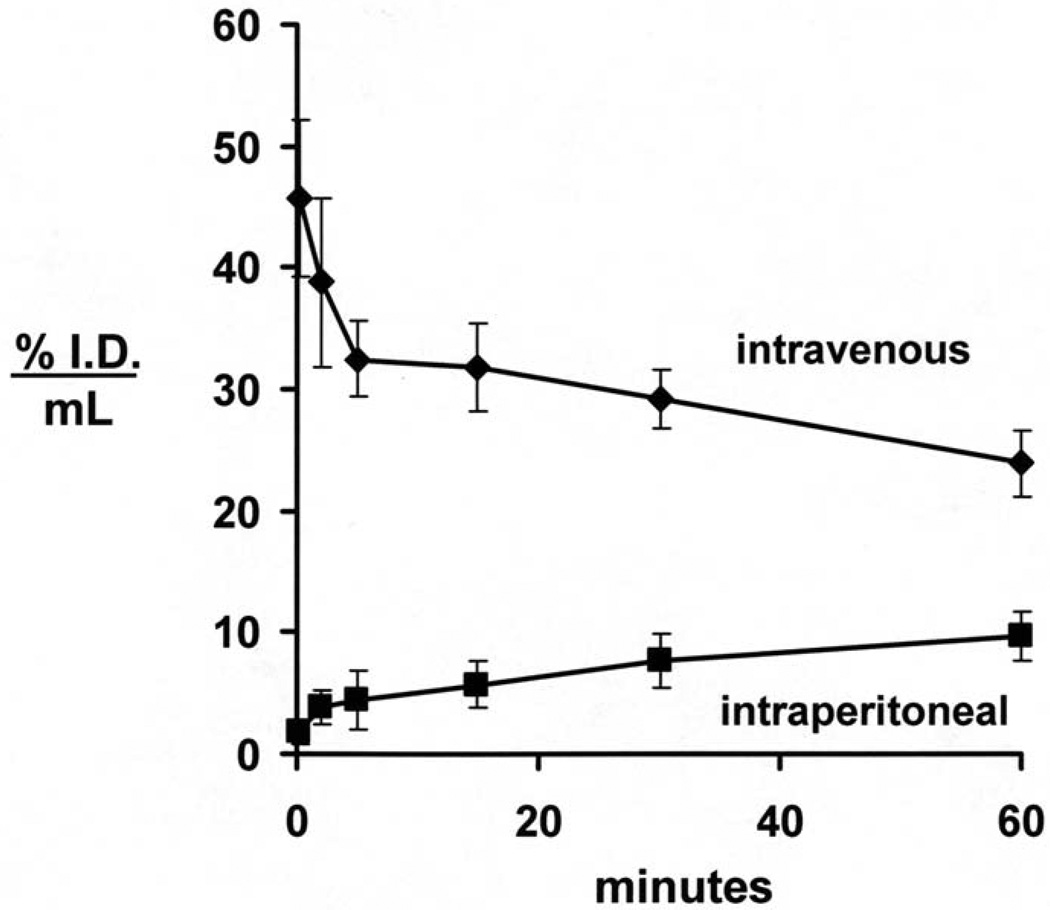
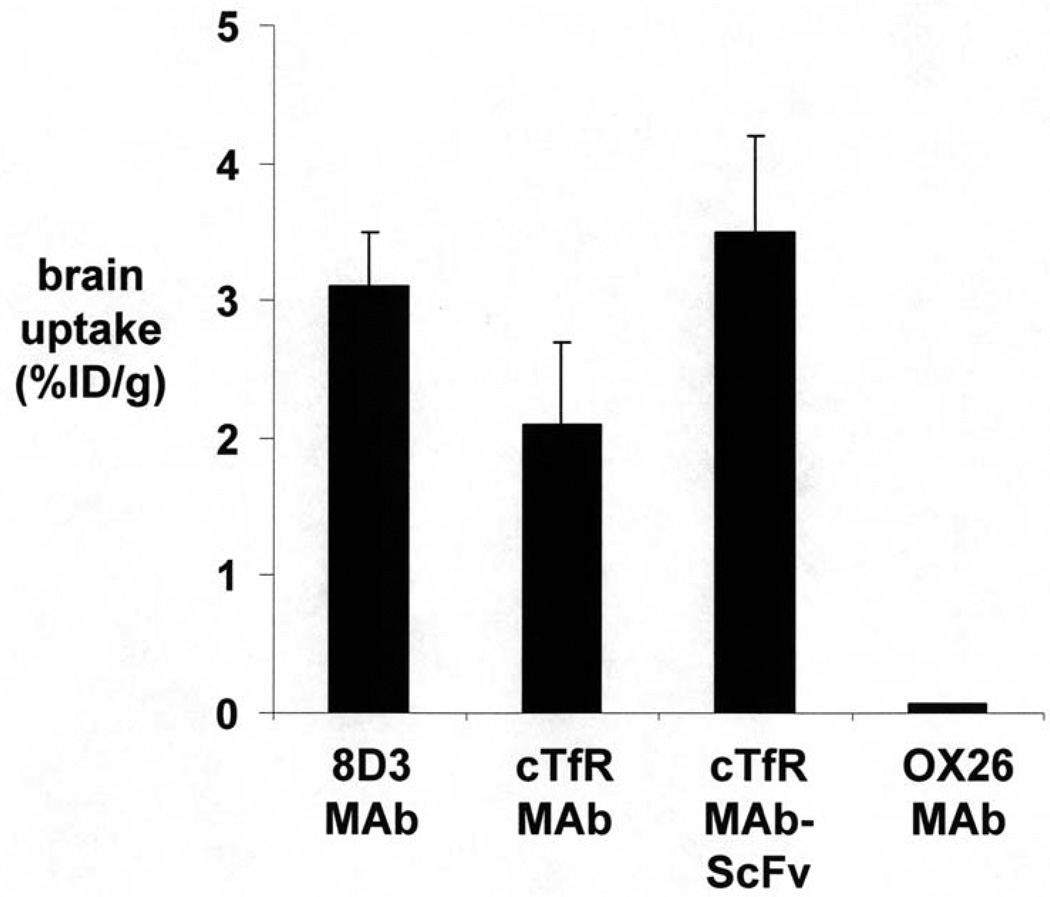
Monoclonal antibodies (MAbs) are potential new therapeutics for brain diseases. However, MAbs do not cross the blood-brain barrier (BBB). The present work describes the genetic engineering of a fusion protein composed of a therapeutic single chain Fv (ScFv) antibody and a mouse/rat chimeric MAb against the mouse transferrin receptor (TfR). The TfRMAb acts as a molecular Trojan horse to ferry the therapeutic ScFv across the BBB in vivo in the mouse. The ScFv is fused to the carboxyl terminus of the heavy chain of the chimeric TfRMAb, and this fusion protein is designated cTfRMAb-ScFv. Chinese hamster ovary cells were permanently transfected, and a high secreting cell line in serum free medium was cloned. The cTfRMAb-ScFv fusion protein was purified to homogeneity on gels and Western blotting with protein G affinity chromatography. The cTfRMAb-ScFv fusion protein was bifunctional and bound both the target antigen, as determined by ELISA, and the mouse TfR, as determined with a radio-receptor assay. The cTfRMAb-ScFv fusion protein was radio-iodinated with the Bolton-Hunter reagent, and a pharmacokinetics study in mice showed that the fusion protein was rapidly cleared from blood with a median residence time of 175 +/- 32 min. The fusion protein was avidly taken up by brain with a % injected dose (ID)/g of 3.5 +/- 0.7, as compared to an MAb with no receptor specificity, which was 0.06 +/- 0.01% ID/g. These studies demonstrate that therapeutic MAbs may be re-engineered as fusion proteins with BBB molecular Trojan horses for targeted delivery across the BBB in vivo.
Figures
References
-
- Pardridge WM. Re-engineering biopharmaceuticals for delivery to brain with molecular Trojan horses. Bioconjug. Chem. 2008;19:1327–1338. - PubMed
-
- Pardridge WM, Kang Y-S, Buciak JL, Yang J. Human insulin receptor monoclonal antibody undergoes high affinity binding to human brain capillaries in vitro and rapid transcytosis through the blood-brain barrier in vivo in the primate. Pharm. Res. 1995;12:807–816. - PubMed
-
- Skarlatos S, Yoshikawa T, Pardridge WM. Transport of [125I]transferrin through the rat blood-brain barrier in vivo. Brain Res. 1995;683:164–171. - PubMed
-
- Lee HJ, Engelhardt B, Lesley J, Bickel U, Pardridge WM. Targeting rat anti-mouse transferrin receptor monoclonal antibodies through blood-brain barrier in mouse. J. Pharmacol. Exp. Ther. 2000;292:1048–1052. - PubMed
Publication types
MeSH terms
Substances
Grants and funding
LinkOut - more resources
Full Text Sources
Other Literature Sources
