


Regulation of protein stability by GSK3 mediated phosphorylation
- PMID: 19923896
- PMCID: PMC2824240
- DOI: 10.4161/cc.8.24.10111
Regulation of protein stability by GSK3 mediated phosphorylation
Abstract
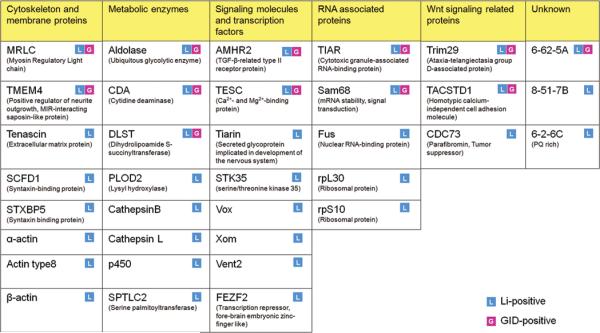
Glycogen synthase kinase-3 (GSK3) plays important roles in numerous signaling pathways that regulate a variety of cellular processes including cell proliferation, differentiation, apoptosis and embryonic development. In the canonical Wnt signaling pathway, GSK3 phosphorylation mediates proteasomal targeting and degradation of beta-catenin via the destruction complex. We recently reported a biochemical screen that discovered multiple additional protein substrates whose stability is regulated by Wnt signaling and/or GSK3 and these have important implications for Wnt/GSK3 regulation of different cellular processes.(1) In this article, we also present a bio-informatics based screen for proteins whose stability may be controlled by GSK3 and beta-Trcp, the SCF E3 ubiquitin ligase that is responsible for beta-catenin degradation in the Wnt signaling pathway. Furthermore, we review various GSK3 regulated proteolysis substrates described in the literature. We propose that GSK3 phosphorylation dependent proteolysis is a widespread mechanism that the cell employs to regulate a variety of cell processes in response to signals.
Figures
References
MeSH terms
Substances
Grants and funding
LinkOut - more resources
Full Text Sources
