. 2009 Nov 18;4(11):e7836.
doi: 10.1371/journal.pone.0007836.

Mutations in H5N1 influenza virus hemagglutinin that confer binding to human tracheal airway epithelium

Affiliations

Mutations in H5N1 influenza virus hemagglutinin that confer binding to human tracheal airway epithelium

Guadalupe Ayora-Talavera et al. PLoS One. .

Abstract

The emergence in 2009 of a swine-origin H1N1 influenza virus as the first pandemic of the 21st Century is a timely reminder of the international public health impact of influenza viruses, even those associated with mild disease. The widespread distribution of highly pathogenic H5N1 influenza virus in the avian population has spawned concern that it may give rise to a human influenza pandemic. The mortality rate associated with occasional human infection by H5N1 virus approximates 60%, suggesting that an H5N1 pandemic would be devastating to global health and economy. To date, the H5N1 virus has not acquired the propensity to transmit efficiently between humans. The reasons behind this are unclear, especially given the high mutation rate associated with influenza virus replication. Here we used a panel of recombinant H5 hemagglutinin (HA) variants to demonstrate the potential for H5 HA to bind human airway epithelium, the predominant target tissue for influenza virus infection and spread. While parental H5 HA exhibited limited binding to human tracheal epithelium, introduction of selected mutations converted the binding profile to that of a current human influenza strain HA. Strikingly, these amino-acid changes required multiple simultaneous mutations in the genomes of naturally occurring H5 isolates. Moreover, H5 HAs bearing intermediate sequences failed to bind airway tissues and likely represent mutations that are an evolutionary "dead end." We conclude that, although genetic changes that adapt H5 to human airways can be demonstrated, they may not readily arise during natural virus replication. This genetic barrier limits the likelihood that current H5 viruses will originate a human pandemic.


Conflict of interest statement

Competing Interests: The authors have declared that no competing interests exist.

Figures

Figure 1
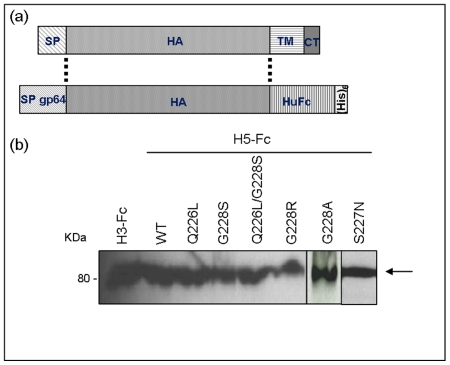
Figure 1. Expression of recombinant HA-Fc proteins.
(A) Recombinant baculoviruses encoding HA from a recent H3N2 human virus, (A/Panama/2007/99) or from a highly pathogenic H5N1 avian influenza virus (A/Vietnam/1194/04), were generated as previously described . The HA proteins were expressed as soluble proteins secreted from infected Sf9 cells by removing the HA transmembrane (TM) and cytoplasmic tail (CT) portions of the protein and replacing the HA signal peptide (SP) with the signal peptide of the baculovirus envelope protein gp64 (SP gp64). The HA proteins were tagged at the C-terminus by a human Fc (HuFc) and hexa-histidine (His6) tags. (B) All recombinant HA proteins were expressed at similar levels as determined by western blot analysis using an anti-human Fc antibody.
Figure 2
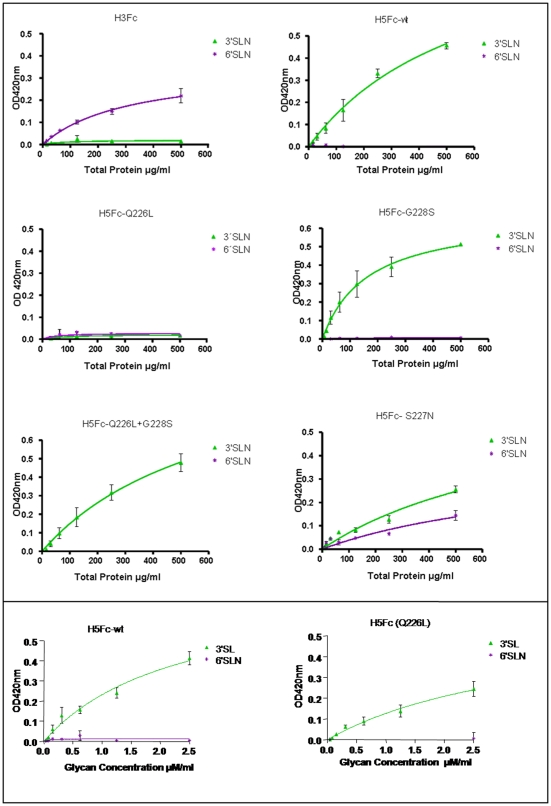
Figure 2. Binding of recombinant HA proteins to synthetic receptor ligands 3SLN (avian receptor) and 6SLN (human receptor) in a solid phase assay.
(A) Synthetic glycans on polyacrylamide linkers were immobilized on 96-well plates following UV treatment. Recombinant HA proteins were preformed into higher order complexes by incubation with anti-human Fc before incubation on the plate and detection with goat anti-human IgG conjugated to horse-radish peroxidise (HRP). (B) Recombinant HA-Fc proteins were adsorbed on 96 well plates coated with anti-human Fc antibody. Synthetic glycans on polyacrylamide linkers with biotin tags (6SLN and 3SL) were incubated on the plates and detected with Streptavidin – HRP conjugate.
Figure 3
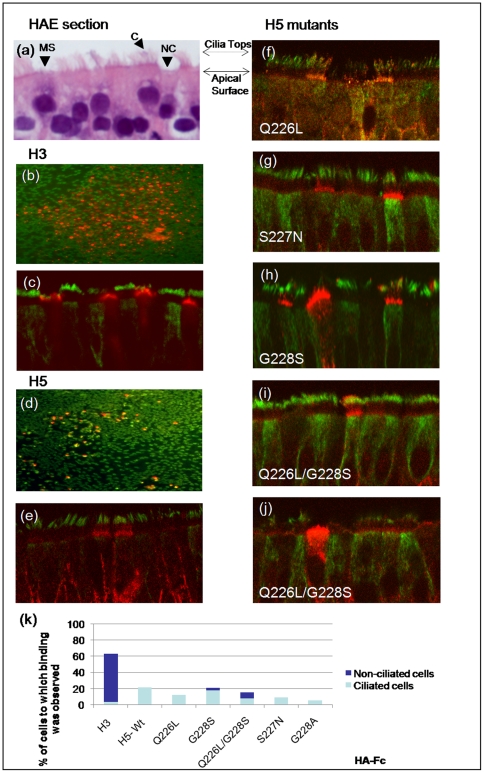
Figure 3. Recombinant HA proteins bind to human airway epithelial (HAE) cultures.
(A) Morphological features of HAE cultures visualized by H&E counterstain. Cell types present include ciliated cells (C), mucin-secreting cells (MS) and non-ciliated cells (NC). HAE cultures were probed with recombinant HA proteins from human H3 (A/Panama/2007/99) (B,C) or avian H5 (A/Vietnam/1194/04) (D,E) viruses either directly to the apical surface of fixed cultures (B,D) or to histological sections (C,E). Receptor binding site mutants of H5 HA (F–J) were also analysed for binding to histological sections. Ciliated cells were identified using anti acetylated α-tubulin (green) and the HA-Fc proteins were visualized with anti human-Fc (red). Images are representative of cell-type binding seen in experiments. (K) Numbers and types of epithelial cells bound by HA proteins were quantified by counting 100–200 total cells from five different fields of view.
Figure 4
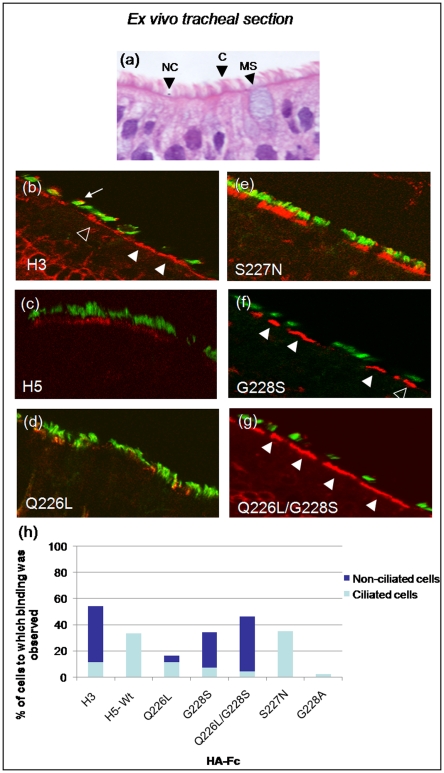
Figure 4. Recombinant HA proteins bind to human tracheal airway epithelium.
(A) Morphological features of human tracheal airway epithelium ex vivo visualized by H&E counterstain indicating cell-types present: (C) ciliated cell, (NC) non-ciliated cell, (MS) mucin secreting cell. Histological sections of ex vivo human tracheal tissue were probed with recombinant HA proteins cloned from human H3 (B), or avian H5 (C) influenza viruses or with H5 HA receptor binding mutants (D–G). Ciliated cells are identified with anti acetylated α-tubulin (green) and the HA-Fc proteins detected with anti human-Fc (red). White arrows indicate cells that exhibit HA binding. Open arrowheads indicate ciliated cells with HA binding, solid arrowheads indicate non-ciliated cells with HA binding and the small arrow indicates binding to tops of cilia. These are representative images and similar patterns were seen in repeated experiments. (H) Numbers and types of epithelial cells bound by HA proteins were quantified by counting 100–200 total cells from five different fields of view.
Figure 5
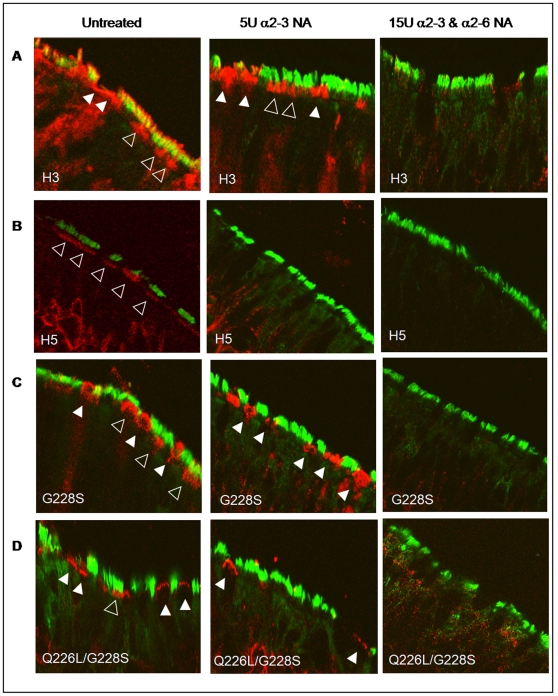
Figure 5. Recombinant HA proteins from human and avian influenza viruses bind ex vivo human tracheal epithelium in a sialic acid dependant manner.
Histological sections of ex vivo human tracheal epithelium were probed with human H3 (A), avian H5 (B) or H5 mutants, (C) G228S, and (D) Q226L/G228S, with and without prior neuraminidase (NA) treatment. Slides were pre-incubated for 3 hours with 5 units of recombinant NA cloned from Salmonella typhimurium LT2 (NEBL) that shows a 260-fold preference for α2-3 over α2-6 linked SA or with 15 units of recombinant NA cloned from Clostridium perfringens (NEBL) that cleaves both α2-3 and α2-6 SA linkages. HA was detected as before using anti-human Fc (red) and anti-acetylated α-tubulin was used to indicate ciliated cells (green). White arrows indicate cells that exhibit HA binding. Open arrowheads indicate ciliated cells with HA binding; solid arrowheads indicate non-ciliated cells with HA binding.
Figure 6
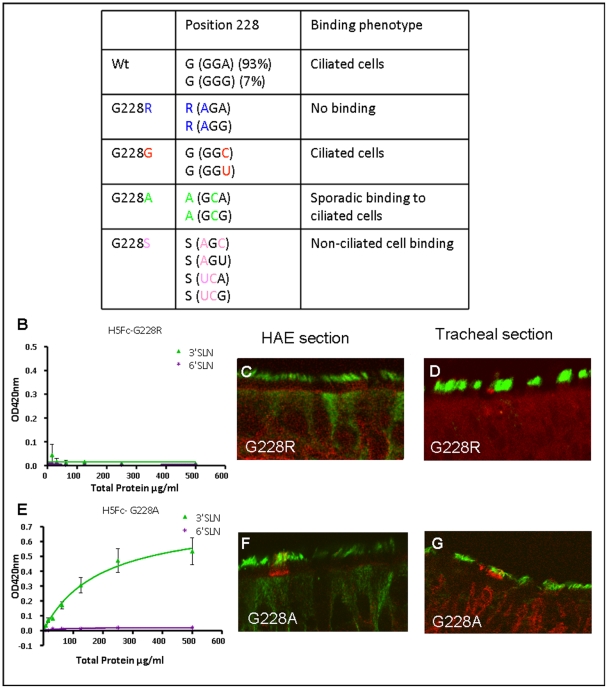
Figure 6. Nucleotide sequence changes required to switch H5 HA receptor binding preference.
(A) Analysis of codon usage by 1374 H5 influenza viruses indicates that codon 228 is GGA in 93% strains and GGG in 7%. The table illustrates transversions and transitions by which coding capacity at this residue might change from glycine to serine. The ability of the two intermediate mutants 228R (B) and 228A (E) recombinant HA proteins to bind synthetic receptor ligands 3SLN (avian receptor) and 6SLN (human receptor) in a solid phase assay was assessed. The binding phenotype on HAE (C,F) or human tracheal epithelium (D,G) by recombinant proteins with each amino acid sequence changed at residue 228 are shown (C,D) G228R and (F,G) G228A.

References

    1. WHO. 2009. Pandemic (H1N1) 2009 - update 63.
    1. WHO. 2009. Cumulative Number of Confirmed Human Cases of Avian Influenza A/(H5N1) Reported to WHO.
    1. de Jong MD, Simmons CP, Thanh TT, Hien VM, Smith GJ, et al. Fatal outcome of human influenza A (H5N1) is associated with high viral load and hypercytokinemia. Nat Med. 2006;12:1203–1207. - PMC - PubMed
    1. Kuiken T, Holmes EC, McCauley J, Rimmelzwaan GF, Williams CS, et al. Host species barriers to influenza virus infections. Science. 2006;312:394–397. - PubMed
    1. van Riel D, Munster VJ, de Wit E, Rimmelzwaan GF, Fouchier RA, et al. Human and avian influenza viruses target different cells in the lower respiratory tract of humans and other mammals. Am J Pathol. 2007;171:1215–1223. - PMC - PubMed

Publication types