


Evaluating the cost-effectiveness of rabies post-exposure prophylaxis: a case study in Tanzania
- PMID: 19925948
- PMCID: PMC3272373
- DOI: 10.1016/j.vaccine.2009.09.027
Evaluating the cost-effectiveness of rabies post-exposure prophylaxis: a case study in Tanzania
Abstract
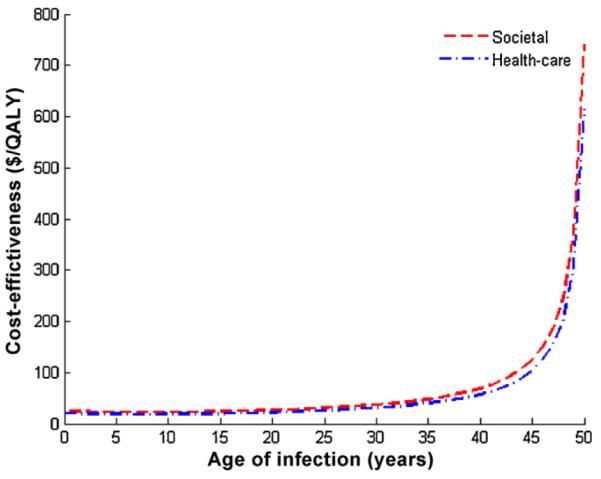
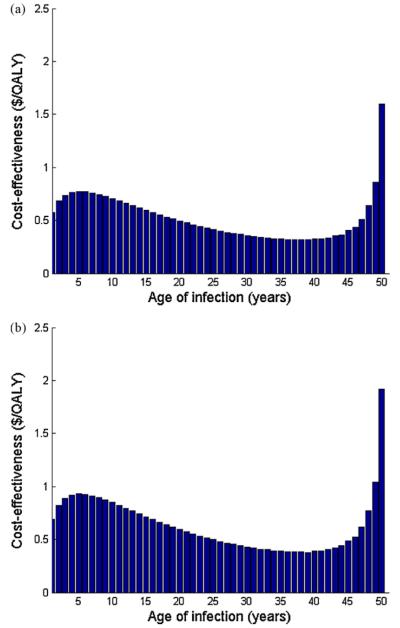
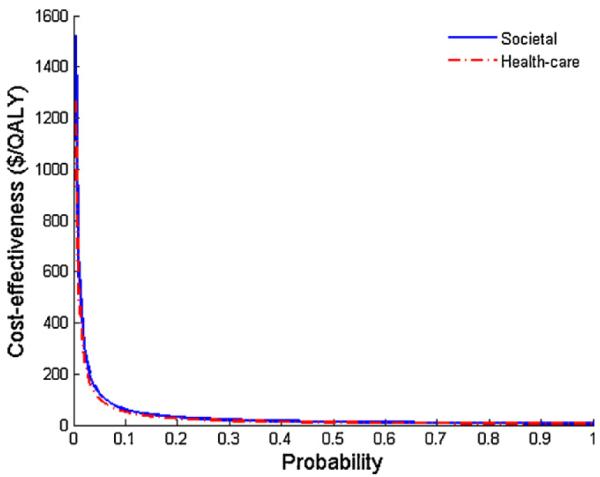
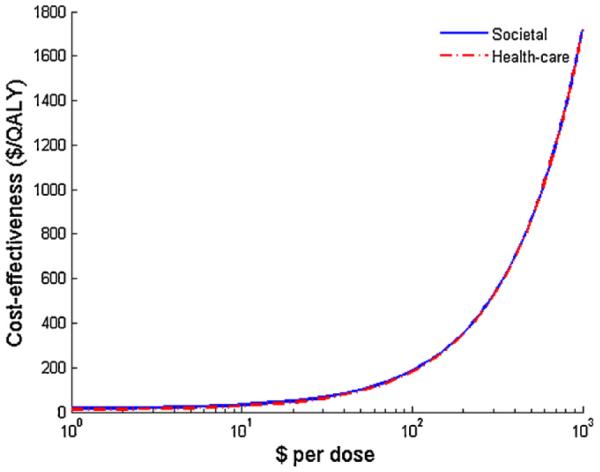
Although fatal if untreated, human rabies can be prevented through post-exposure prophylaxis (PEP), which involves a course of vaccination and immunoglobulin administered immediately after exposure. However, high costs and frequent lack of rabies vaccine and immunoglobulin lead to about 55,000 deaths per year worldwide. Using data from a detailed study of rabies in Tanzania, we calculate a cost-effectiveness ratio for PEP when the WHO-recommended Essen regimen, a 5-dose intramuscular vaccination schedule, is adopted. Our analyses indicate a cost-effectiveness ratio for PEP of $27/quality-adjusted life year (QALY) from a health care perspective and $32/QALY from a societal perspective in Tanzania. From both perspectives, it is "very cost-effective" to administer PEP to patients bitten by an animal suspected to be rabid. Moreover, PEP remains "very cost-effective" provided that at least 1% of doses are administered to people who were actually exposed to rabies.
Figures
References
-
- Dhankhar P, Vaidya SA, Fishbien DB, Meltzer MI. Cost effectiveness of rabies post exposure prophylaxis in the United States. Vaccine. 2008;26(August (33):4251–5. - PubMed
-
- Manning SE, Rupprecht CE, Fishbein D, Hanlon CA, Lumlertdacha B, Guerra M, et al. Human rabies prevention—United States, 2008 recommendations of the Advisory Committee on Immunization Practices. MMWR Recomm Rep. 2008;57(May (RR-3):1–28. - PubMed
Publication types
MeSH terms
Substances
Grants and funding
LinkOut - more resources
Full Text Sources
Medical
Miscellaneous
