


Stress-induced obesity and the emotional nervous system
- PMID: 19926299
- PMCID: PMC2831158
- DOI: 10.1016/j.tem.2009.10.004
Stress-induced obesity and the emotional nervous system
Abstract
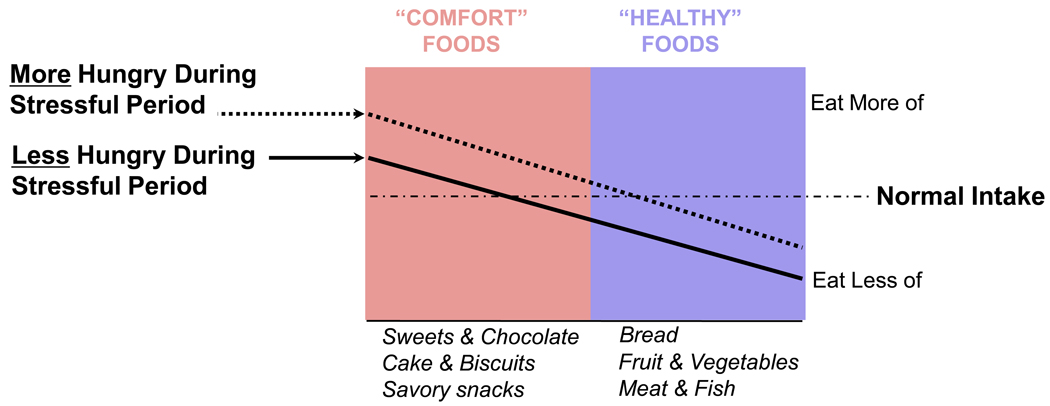
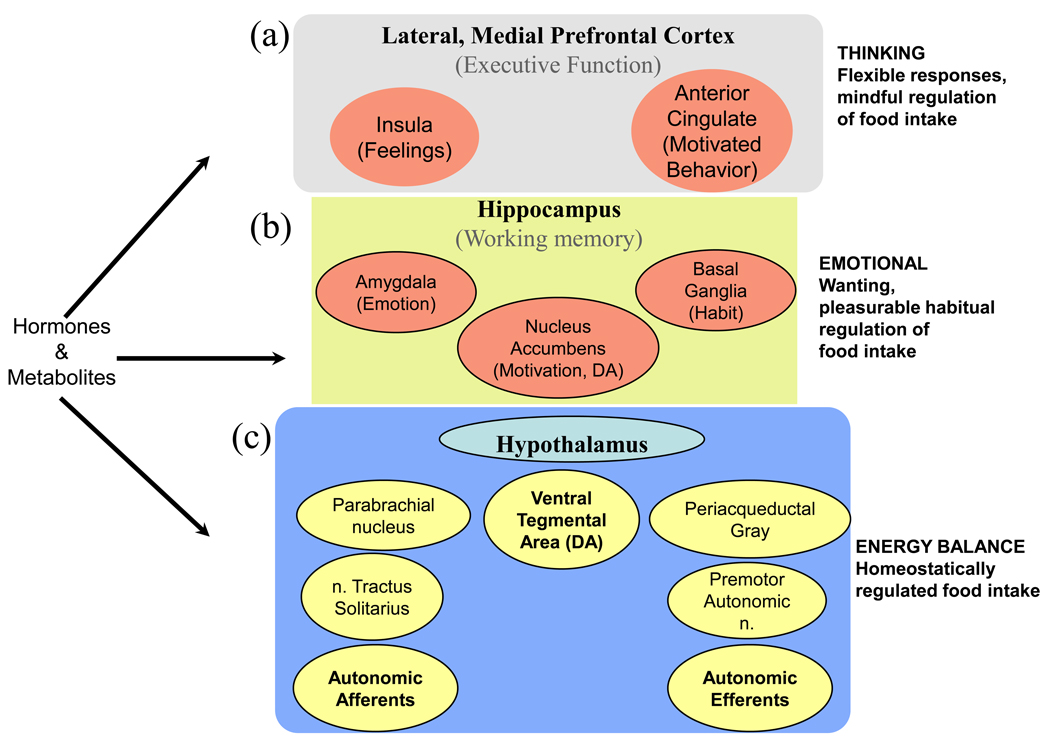
Stress and emotional brain networks foster eating behaviors that can lead to obesity. The neural networks underlying the complex interactions among stressors, body, brain and food intake are now better understood. Stressors, by activating a neural stress-response network, bias cognition toward increased emotional activity and degraded executive function. This causes formed habits to be used rather than a cognitive appraisal of responses. Stress also induces secretion of glucocorticoids, which increases motivation for food, and insulin, which promotes food intake and obesity. Pleasurable feeding then reduces activity in the stress-response network, reinforcing the feeding habit. These effects of stressors emphasize the importance of teaching mental reappraisal techniques to restore responses from habitual to thoughtful, thus battling stress-induced obesity.
Copyright 2009 Elsevier Ltd. All rights reserved.
Figures
References
-
- Flier JS, et al. Obesity wars: molecular progress confronts an expanding epidemic. Cell. 2004;116(2):337–350. - PubMed
-
- Brunner EJ, Chandola T, Marmot MG. Prospective effect of job strain on general and central obesity in the Whitehall II Study. Am J Epidemiol. 2007;165(7):828–837. - PubMed
-
- Eriksson J, et al. Obesity from cradle to grave. Int J Obes Relat Metab Disord. 2003;27(6):722–727. - PubMed
-
- Ogden CL, Carroll MD, Flegal KM. High Body Mass Index for Age Among US Children and Adolescents, 2003–2006. JAMA. 2008;299(20):2401–2405. - PubMed
-
- Ogden CL, et al. Prevalence of Overweight and Obesity in the United States, 1999–2004. JAMA. 2006;295(13):1549–1555. - PubMed
Publication types
MeSH terms
Substances
Grants and funding
LinkOut - more resources
Full Text Sources
Other Literature Sources
Medical
