


Review
doi: 10.1016/j.cbpa.2009.10.022.
Epub 2009 Nov 18.
NIR dyes for bioimaging applications
Affiliations
- PMID: 19926332
- PMCID: PMC2819555
- DOI: 10.1016/j.cbpa.2009.10.022
Item in Clipboard
Review
NIR dyes for bioimaging applications
Curr Opin Chem Biol.
2010 Feb.
Abstract
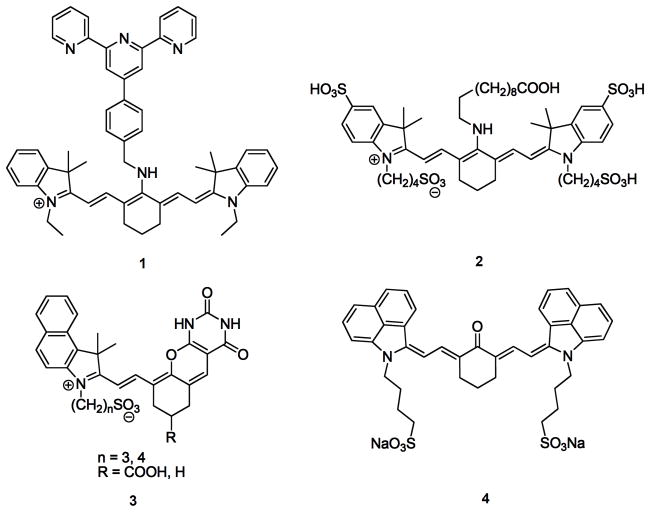
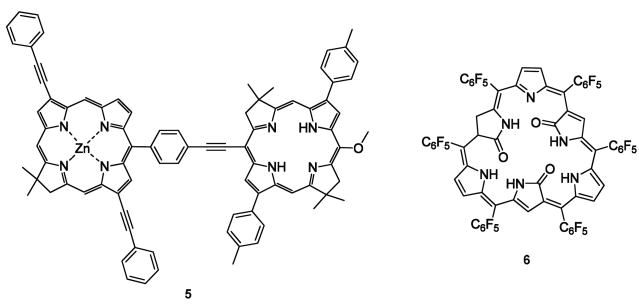
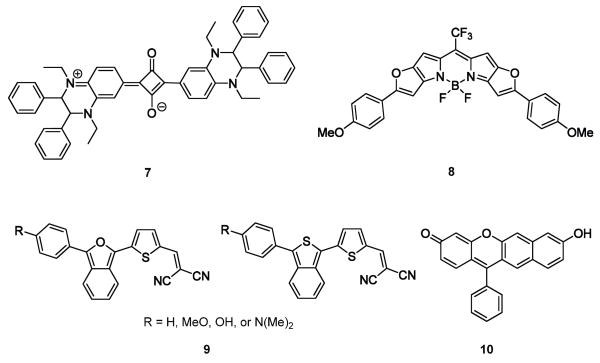
Fluorescent dyes based on small organic molecules that function in the near infrared (NIR) region are of great current interest in chemical biology. They allow for imaging with minimal autofluorescence from biological samples, reduced light scattering, and high tissue penetration. Herein, examples of ongoing NIR fluorophore design strategies as well as their properties and anticipated applications relevant to the bioimaging are presented.
2009 Elsevier Ltd. All rights reserved.
References
-
- Fischer GM, Isomaki-Krondahl M, Gottker-Schnetmann I, Daltrozzo E, Zumbusch A. Pyrrolopyrrole cyanine dyes: a new class of near-infrared dyes and fluorophores. Chem Eur J. 2009;15:4857–4864. - PubMed
-
- Tang B, Yu F, Li P, Tong LL, Duan X, Xie T, Wang X. A near-infrared neutral pH fluorescent probe for monitoring minor pH changes: imaging in living HepG2 and HL-7702 cells. J Am Chem Soc. 2009;131:3016–3023. - PubMed
-
- Leevy WM, Gammon ST, Johnson JR, Lampkins AJ, Jiang H, Marquez M, Piwnica-Worms D, Suckow MA, Smith BD. Noninvasive optical imaging of staphylococcus aureus bacterial infection in living mice using a bis-dipicolylamine-zinc(II) affinity group conjugated to a near-infrared fluorophore. Bioconjugate Chem. 2008;19:686–692. The authors created a robust imaging probe combining a carbocyanine with zinc(II) dipicolylamine (Zn-DPA) for the detection of localized S. aureus infection. The probe is easily visualized at a leg infection site within 3 hours of administration. - PMC - PubMed
Publication types
MeSH terms
Substances
Grants and funding
LinkOut - more resources
Full Text Sources
Other Literature Sources
Miscellaneous
