


Millisecond light pulses make mice stop running, then display prolonged sleep-like behavior in the absence of light
- PMID: 19926809
- PMCID: PMC2853800
- DOI: 10.1177/0748730409349059
Millisecond light pulses make mice stop running, then display prolonged sleep-like behavior in the absence of light
Abstract
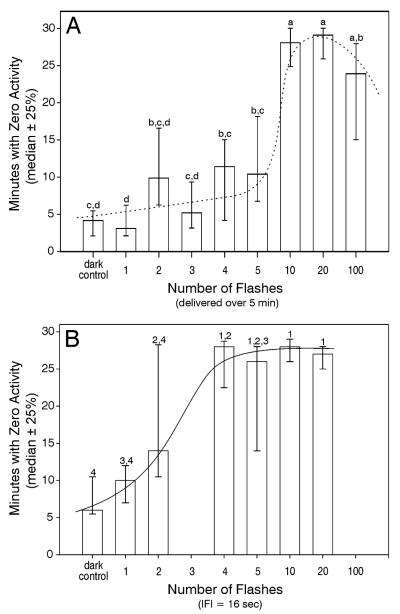
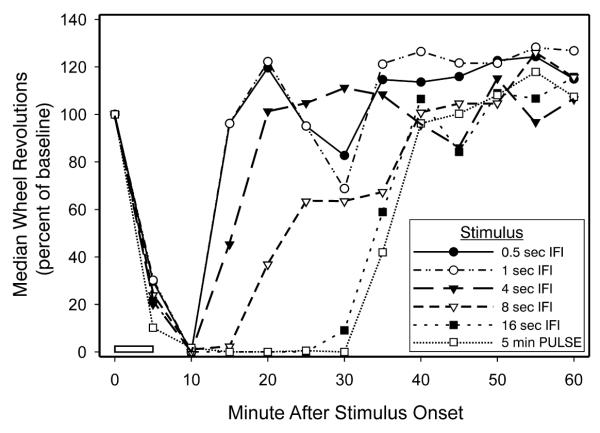
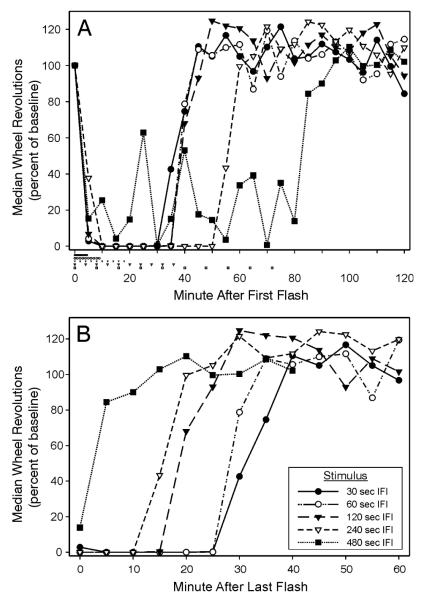
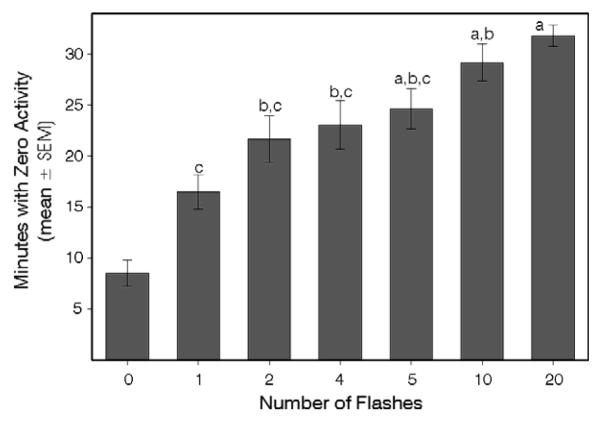
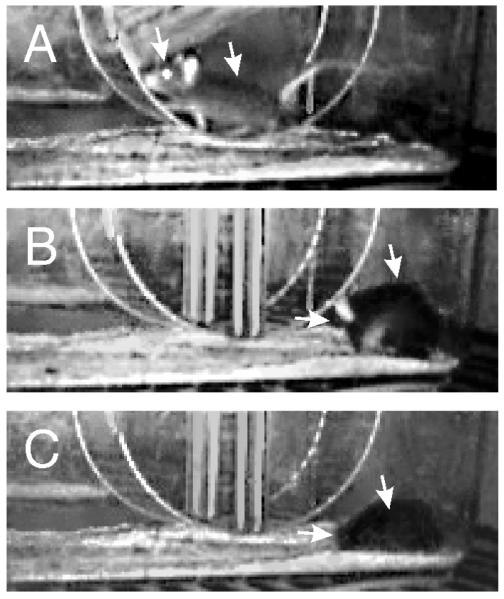
Masking, measured as a decrease in nocturnal rodent wheel running, is a visual system response to rod/cone and retinal ganglion cell photoreception. Here, the authors show that a few milliseconds of light are sufficient to initiate masking, which continues for many minutes without additional photic stimulation. C57J/B6 mice were tested using flash stimuli previously shown to elicit large circadian rhythm phase shifts. Ten flashes, 2 msec each and equally distributed over 5 min, activate locomotor suppression that endures for an additional 25 to 35 min in the dark and does not differ in magnitude or duration from that elicited by 5-min saturating light pulse. Locomotor activity by mice without access to running wheels is also suppressed by light flashes. The effects of various light flash patterns on mouse locomotor suppression are similar to those previously described for hamster phase shifts. Video analysis of active mice indicates that light flashes initiated at ZT13 rapidly induce an interval of behavioral quiescence that lasts about 10 min at which time the animals assume a typical sleep posture that is maintained for an additional 25 min. Thus, the period coincident with light-induced wheel running suppression appears to consist of two distinct behavioral states, one interval during which locomotor quiescence is initiated and maintained, followed by a second interval characterized by behavioral sleep. Given this sequence effected by light stimulation, we suggest that it be referred to as "photosomnolence," the term reflecting upon both the nature of the stimulus and the associated behavioral change.
Figures
References
-
- Albers HE, Lydic R, Moore-Ede MC. Entrainment and masking of circadian drinking rhythms in primates: influence of light intensity. Physiol Behav. 1982;28:205–211. - PubMed
-
- Aschoff J. Exogenous and endogenous components in circadian rhythms. Cold Spring Harbor Symp Quant Biol. 1960;25:11–27. - PubMed
-
- Baver SB, Pickard GE, Sollars PJ, Pickard GE. Two types of melanopsin retinal ganglion cell differentially innervate the hypothalamic suprachiasmatic nucleus and the olivary pretectal nucleus. Eur J Neurosci. 2008;27:1763–1770. - PubMed
-
- Bergmann BM, Winter JB, Rosenberg RS, Rechtschaffen A. NREM sleep with low-voltage EEG in the rat. Sleep. 1987;10:1–11. - PubMed
Publication types
MeSH terms
Grants and funding
LinkOut - more resources
Full Text Sources
