


Dysregulation of intracellular dopamine stores revealed in the R6/2 mouse striatum
- PMID: 19929911
- PMCID: PMC3999965
- DOI: 10.1111/j.1471-4159.2009.06501.x
Dysregulation of intracellular dopamine stores revealed in the R6/2 mouse striatum
Abstract
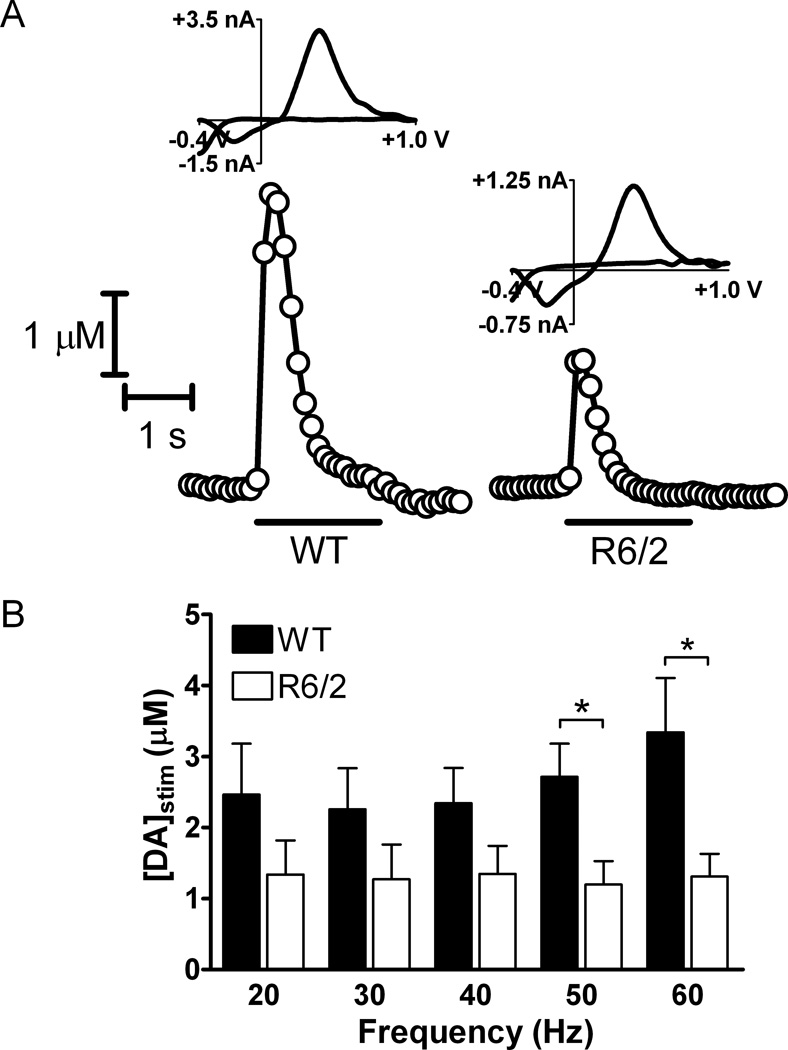
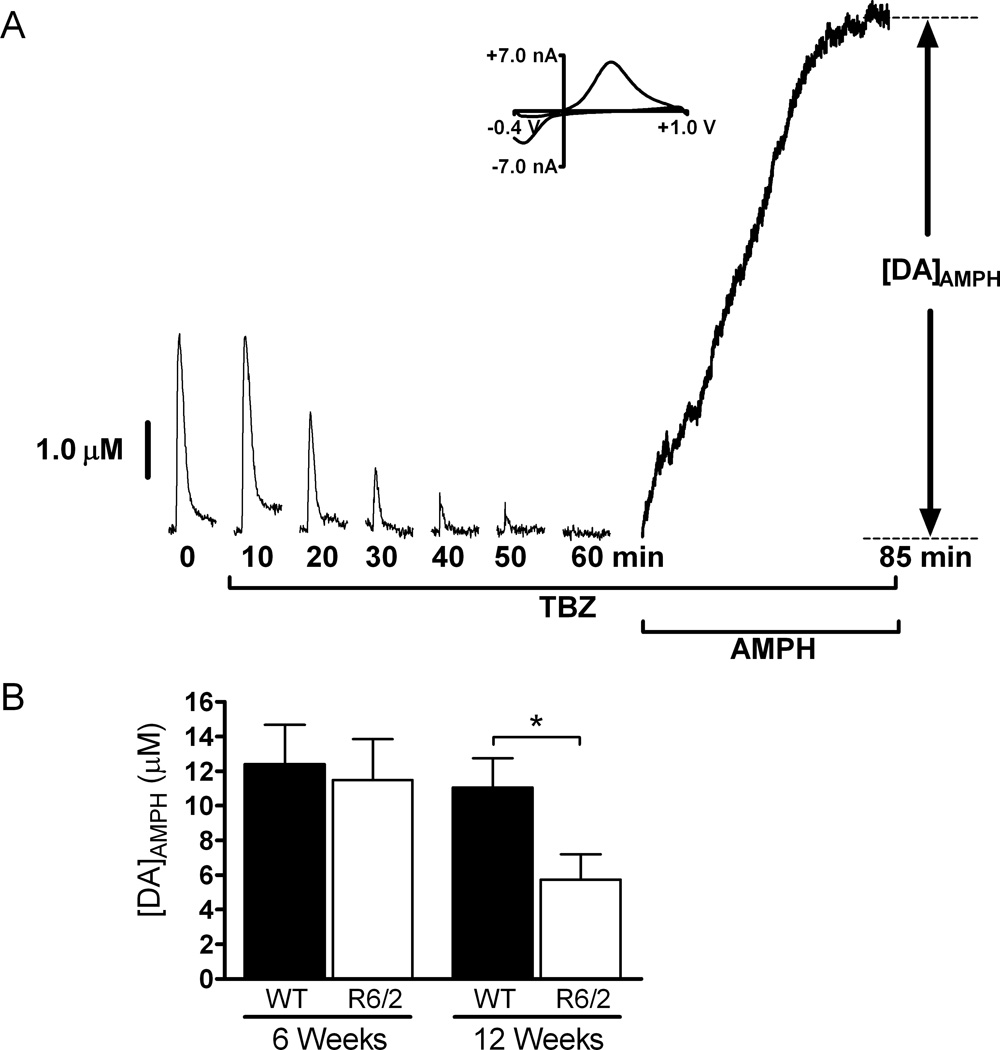
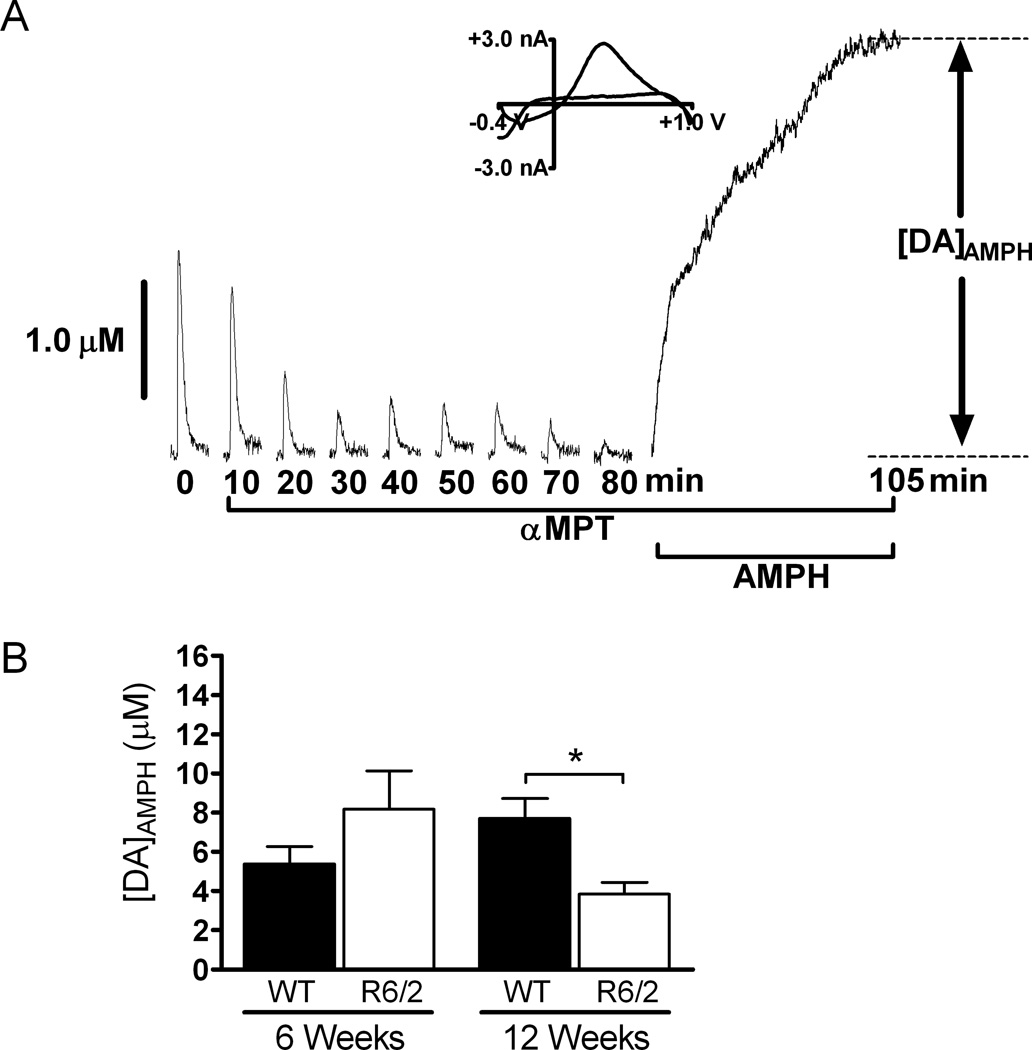
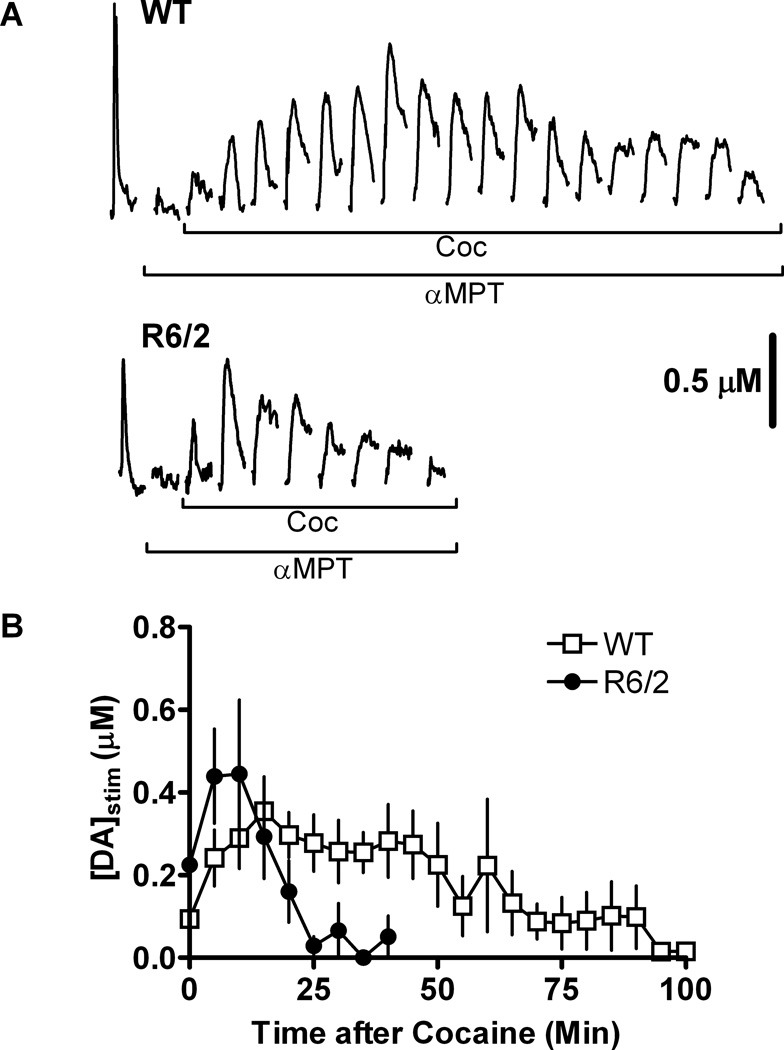
Huntington's disease (HD) is a fatal, neurodegenerative movement disorder characterized by preferential and extensive striatal degeneration. Here, we used fast-scan cyclic voltammetry to study the mobilization and efflux of reserve pool dopamine (DA) in striatal brain slices from HD model R6/2 mice. When applying stimulus trains of 120 pulses, evoked DA release in wild-type (WT) slices was greater than that in R6/2 slices at the higher frequencies (50 and 60 Hz). To quantify cytosolic and reserve pool DA levels, amphetamine-induced DA efflux was measured after pre-treatment with either tetrabenazine or alpha-methyl-p-tyrosine. Slices from 12-week-old R6/2 mice released less DA than slices from WT mice, while no difference was noted in slices from 6-week old mice. The vesicular release of reserve pool DA, mobilized by treatment with cocaine, was shorter lived in R6/2 slices compared with WT slices even though peak DA release was the same. Moreover, the number of DA reserve pool vesicles in R6/2 mice was less than half of that in WT. Therefore, our data suggest that the same number of DA molecules are present in each reserve pool vesicle in WT and R6/2 mice and that these vesicles are readily mobilized in both genotypes; however, R6/2 mice have fewer DA reserve pool vesicles available for mobilization.
Figures
References
-
- Abercrombie ED, Russo ML. Program Number 195.12. in Society for Neuroscience. 2002. Orlando, FL: 2002. Neurochemistry in the R6/2 Transgenic Mouse Model of Huntington's Disease.
-
- Bates GP, Harper PS, Jones L. Huntington's Disease. Oxford: Oxford University Press; 2002.
-
- Cooper JK, Schilling G, Peters MF, et al. Truncated N-terminal fragments of huntingtin with expanded glutamine repeats form nuclear and cytoplasmic aggregates in cell culture. Hum Mol Genet. 1998;7:783–790. - PubMed
Publication types
MeSH terms
Substances
Grants and funding
LinkOut - more resources
Full Text Sources
Other Literature Sources
Molecular Biology Databases
