


Classification of voluntary cough sound and airflow patterns for detecting abnormal pulmonary function
- PMID: 19930559
- PMCID: PMC2789703
- DOI: 10.1186/1745-9974-5-8
Classification of voluntary cough sound and airflow patterns for detecting abnormal pulmonary function
Abstract
Background: Involuntary cough is a classic symptom of many respiratory diseases. The act of coughing serves a variety of functions such as clearing the airways in response to respiratory irritants or aspiration of foreign materials. It has been pointed out that a cough results in substantial stresses on the body which makes voluntary cough a useful tool in physical diagnosis.
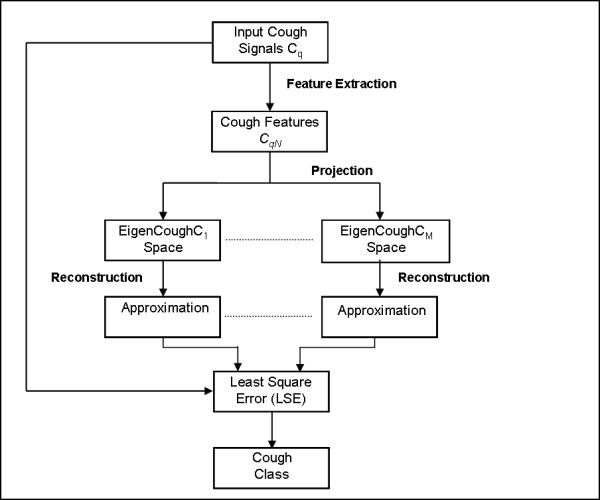
Methods: In the present study, fifty-two normal subjects and sixty subjects with either obstructive or restrictive lung disorders were asked to perform three individual voluntary coughs. The objective of the study was to evaluate if the airflow and sound characteristics of a voluntary cough could be used to distinguish between normal subjects and subjects with lung disease. This was done by extracting a variety of features from both the cough airflow and acoustic characteristics and then using a classifier that applied a reconstruction algorithm based on principal component analysis.
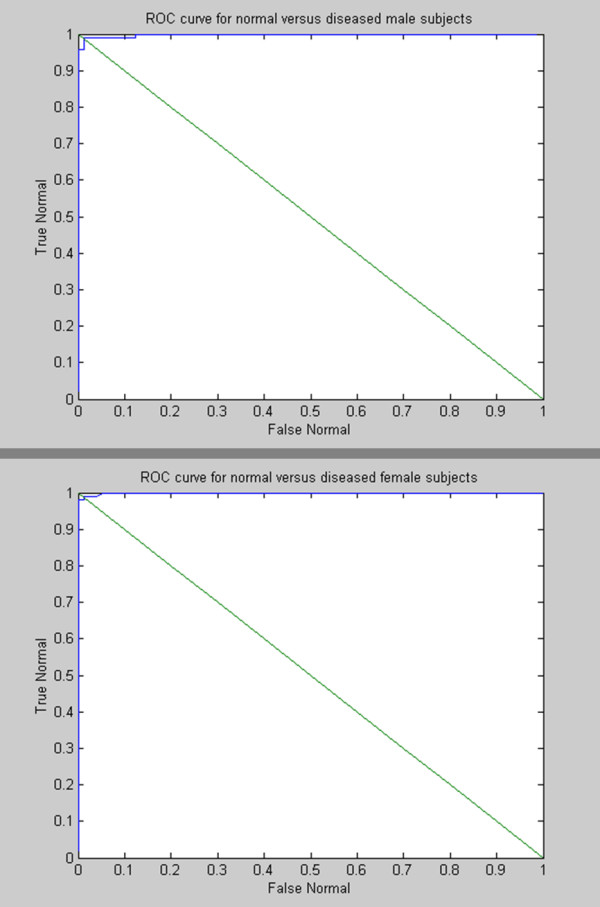
Results: Results showed that the proposed method for analyzing voluntary coughs was capable of achieving an overall classification performance of 94% and 97% for identifying abnormal lung physiology in female and male subjects, respectively. An ROC analysis showed that the sensitivity and specificity of the cough parameter analysis methods were equal at 98% and 98% respectively, for the same groups of subjects.
Conclusion: A novel system for classifying coughs has been developed. This automated classification system is capable of accurately detecting abnormal lung function based on the combination of the airflow and acoustic properties of voluntary cough.
Figures
References
-
- Korpas J, Tomori Z. Cough and other Respiratory reflexes. Karger. 1979.
LinkOut - more resources
Full Text Sources
Other Literature Sources
