


Dynamics of growth and weight transitions in a pediatric cohort from India
- PMID: 19930643
- PMCID: PMC2784800
- DOI: 10.1186/1475-2891-8-55
Dynamics of growth and weight transitions in a pediatric cohort from India
Abstract
Background: There is paucity of information regarding time trends of weight status in children from rapidly developing economies like India. The aim of the study was to analyse the dynamics of growth and weight transitions in a cohort of school children from India.
Methods: A population of 25 228 children was selected using stratified random sampling method from schools in a contiguous area in Ernakulam District, Kerala, India. Weight and height were measured at two time points, one in 2003-04 and another in 2005-06. The paired data of 12 129 children aged 5-16 years were analysed for the study.
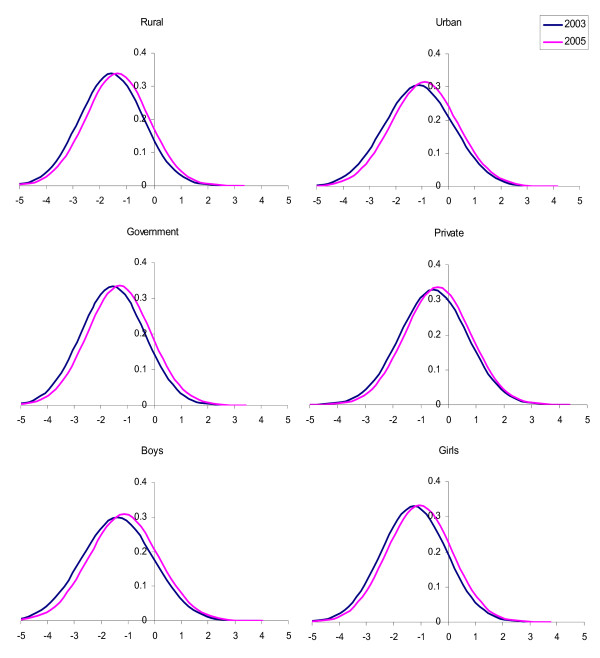
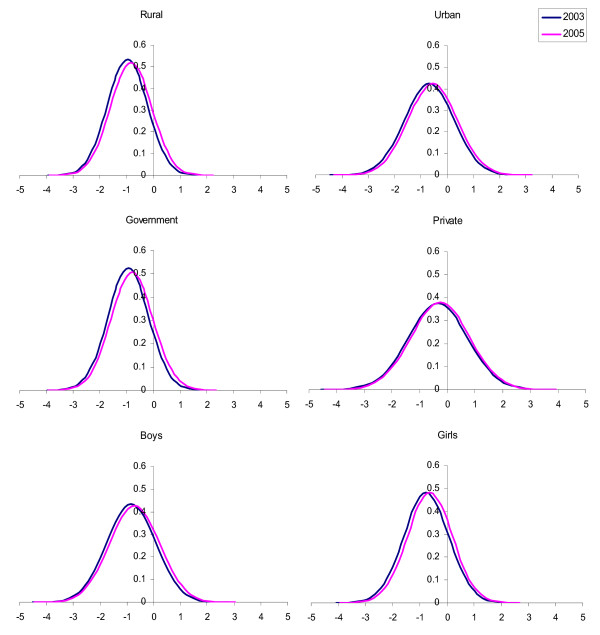
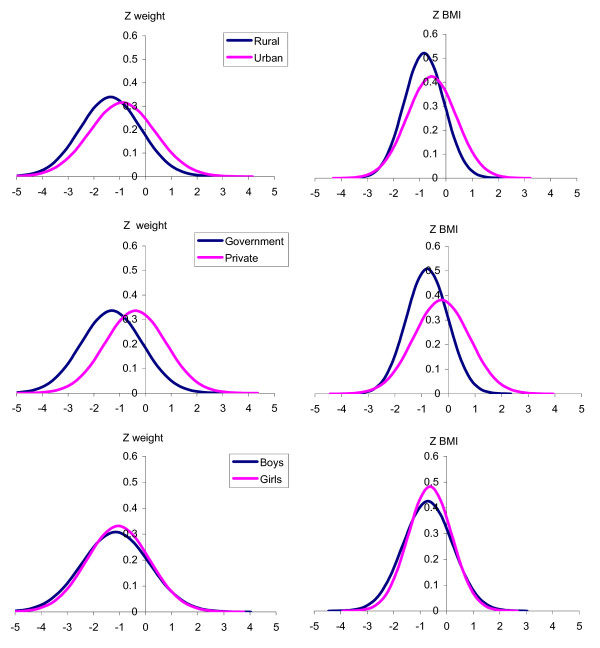
Results: The mean interval between the two surveys was 2.02 +/- 0.32 years. The percentage of underweight, normal weight, overweight and obese children in the year 2003-04 were 38.4%, 56.6%, 3.7%, and 1.3% respectively. The corresponding figures in year 2005-06 were 29.9%, 63.6%, 4.8% and 1.7% respectively. Among the underweight children, 34.8% migrated to normal weight status and 0.1% migrated to overweight status. Conversion of underweight to normal weight predominated in urban area and girls. Among the normal weight children, 8.6% migrated to underweight, 4.1% migrated to overweight and 0.4% migrated to obesity. Conversion of normal weight to overweight status predominated in urban area, private schools and boys. Conversion of normal weight to underweight predominated in rural area, government schools and boys. Among the overweight children, 26.7% migrated to normal weight status, 16.4% became obese and 56.9% retained their overweight status. Of the obese children, 6.2% improved to normal weight status, 25.3% improved to overweight status and 68.5% remained as obese in 2005-06. There was significant difference in trends between socio demographic subgroups regarding conversion of underweight status to normal weight as well as normal weight status to overweight.
Conclusion: The study population is experiencing rapid growth and nutritional transitions characterised by a decline in the underweight population coupled with an escalation of the overweight population. The heterogeneous nature of this transition appears to be due to differences in socio demographic factors.
Figures
References
Publication types
MeSH terms
LinkOut - more resources
Full Text Sources
