


Patterns of neural activity associated with differential acute locomotor stimulation to cocaine and methamphetamine in adolescent versus adult male C57BL/6J mice
- PMID: 19932887
- PMCID: PMC2814970
- DOI: 10.1016/j.neuroscience.2009.11.038
Patterns of neural activity associated with differential acute locomotor stimulation to cocaine and methamphetamine in adolescent versus adult male C57BL/6J mice
Abstract
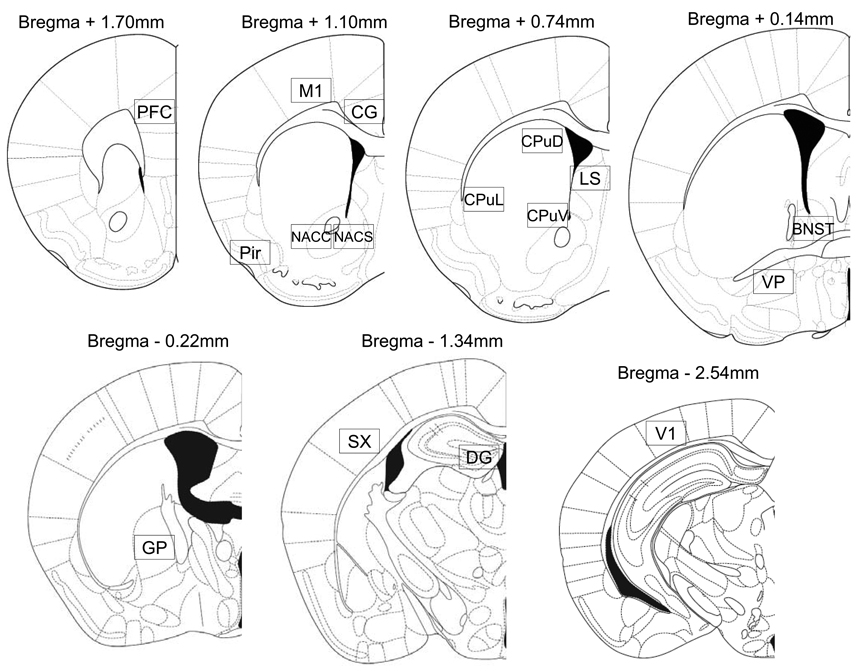
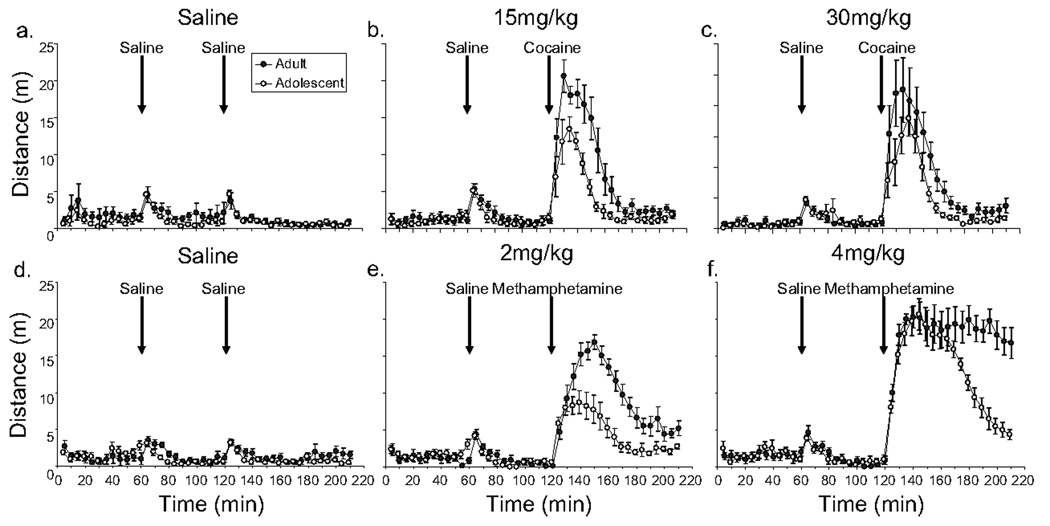
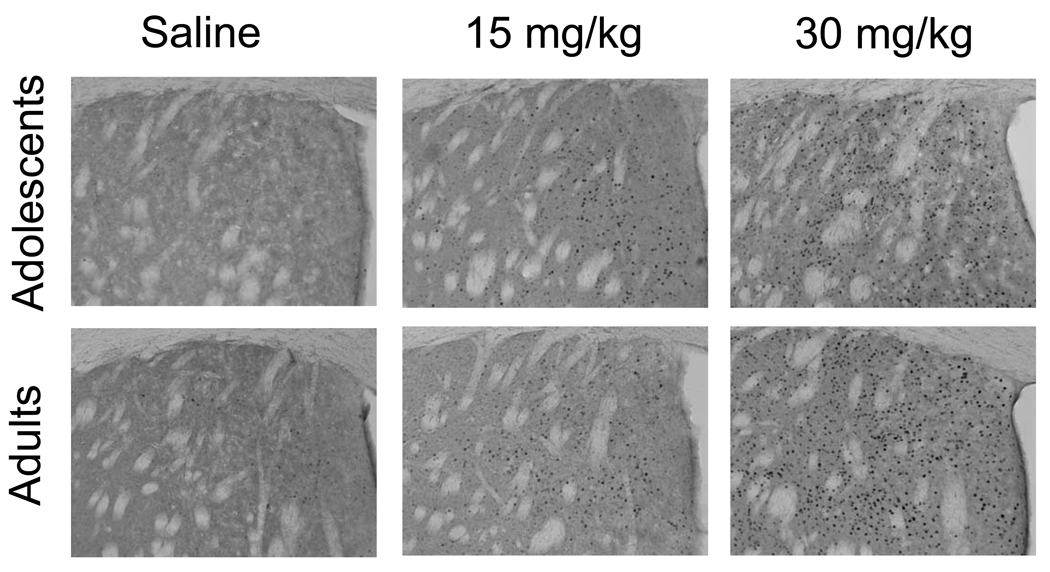
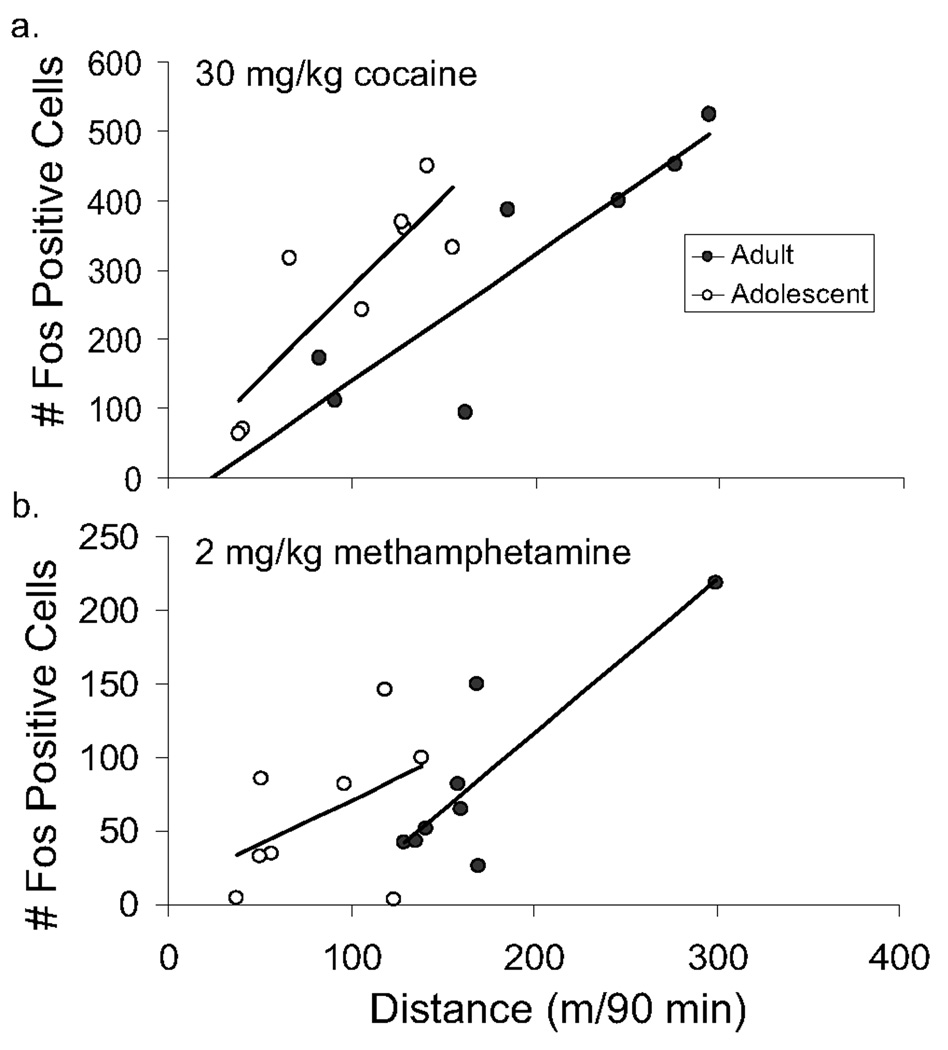
Adolescence is a time period when major changes occur in the brain with long-term consequences for behavior. One ramification is altered responses to drugs of abuse, but the specific brain mechanisms and implications for mental health are poorly understood. Here, we used a mouse model in which adolescents display dramatically reduced sensitivity to the acute locomotor stimulating effects of cocaine and methamphetamine. The goal was to identify key brain regions or circuits involved in the differential behavior. Male adolescent (postnatal day (PN), 30-35) and young adult (PN, 69-74) C57BL/6J mice were administered an i.p. injection of cocaine (0, 15, 30 mg/kg) or methamphetamine (0, 2, 4 mg/kg) and euthanized 90 min later. Locomotor activity was monitored continuously in the home cage by video tracking. Immunohistochemical detection of Fos protein was used to quantify neuronal activation in 16 different brain regions. As expected, adolescents were less sensitive to the locomotor stimulating effects of cocaine and methamphetamine as indicated by a rightward shift in the dose response relationship. After a saline injection, adolescents showed similar levels of Fos as adults in all regions except the dorsal caudate (CPuD) and lateral caudate (CPuL) where levels were lower in adolescents. Cocaine and methamphetamine dose dependently increased Fos in all brain regions sampled in both adolescents and adults, but Fos levels were similar in both age groups for a majority of regions and doses. Locomotor activity was correlated with Fos in several brain areas within adolescent and adult groups, and adolescents had a significantly greater induction of Fos for a given amount of locomotor activity in key brain regions including the caudate where they showed reduced Fos under baseline conditions. Future research will identify the molecular and cellular events that are responsible for the differential psychostimulant-induced patterns of brain activation and behavior observed in adolescent versus adult mice.
Figures
References
-
- Andersen SL, LeBlanc CJ, Lyss PJ. Maturational increases in c-fos expression in the ascending dopamine systems. Synapse. 2001;41:345–350. - PubMed
-
- Atkins AL, Helms ML, O'Toole LA, Belknap JK. Stereotypic behaviors in mice selectively bred for high and low methamphetamine-induced stereotypic chewing. Psychopharmacology (Berl) 2001;157:96–104. - PubMed
-
- Azar MR, Acar N, Erwin VG, Barbato GF, Morse AC, Heist CL, Jones BC. Distribution and clearance of cocaine in brain is influenced by genetics. Pharmacol Biochem Behav. 1998;59:637–640. - PubMed
-
- Badiani A, Oates MM, Day HE, Watson SJ, Akil H, Robinson TE. Environmental modulation of amphetamine-induced c-fos expression in D1 versus D2 striatal neurons. Behav Brain Res. 1999;103:203–209. - PubMed
-
- Bolam JP, Izzo PN, Graybiel AM. Cellular substrate of the histochemically defined striosome/matrix system of the caudate nucleus: a combined Golgi and immunocytochemical study in cat and ferret. Neuroscience. 1988;24:853–875. - PubMed
Publication types
MeSH terms
Substances
Grants and funding
LinkOut - more resources
Full Text Sources
Other Literature Sources
Medical
Research Materials
