Quantitative loci regulating plasma levels of gamma glutamyl transferase and albumin and their genetic correlations with cardiovascular risk factors
- PMID: 19934372
- PMCID: PMC2832911
- DOI: 10.3181/0903-RM-115
Quantitative loci regulating plasma levels of gamma glutamyl transferase and albumin and their genetic correlations with cardiovascular risk factors
Abstract
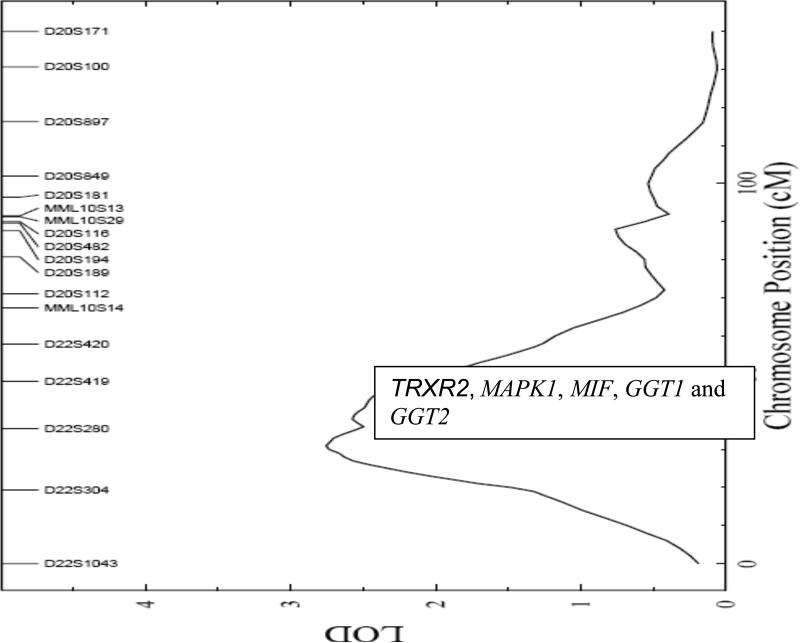
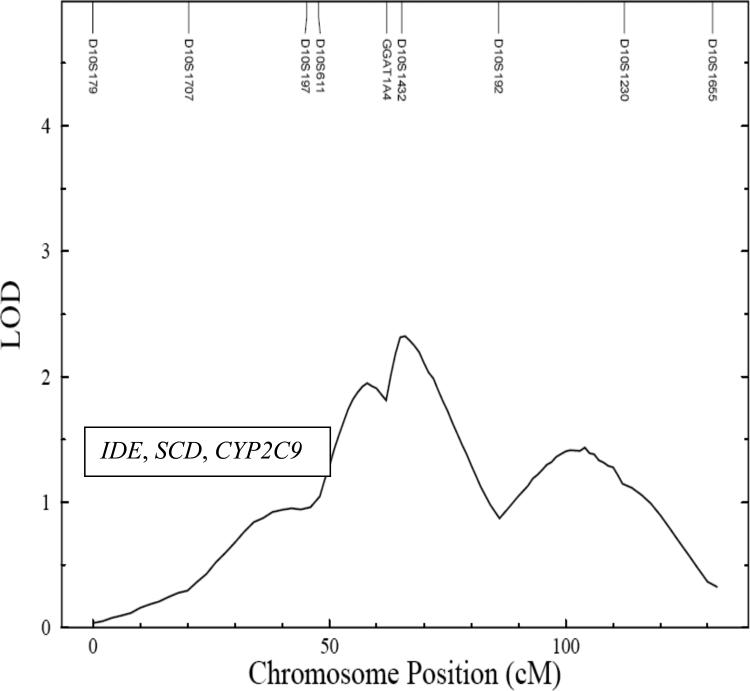
gamma Glutamyl transferase (GGT) and albumin (ALB) are two markers of liver function. These two proteins have been associated with non-alcoholic fatty liver disease and cardiovascular disease. The objectives of this study were to explore the genetic factors that influence variation in the plasma levels of GGT and ALB and to evaluate their genetic correlations with cardiovascular risk factors. Baboons from the Southwest National Primate Research Center at the Southwest Foundation for Biomedical Research, San Antonio, TX, were used as an animal model. The baboons were fed a standard monkey chow diet ad libitum. Fasting plasma concentrations of GGT, ALB, triglycerides, total cholesterol and LDL cholesterol were measured in 350 pedigreed adult baboons by standard assay procedures. A maximum likelihood-based variance decomposition approach implemented in the computer program SOLAR was used to conduct genetic analyses. The heritabilities of GGT (h(2) = 0.55; P < 0.0001) and ALB (h(2) = 0.42; P < 0.01) were significant. No statistically significant associations were found between GGT and the cardiovascular-related phenotypes. Genetic correlations between ALB and total cholesterol, LDL cholesterol and triglycerides were significant. A QTL (LOD = 2.8) for GGT plasma levels was identified on the baboon homologue of human chromosome 22 between markers D22S304 and D22S280. A QTL (LOD = 2.3) near marker D10S1432 was detected on the baboon homologue of human chromosome 10 for ALB. These results imply that variations in the plasma levels of GGT and ALB are under significant genetic regulation and that a common genetic component influences ALB and cardiovascular risk factor phenotypes.
Keywords: NAFLD; atherosclerosis; genome scan; obesity; oxidative stress.
Figures
Comment in
- Exp Biol Med (Maywood). 234:vi.
References
-
- Ekstedt M, Franzen LE, Mathiesen UL, Thorelius L, Holmqvist M, Bodemar G, Kechagias S. Long-term follow-up of patients with NAFLD and elevated liver enzymes. Hepatology. 2006;44:865–873. - PubMed
-
- Liou I, Kowdley KV. Natural history of nonalcoholic steatohepatitis. J Clin Gastroenterol. 2006;40:S11–16. - PubMed
-
- Adams LA, Angulo P. Recent concepts in non-alcoholic fatty liver disease. Diabet Med. 2005;22:1129–1133. - PubMed
-
- Targher G. Non-alcoholic fatty liver disease, the metabolic syndrome and the risk of cardiovascular disease: the plot thickens. Diabet Med. 2007;24:1–6. - PubMed
-
- Schindhelm RK, Dekker JM, Nijpels G, Bouter LM, Stehouwer CD, Heine RJ, Diamant M. Alanine aminotransferase predicts coronary heart disease events: A 10-year follow-up of the Hoorn Study. Atherosclerosis. 2007;191:391–396. - PubMed
Publication types
MeSH terms
Substances
Grants and funding
LinkOut - more resources
Full Text Sources
Miscellaneous