


Trichoderma biocontrol: signal transduction pathways involved in host sensing and mycoparasitism
- PMID: 19936091
- PMCID: PMC2759141
- DOI: 10.4137/grsb.s397
Trichoderma biocontrol: signal transduction pathways involved in host sensing and mycoparasitism
Abstract
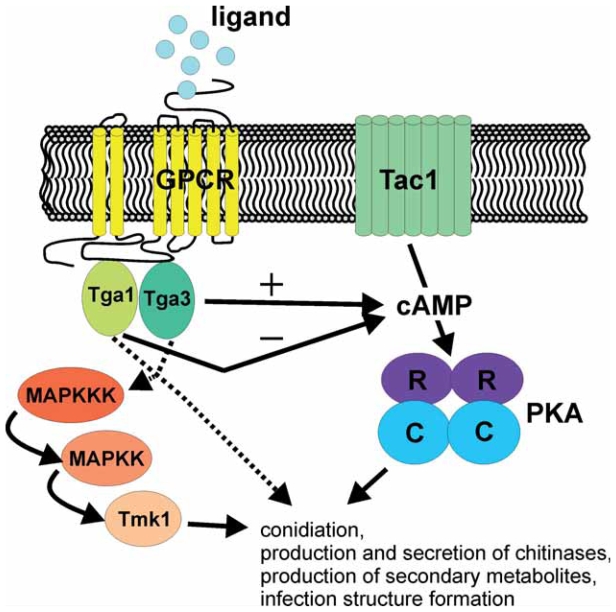
Fungi of the genus Trichoderma are used as biocontrol agents against several plant pathogenic fungi like Rhizoctonia spp., Pythium spp., Botrytis cinerea and Fusarium spp. which cause both soil-borne and leaf- or flower-borne diseases of agricultural plants. Plant disease control by Trichoderma is based on complex interactions between Trichoderma, the plant pathogen and the plant. Until now, two main components of biocontrol have been identified: direct activity of Trichoderma against the plant pathogen by mycoparasitism and induced systemic resistance in plants. As the mycoparasitic interaction is host-specific and not merely a contact response, it is likely that signals from the host fungus are recognised by Trichoderma and provoke transcription of mycoparasitism-related genes. In the last few years examination of signalling pathways underlying Trichoderma biocontrol started and it was shown that heterotrimeric G-proteins and mitogen-activated protein (MAP) kinases affected biocontrol-relevant processes such as the production of hydrolytic enzymes and antifungal metabolites and the formation of infection structures. MAPK signalling was also found to be involved in induction of plant systemic resistance in Trichoderma virens and in the hyperosmotic stress response in Trichoderma harzianum. Analyses of the function of components of the cAMP pathway during Trichoderma biocontrol revealed that mycoparasitism-associated coiling and chitinase production as well as secondary metabolism are affected by the internal cAMP level; in addition, a cross talk between regulation of light responses and the cAMP signalling pathway was found in Trichoderma atroviride.
Keywords: Trichoderma; biocontrol; mycoparasitism; signal transduction.
Figures
References
-
- Barak R, Chet I. Determination, by fluorescein diacetate staining, of fungal viability during mycoparasitism. Soil Biol Biochem. 1986;18:315–9.
-
- Birnbaumer L. Receptor-to-effector signaling through G proteins: roles for beta gamma dimers as well as alpha subunits. Cell. 1992;71(7):1069–72. - PubMed
-
- Bolker M. Sex and crime: heterotrimeric G proteins in fungal mating and pathogenesis. Fungal Genet Biol. 1998;25(3):143–56. - PubMed
Grants and funding
LinkOut - more resources
Full Text Sources
Research Materials
Miscellaneous
