Roles of IL-6-gp130 Signaling in Vascular Inflammation
- PMID: 19936194
- PMCID: PMC2780819
- DOI: 10.2174/157340308785160570
Roles of IL-6-gp130 Signaling in Vascular Inflammation
Abstract
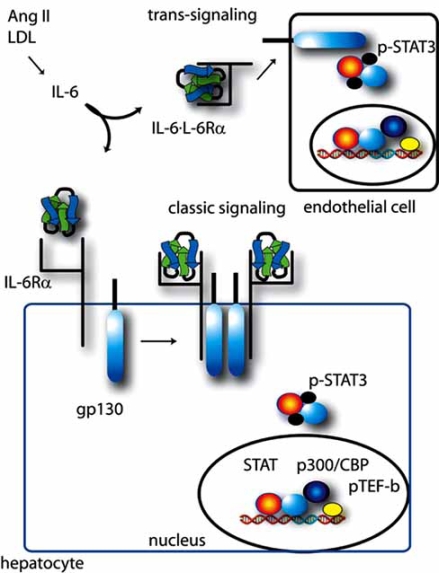
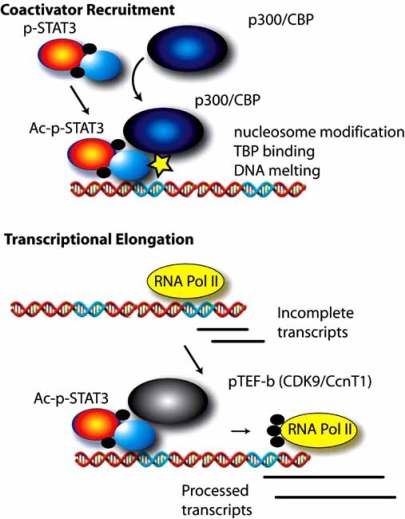
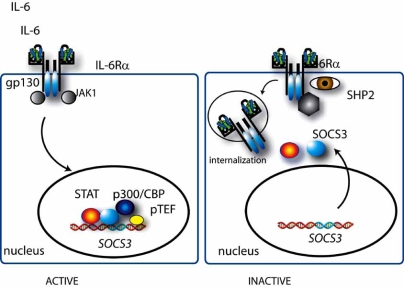
Interleukin-6 (IL-6) is a well-established, independent indicator of multiple distinct types of cardiovascular disease and all-cause mortality. In this review, we present current understanding of the multiple roles that IL-6 and its signaling pathways through glycoprotein 130 (gp130) play in cardiovascular homeostasis. IL-6 is highly inducible in vascular tissues through the actions of the angiotensin II (Ang II) peptide, where it acts in a paracrine manner to signal through two distinct mechanisms, the first being a classic membrane receptor initiated pathway and the second, a trans-signaling pathway, being able to induce responses even in tissues lacking the IL-6 receptor. Recent advances and new concepts in how its intracellular signaling pathways operate via the Janus kinase (JAK)-Signal Transducer and Activator of Transcription (STAT) are described. IL-6 has diverse actions in multiple cell types of cardiovascular importance, including endothelial cells, monocytes, platelets, hepatocytes and adipocytes. We discuss central roles of IL-6 in endothelial dysfunction, cellular inflammation by affecting monocyte activation/differentiation, cellular cytoprotective functions from reactive oxygen species (ROS) stress, modulation of pro-coagulant state, myocardial growth control, and its implications in metabolic control and insulin resistance. These multiple actions indicate that IL-6 is not merely a passive biomarker, but actively modulates adaptive and pathological responses to cardiovascular stress.
Summary: IL-6 is a multifunctional cytokine whose presence in the circulation is linked with diverse types of cardiovascular disease and is an independent risk factor for atherosclerosis. In this review, we examine the mechanisms by which IL-6 signals and its myriad effects in cardiovascular tissues that modulate the manifestations of vascular inflammation.
Keywords: IL-6/ gp-130/ angiotensin II/ STAT3/ vascular inflammation..
Figures
References
-
- Brasier AR, Recinos A III, Eledrisi MS. Vascular inflammation and the renin-angiotensin system. Arterioscler Thromb Vasc Biol. 2002;22(8):1257–66. - PubMed
-
- Han Y, Runge MS, Brasier AR. Angiotensin II induces interleukin-6 transcription in vascular smooth muscle cells through pleiotropic activation of nuclear factor-kappa B transcription factors. Circ Res. 1999;84(6):695–703. - PubMed
-
- Ridker PM, Rifai N, Stampfer MJ, Hennekens CH. Plasma Concentration of Interleukin-6 and the Risk of Future Myocardial Infarction Among Apparently Healthy Men. Circulation. 2000;101(15):1767–72. - PubMed
-
- Biasucci LM, Liuzzo G, Fantuzzi G, et al. Increasing Levels of Interleukin (IL)-1Ra and IL-6 During the First 2 Days of Hospitalization in Unstable Angina Are Associated With Increased Risk of In-Hospital Coronary Events. Circulation. 1999;99(16):2079–84. - PubMed
Grants and funding
LinkOut - more resources
Full Text Sources
Other Literature Sources
Medical
Miscellaneous