


Low adiponectin concentration during pregnancy predicts postpartum insulin resistance, beta cell dysfunction and fasting glycaemia
- PMID: 19937225
- PMCID: PMC2878328
- DOI: 10.1007/s00125-009-1600-8
Low adiponectin concentration during pregnancy predicts postpartum insulin resistance, beta cell dysfunction and fasting glycaemia
Abstract
Aims/hypothesis: The postpartum phase following gestational diabetes (GDM) is characterised by subtle metabolic defects, including the beta cell dysfunction that is believed to mediate the increased future risk of type 2 diabetes in this patient population. Low circulating levels of adiponectin and increased leptin and C-reactive protein (CRP) have recently emerged as novel diabetic risk factors, although their relevance to GDM and subsequent diabetes has not been characterised. Thus, we sought to determine whether adiponectin, leptin and CRP levels during pregnancy relate to the postpartum metabolic defects linking GDM with type 2 diabetes.
Methods: Metabolic characterisation, including oral glucose tolerance testing, was undertaken in 487 women during pregnancy and at 3 months postpartum. Based on the antepartum OGTT, there were 137 women with GDM, 91 with gestational impaired glucose tolerance and 259 with normal glucose tolerance.
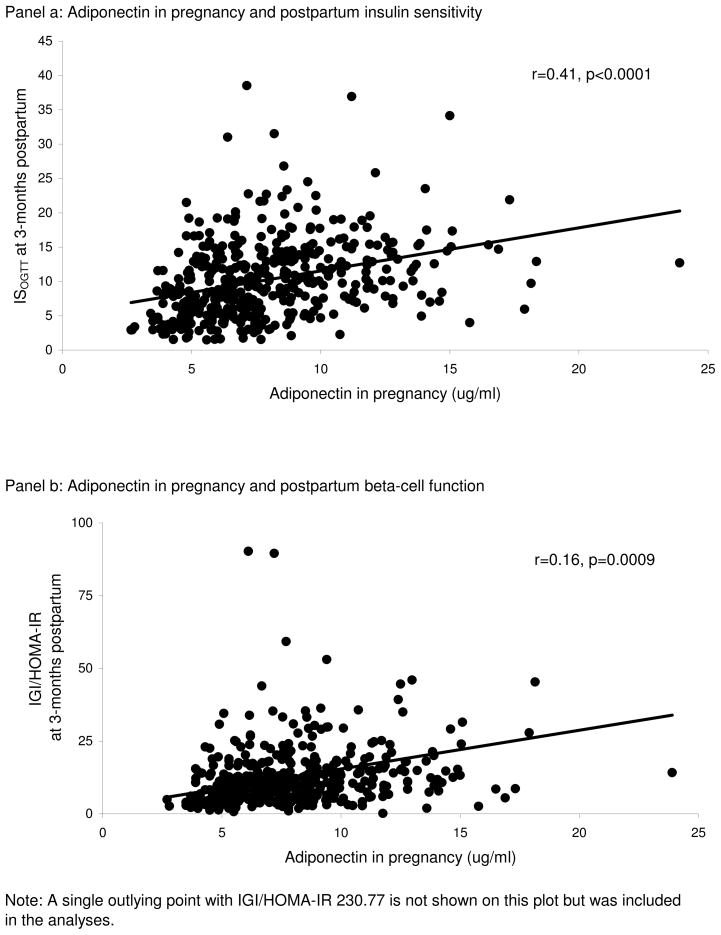
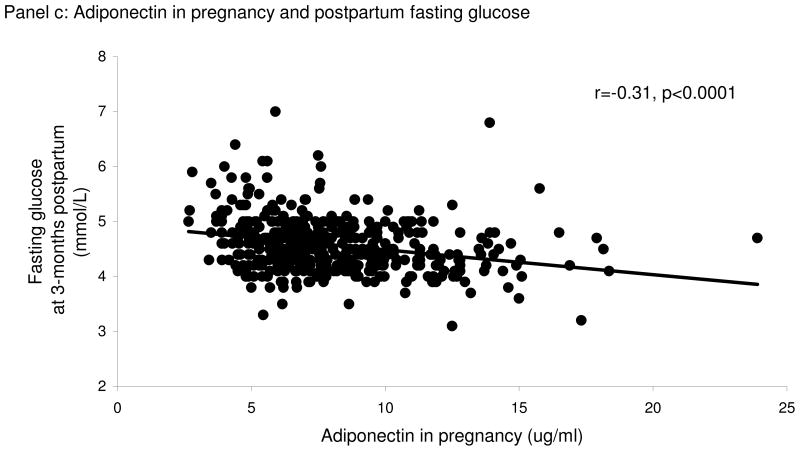
Results: Adiponectin levels were lowest (p < 0.0001) and CRP levels highest (p = 0.0008) in women with GDM. Leptin did not differ between the glucose tolerance groups (p = 0.4483). Adiponectin (r = 0.41, p < 0.0001), leptin (r = -0.36, p < 0.0001) and CRP (r = -0.30, p < 0.0001) during pregnancy were all associated with postpartum insulin sensitivity (determined using the insulin sensitivity index of Matsuda and DeFronzo [IS(OGTT)]). Intriguingly, adiponectin levels were also related to postpartum beta cell function (insulinogenic index/HOMA of insulin resistance; r = 0.16, p = 0.0009). Indeed, on multiple linear regression analyses, adiponectin levels during pregnancy independently predicted both postpartum insulin sensitivity (t = 3.97, p < 0.0001) and beta cell function (t = 2.37, p = 0.0181), even after adjustment for GDM. Furthermore, adiponectin emerged as a significant negative independent determinant of postpartum fasting glucose (t = -3.01, p = 0.0027).
Conclusions/interpretation: Hypoadiponectinaemia during pregnancy predicts postpartum insulin resistance, beta cell dysfunction and fasting glycaemia, and hence may be relevant to the pathophysiology relating GDM with type 2 diabetes.
Figures
References
-
- Buchanan TA. Pancreatic β-cell defects in gestational diabetes: implications for the pathogenesis and prevention of type 2 diabetes. J Clin Endocrinol Metab. 2001;86:989–993. - PubMed
-
- Schaefer-Graf UM, Buchanan TA, Xiang AH, Peters RK, Kjos SL. Clinical predictors for a high risk for the development of diabetes mellitus in the early pueperium in women with recent gestational diabetes mellitus. Am J Obstet Gynecol. 2002;186:751–756. - PubMed
-
- Sinha B, Brydon P, Taylor RS, et al. Maternal ante-natal parameters as predictors of persistent postnatal glucose intolerance: a comparative study between Afro-Caribbeans, Asians and Caucasians. Diabet Med. 2003;20:382–386. - PubMed
Publication types
MeSH terms
Substances
Grants and funding
LinkOut - more resources
Full Text Sources
Medical
Research Materials
Miscellaneous
