


Anatomical distribution of avian bornavirus in parrots, its occurrence in clinically healthy birds and ABV-antibody detection
- PMID: 19937538
- PMCID: PMC4109277
- DOI: 10.1080/03079450903349238
Anatomical distribution of avian bornavirus in parrots, its occurrence in clinically healthy birds and ABV-antibody detection
Abstract
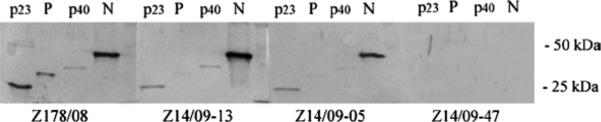
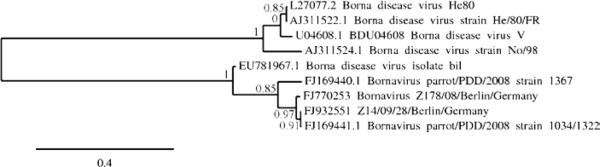
Proventricular dilatation disease (PDD) is a fatal infectious disease of birds that primarily affects psittacine birds. Although a causative agent has not been formally demonstrated, the leading candidate is a novel avian bornavirus (ABV) detected in post-mortem tissue samples of psittacids with PDD from the USA, Israel and, recently, Germany. Here we describe the presence of ABV in a parrot with PDD as well as in clinically normal birds exposed to birds with PDD. In two ABV-positive post-mortem cases, the tissue distribution of ABV was investigated by quantitative real-time reverse transcription-polymerase chain reaction. Viraemia was observed in a PDD-affected bird whereas a restriction of ABV to nerve tissue was found in the non-PDD-affected bird. Healthy birds from the same aviary as the affected birds were also found to harbour the virus; 19/59 (32.2%) birds tested positive for ABV RNA in cloacal swabs, providing the first evidence of ABV in clinically healthy birds. In contrast, 39 birds from the same geographic area, but from two different aviaries without PDD cases in recent years, had negative cloacal swabs. ABV RNA-positive, clinically healthy birds demonstrated the same serological response as the animal with confirmed PDD. These results indicate that ABV infection may occur without clinical evidence of PDD and suggest that cloacal swabs can enable the non-invasive detection of ABV infection.
Figures
References
-
- Berhane Y, Smith DA, Newman S, Taylor M, Nagy E, Binnington B, Hunter B. Peripheral neuritis in psittacine birds with proventricular dilatation disease. Avian Pathology. 2001;30:563–570. - PubMed
-
- Briese T, Hornig M, Lipkin WI. Bornavirus immuno-pathogenesis in rodents: models for human neurological diseases. Journal for Neurovirology. 1999;5:604–612. - PubMed
-
- Castresana J. Selection of conserved blocks from multiple alignments for their use in phylogenetic analysis. Molecular Biology and Evolution. 2000;17:540–552. - PubMed
Publication types
MeSH terms
Substances
Grants and funding
LinkOut - more resources
Full Text Sources
Medical
