Intraperitoneal Alpha-Lipoic Acid to prevent neural damage after crush injury to the rat sciatic nerve
- PMID: 19939272
- PMCID: PMC2789059
- DOI: 10.1186/1749-7221-4-22
Intraperitoneal Alpha-Lipoic Acid to prevent neural damage after crush injury to the rat sciatic nerve
Abstract
Objective: Crush injury to the sciatic nerve causes oxidative stress. Alfa Lipoic acid (a-LA) is a neuroprotective metabolic antioxidant. This study was designed to investigate the antioxidant effects of pretreatment with a-LA on the crush injury of rat sciatic nerve.
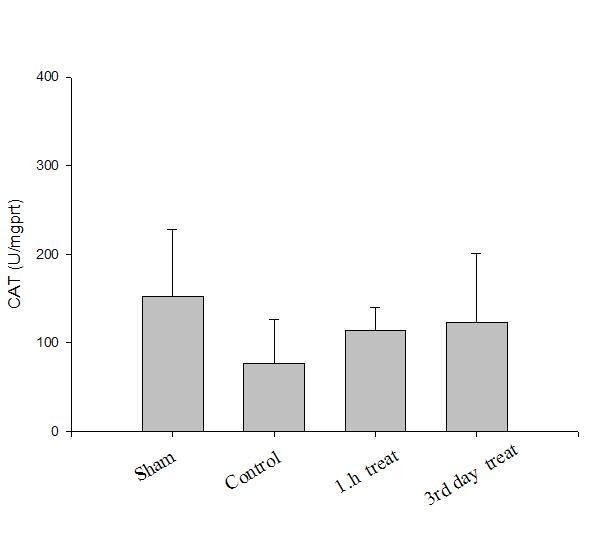
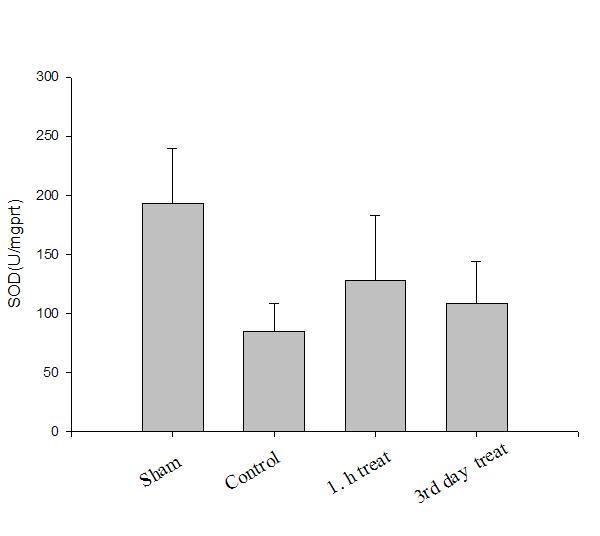
Methods: Forty rats were randomized into four groups. Group I and Group II received saline (2 ml, intraperitoneally) and a-LA (100 mg/kg, 2 ml, intraperitoneally) in the groups III and IV at the 24 and 1 hour prior to the crush injury. In groups II, III and IV, the left sciatic nerve was exposed and compressed for 60 seconds with a jeweler's forceps. In Group I (n = 10), the sciatic nerve was explored but not crushed. In all groups of rats, superoxide dismutase (SOD) and catalase (CAT) activities, as well as malondialdehyde (MDA) levels were measured in samples of sciatic nerve tissue.
Results: Compared to Group I, Group II had significantly decreased tissue SOD and CAT activities and elevated MDA levels indicating crush injury (p < 0.05). In the a-LA treatment groups (groups III and IV), tissue CAT and SOD activities were significantly increased and MDA levels significantly decreased at the first hour (p < 0.05) and on the 3rd day (p < 0.05). There was no significant difference between a-LA treatment groups (p > 0.05).
Conclusion: A-LA administered before crush injury of the sciatic nerve showed significant protective effects against crush injury by decreasing the oxidative stress. A-LA should be considered in the treatment of peripheral nerve injuries, but further studies are needed to explain the mechanism of its neuroprotective effects.
Figures

References
-
- Schonheit K, Gille L, Nohl H. Effect of alpha-lipoic acid and dihydrolipoic acid on ischemia/reperfusion injury of the heart and heart mitochondria. Biochimica et Biophysica Acta. 1995;4:335–42. - PubMed
LinkOut - more resources
Full Text Sources
Other Literature Sources
Miscellaneous