


Nanotechnology research: applications in nutritional sciences
- PMID: 19939997
- PMCID: PMC2793126
- DOI: 10.3945/jn.109.115048
Nanotechnology research: applications in nutritional sciences
Erratum in
- J Nutr. 2010 May;140(5):1062. Saos, Etta [corrected to Saltos, Etta]
Abstract
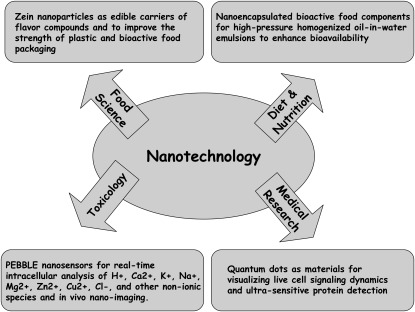
The tantalizing potential of nanotechnology is to fabricate and combine nanoscale approaches and building blocks to make useful tools and, ultimately, interventions for medical science, including nutritional science, at the scale of approximately 1-100 nm. In the past few years, tools and techniques that facilitate studies and interventions in the nanoscale range have become widely available and have drawn widespread attention. Recently, investigators in the food and nutrition sciences have been applying the tools of nanotechnology in their research. The Experimental Biology 2009 symposium entitled "Nanotechnology Research: Applications in Nutritional Sciences" was organized to highlight emerging applications of nanotechnology to the food and nutrition sciences, as well as to suggest ways for further integration of these emerging technologies into nutrition research. Speakers focused on topics that included the problems and possibilities of introducing nanoparticles in clinical or nutrition settings, nanotechnology applications for increasing bioavailability of bioactive food components in new food products, nanotechnology opportunities in food science, as well as emerging safety and regulatory issues in this area, and the basic research applications such as the use of quantum dots to visualize cellular processes and protein-protein interactions. The session highlighted several emerging areas of potential utility in nutrition research. Nutrition scientists are encouraged to leverage ongoing efforts in nanomedicine through collaborations. These efforts could facilitate exploration of previously inaccessible cellular compartments and intracellular pathways and thus uncover strategies for new prevention and therapeutic modalities.
Figures
References
-
- National Nanotechnology Initiative. What is nanotechnology? [cited 2009 Aug 21]. Available from: http://www.nano.gov/html/facts/whatIsNano.html.
-
- Moraru CI, Panchapakesan CP, Huang Q, Takhistov P, Liu S, Kokini JL. Nanotechnology: a new frontier in food science. Food Technol. 2003;57:24–9.
-
- Ross SA, Srinivas PR, Clifford AJ, Lee SC, Philbert MA, Hettich RL. New technologies for nutrition research. J Nutr. 2004;134:681–5. - PubMed
-
- Nickols-Richardson SM. Nanotechnology: implications for food and nutrition professionals. J Am Diet Assoc. 2007;107:1494–7. - PubMed
Publication types
MeSH terms
Substances
Grants and funding
LinkOut - more resources
Full Text Sources
Other Literature Sources
Medical
Miscellaneous
