


Regulation of sigma-1 receptors and endoplasmic reticulum chaperones in the brain of methamphetamine self-administering rats
- PMID: 19940104
- PMCID: PMC2835445
- DOI: 10.1124/jpet.109.159244
Regulation of sigma-1 receptors and endoplasmic reticulum chaperones in the brain of methamphetamine self-administering rats
Abstract
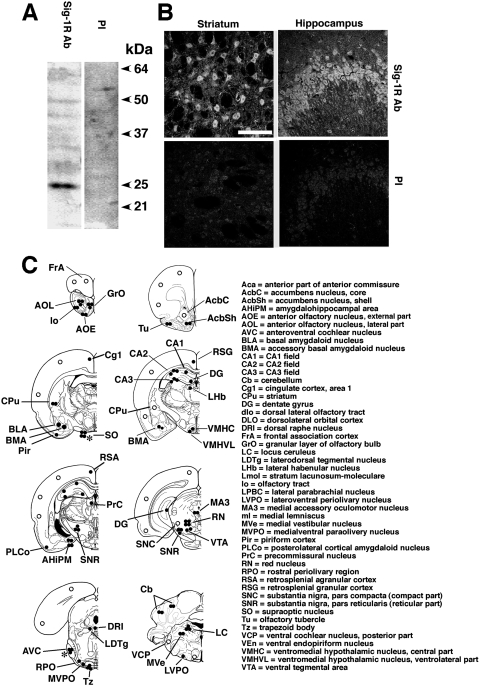
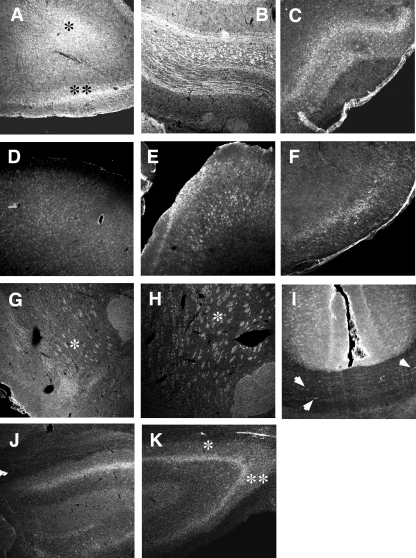
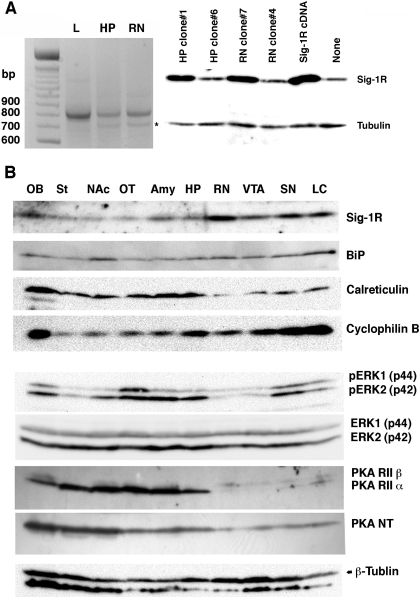
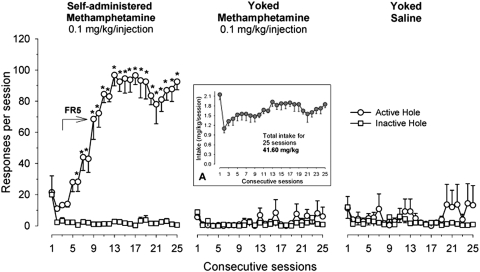
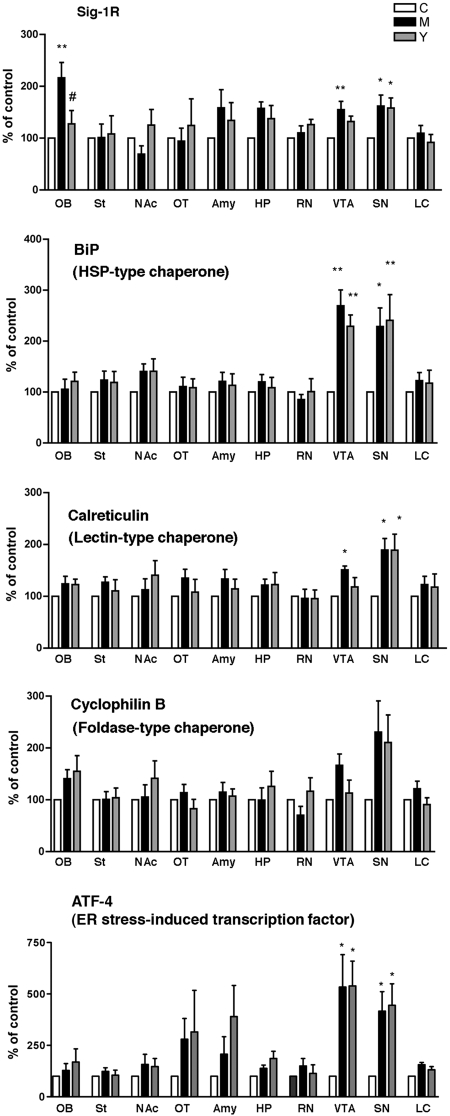
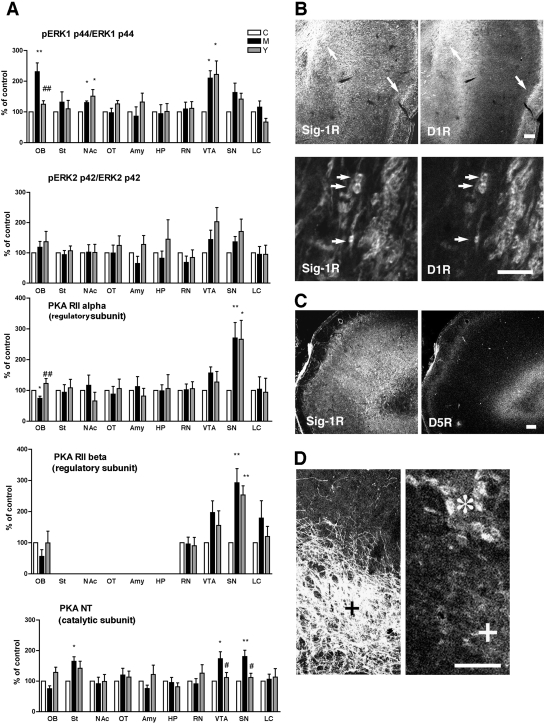
sigma-1 Receptors are endoplasmic reticulum (ER) chaperones that are implicated in the neuroplasticity associated with psychostimulant abuse. We immunocytochemically examined the distribution of sigma-1 receptors in the brain of drug-naive rats and then examined the dynamics of sigma-1 receptors and other ER chaperones in specific brain subregions of rats that self-administered methamphetamine, received methamphetamine passively, or received only saline injections. sigma-1 Receptors were found to be expressed in moderate to high levels in the olfactory bulb, striatum, nucleus accumbens shell, olfactory tubercle, amygdala, hippocampus, red nucleus, ventral tegmental area, substantia nigra, and locus ceruleus. Methamphetamine, whether self-administered or passively received, significantly elevated ER chaperones including the sigma-1 receptor, BiP, and calreticulin in the ventral tegmental area and substantia nigra. In the olfactory bulb, however, only the sigma-1 receptor chaperone was increased, and this increase occurred only in rats that actively self-administered methamphetamine. Consistent with an increase in sigma-1 receptors, extracellular signal-regulated kinase was found to be activated and protein kinase A attenuated in the olfactory bulb of methamphetamine self-administering rats. sigma-1 Receptors in the olfactory bulb were found to be colocalized with dopamine D1 receptors. These results indicate that methamphetamine induces ER stress in the ventral tegmental area and substantia nigra in rats whether the drug is received actively or passively. However, the changes seen only in rats that actively self-administered methamphetamine suggest that D1 and sigma-1 receptors in the olfactory bulb might play an important role in the motivational conditioning/learning aspects of methamphetamine self-administration in the rat.
Figures

References
-
- Alonso G, Phan V, Guillemain I, Saunier M, Legrand A, Anoal M, Maurice T. (2000) Immunocytochemical localization of the sigma(1) receptor in the adult rat central nervous system. Neuroscience 97:155–170 - PubMed
-
- Cecchi GA, Petreanu LT, Alvarez-Buylla A, Magnasco MO. (2001) Unsupervised learning and adaptation in a model of adult neurogenesis. J Comput Neurosci 11:175–182 - PubMed
-
- Cormaci G, Mori T, Hayashi T, Su TP. (2007) Protein kinase A activation down-regulates, whereas extracellular signal-regulated kinase activation up-regulates sigma-1 receptors in B-104 cells: implication for neuroplasticity. J Pharmacol Exp Ther 320:202–210 - PubMed
-
- Davila NG, Blakemore LJ, Trombley PQ. (2003) Dopamine modulates synaptic transmission between rat olfactory bulb neurons in culture. J Neurophysiol 90:395–404 - PubMed
-
- Deng X, Ladenheim B, Jayanthi S, Cadet JL. (2007) Methamphetamine administration causes death of dopaminergic neurons in the mouse olfactory bulb. Biol Psychiatry 61:1235–1243 - PubMed
Publication types
MeSH terms
Substances
Grants and funding
LinkOut - more resources
Full Text Sources
Medical
Research Materials
