


Rational design of a structural and functional nitric oxide reductase
- PMID: 19940850
- PMCID: PMC4297211
- DOI: 10.1038/nature08620
Rational design of a structural and functional nitric oxide reductase
Abstract
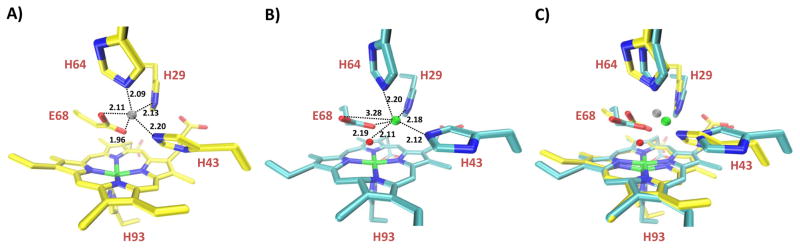
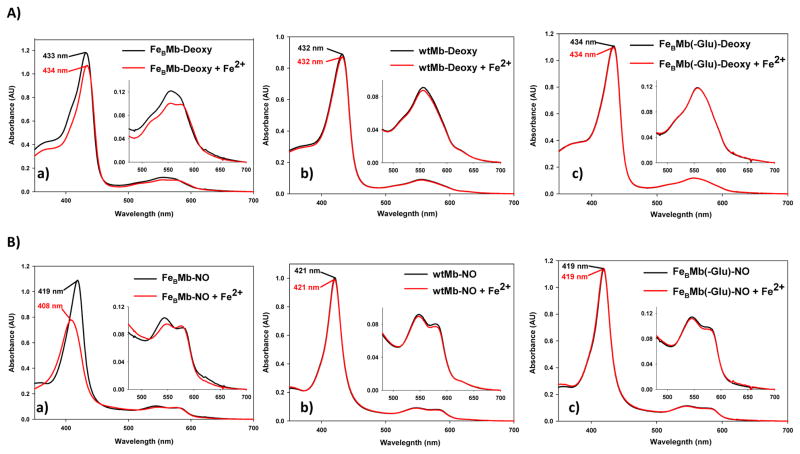
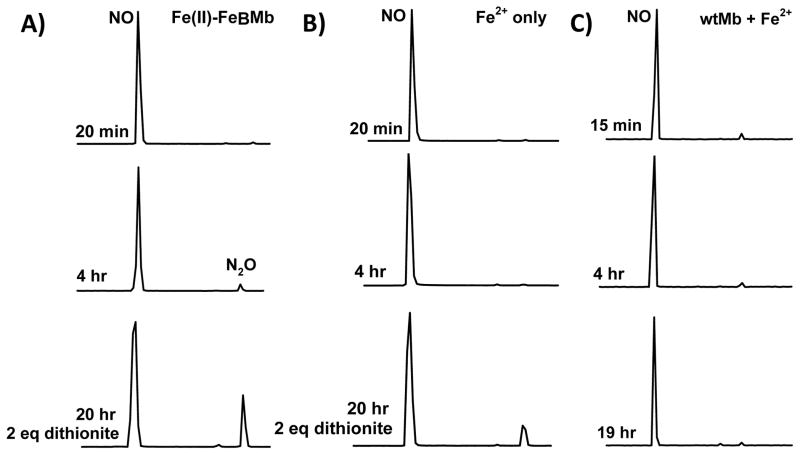
Protein design provides a rigorous test of our knowledge about proteins and allows the creation of novel enzymes for biotechnological applications. Whereas progress has been made in designing proteins that mimic native proteins structurally, it is more difficult to design functional proteins. In comparison to recent successes in designing non-metalloproteins, it is even more challenging to rationally design metalloproteins that reproduce both the structure and function of native metalloenzymes. This is because protein metal-binding sites are much more varied than non-metal-containing sites, in terms of different metal ion oxidation states, preferred geometry and metal ion ligand donor sets. Because of their variability, it has been difficult to predict metal-binding site properties in silico, as many of the parameters, such as force fields, are ill-defined. Therefore, the successful design of a structural and functional metalloprotein would greatly advance the field of protein design and our understanding of enzymes. Here we report a successful, rational design of a structural and functional model of a metalloprotein, nitric oxide reductase (NOR), by introducing three histidines and one glutamate, predicted as ligands in the active site of NOR, into the distal pocket of myoglobin. A crystal structure of the designed protein confirms that the minimized computer model contains a haem/non-haem Fe(B) centre that is remarkably similar to that in the crystal structure. This designed protein also exhibits NO reduction activity, and so models both the structure and function of NOR, offering insight that the active site glutamate is required for both iron binding and activity. These results show that structural and functional metalloproteins can be rationally designed in silico.
Figures
References
-
- Regan L, DeGrado WF. Characterization of a helical protein designed from first principles. Science. 1988;241:976–978. - PubMed
-
- Hecht MH, Richardson JS, Richardson DC, Ogden RC. De novo design, expression, and characterization of Felix: a four-helix bundle protein of native-like sequence. Science. 1990;249:884–891. - PubMed
-
- Kuhlman B, et al. Design of a novel globular protein fold with atomic-level accuracy. Science. 2003;302:1364–1368. - PubMed
Publication types
MeSH terms
Substances
Associated data
- Actions
Grants and funding
LinkOut - more resources
Full Text Sources
Other Literature Sources
