


The development of gyrification in childhood and adolescence
- PMID: 19942335
- PMCID: PMC2815169
- DOI: 10.1016/j.bandc.2009.10.009
The development of gyrification in childhood and adolescence
Abstract
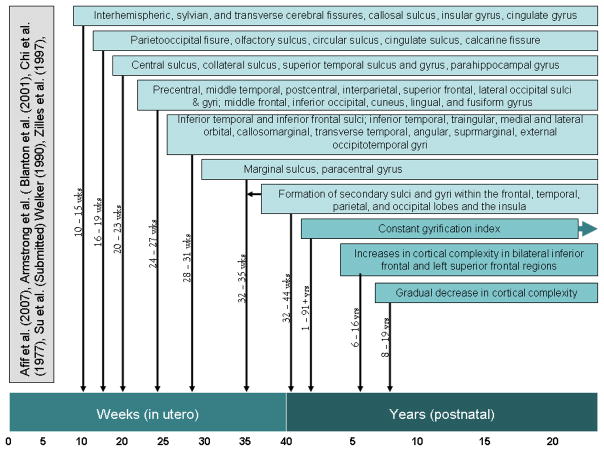
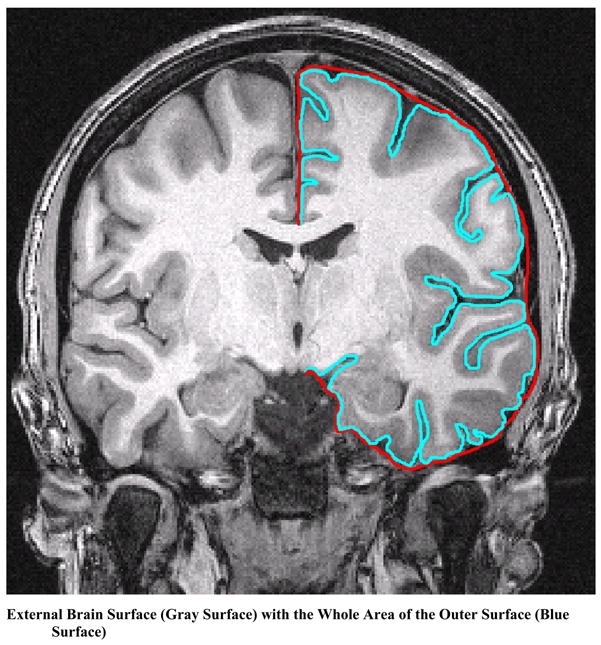
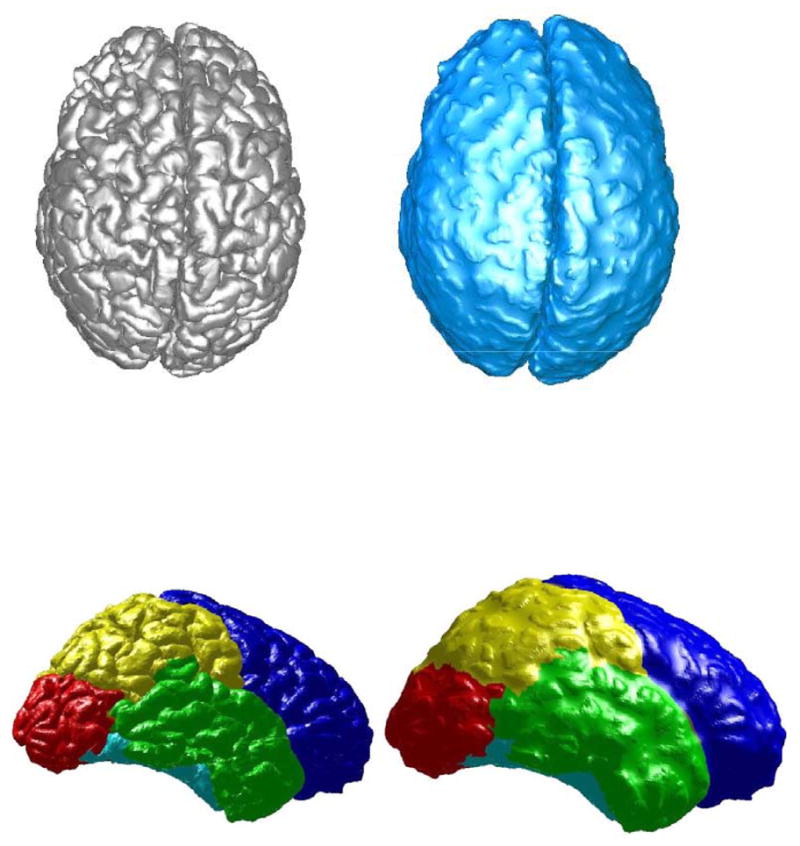
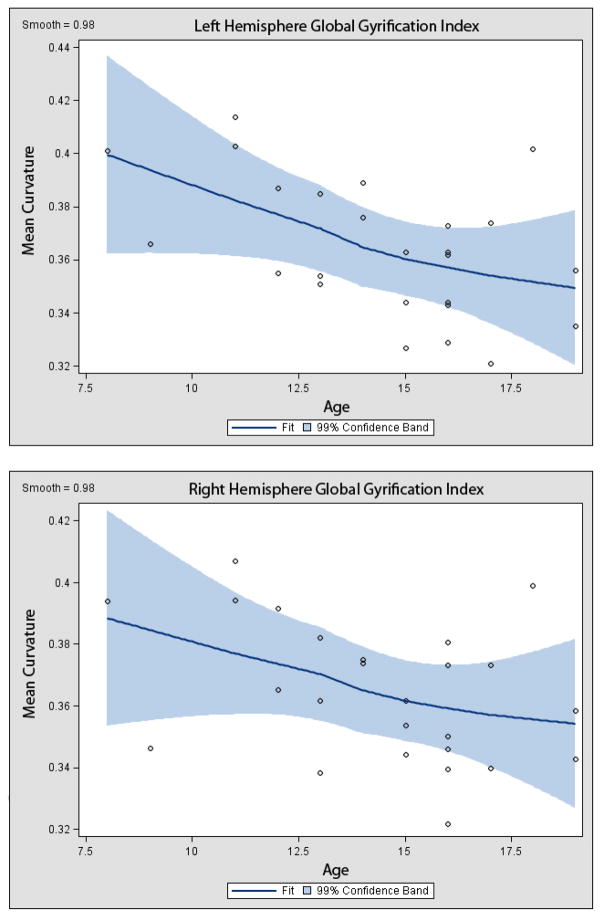
Gyrification is the process by which the brain undergoes changes in surface morphology to create sulcal and gyral regions. The period of greatest development of brain gyrification is during the third trimester of pregnancy, a period of time in which the brain undergoes considerable growth. Little is known about changes in gyrification during childhood and adolescence, although considering the changes in gray matter volume and thickness during this time period, it is conceivable that alterations in the brain surface morphology could also occur during this period of development. The formation of gyri and sulci in the brain allows for compact wiring that promotes and enhances efficient neural processing. If cerebral function and form are linked through the organization of neural connectivity, then alterations in neural connectivity, i.e., synaptic pruning, may also alter the gyral and sulcal patterns of the brain. This paper reviews developmental theories of gyrification, computational techniques for measuring gyrification, and the potential interaction between gyrification and neuronal connectivity. We also present recent findings involving alterations in gyrification during childhood and adolescence.
2009 Elsevier Inc. All rights reserved.
Figures
References
-
- Allmann J. Evolving brains. W H Freeman & Co; 2000.
-
- Armstrong E, Curtis M, Buxhoeveden DP, Fregoe C, Zilles K, Casanova MF, et al. Cortical gyrification in the rhesus monkey: a test of the mechanical folding hypothesis. Cereb Cortex. 1991;1(5):426–432. - PubMed
-
- Armstrong E, Schleicher A, Omran H, Curtis M, Zilles K. The ontogeny of human gyrification. Cereb Cortex. 1995;5(1):56–63. - PubMed
-
- Barron DH. An experimental analysis of some factors involved in the development of the fissure pattern of the cerebral cortex. J Exp Zool. 1950;113:553–581.
