


Cholecystokinin receptors mediate tolerance to the analgesic effect of TENS in arthritic rats
- PMID: 19944533
- PMCID: PMC3954516
- DOI: 10.1016/j.pain.2009.10.011
Cholecystokinin receptors mediate tolerance to the analgesic effect of TENS in arthritic rats
Abstract
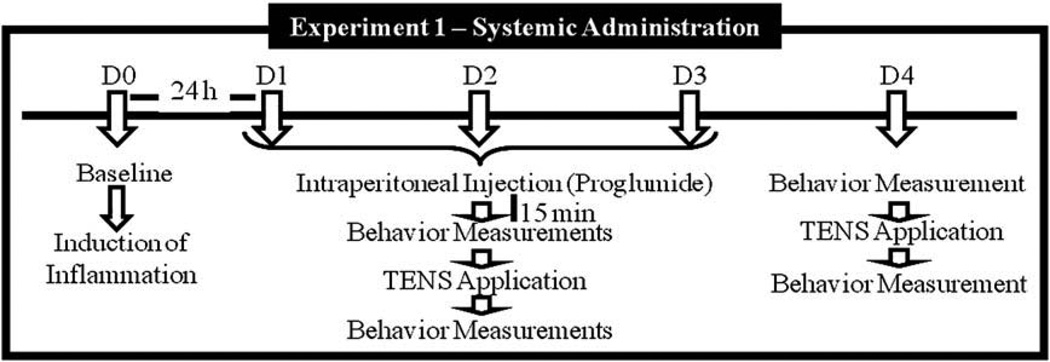
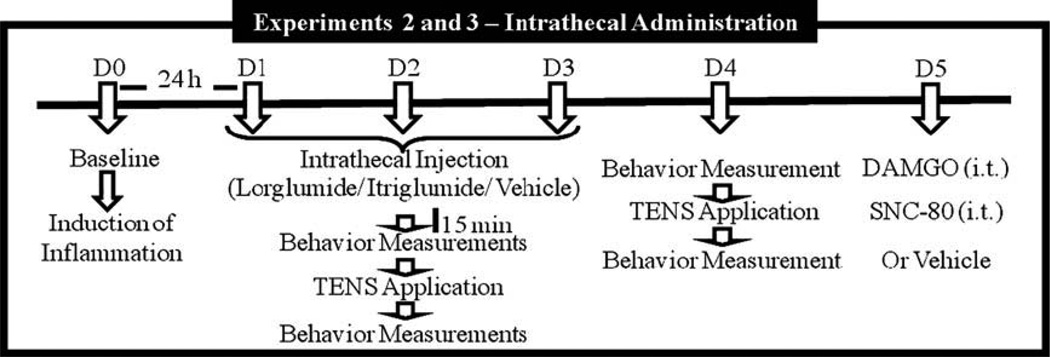
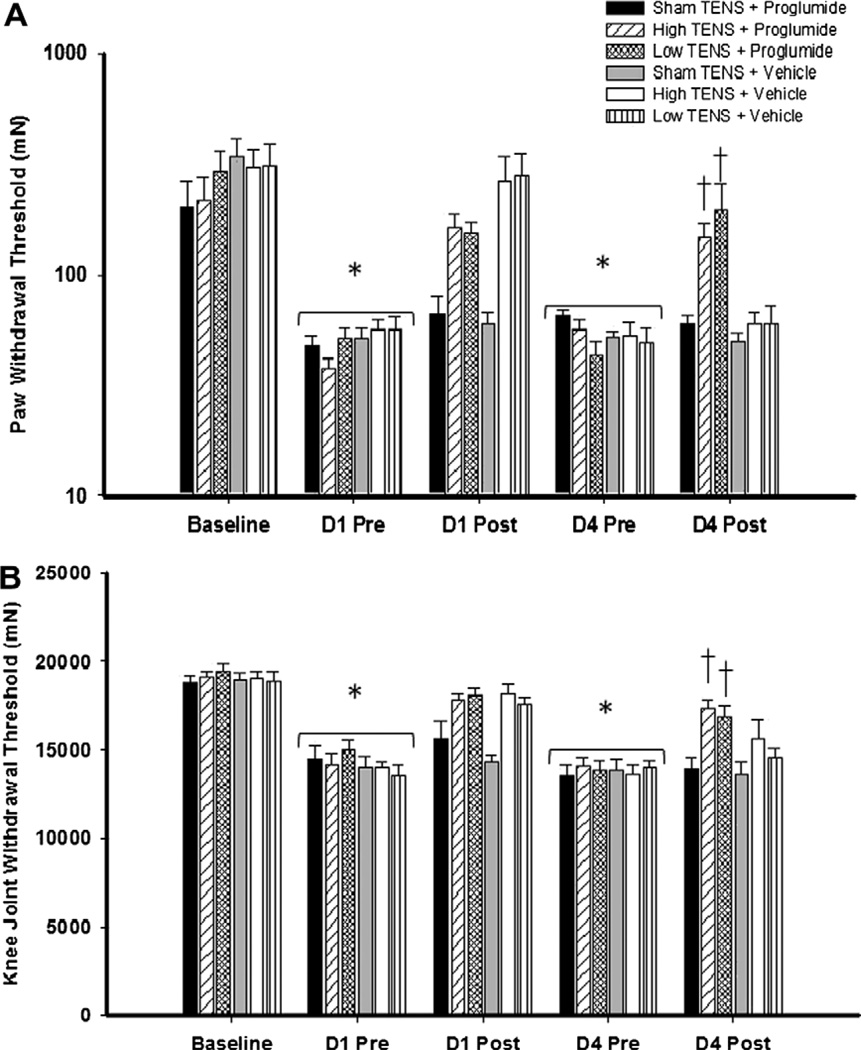
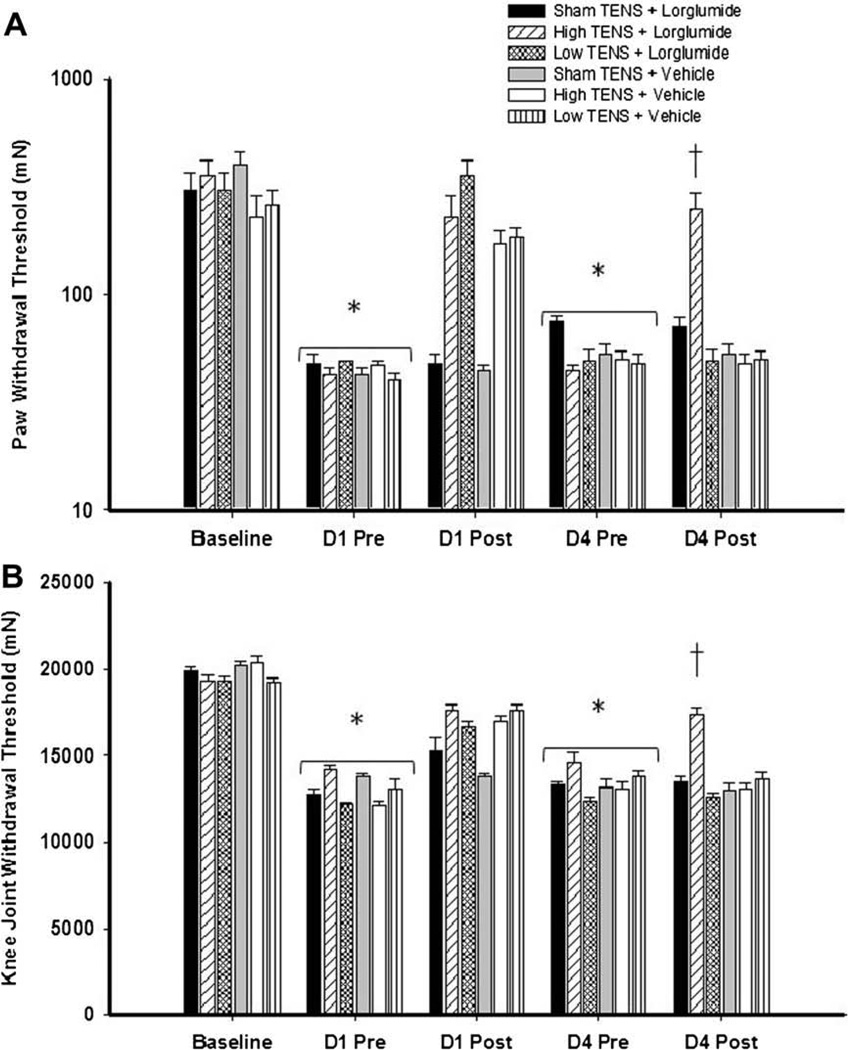
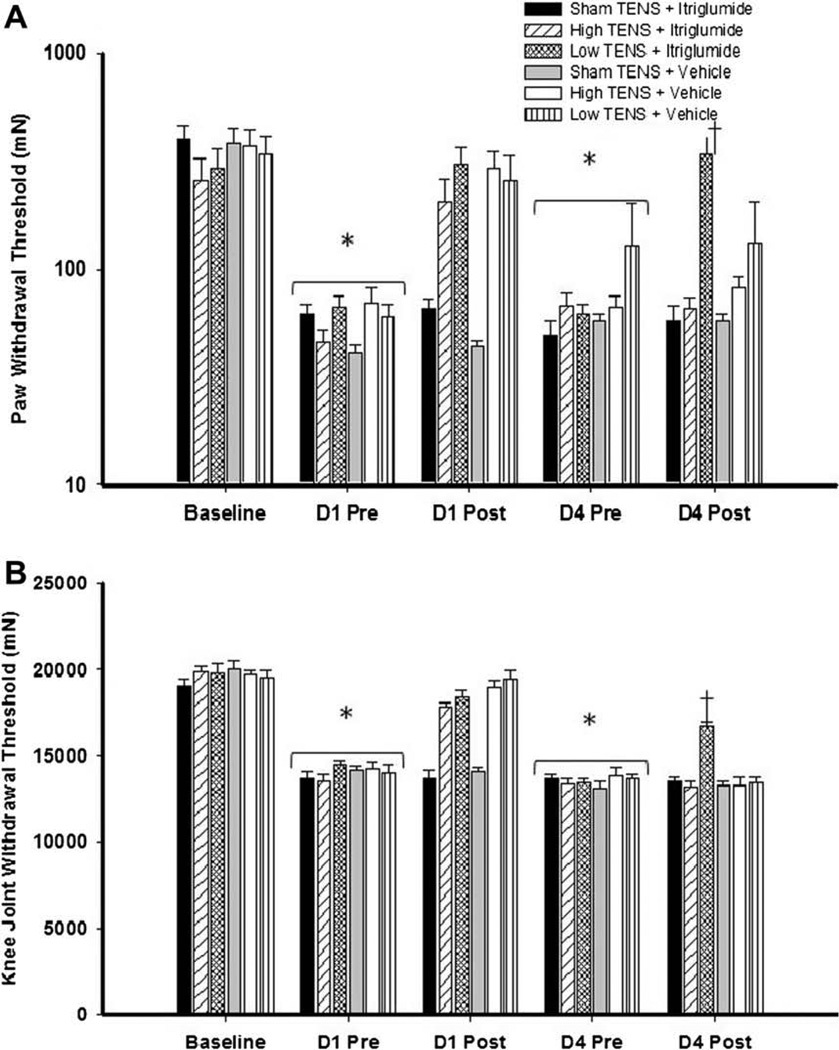
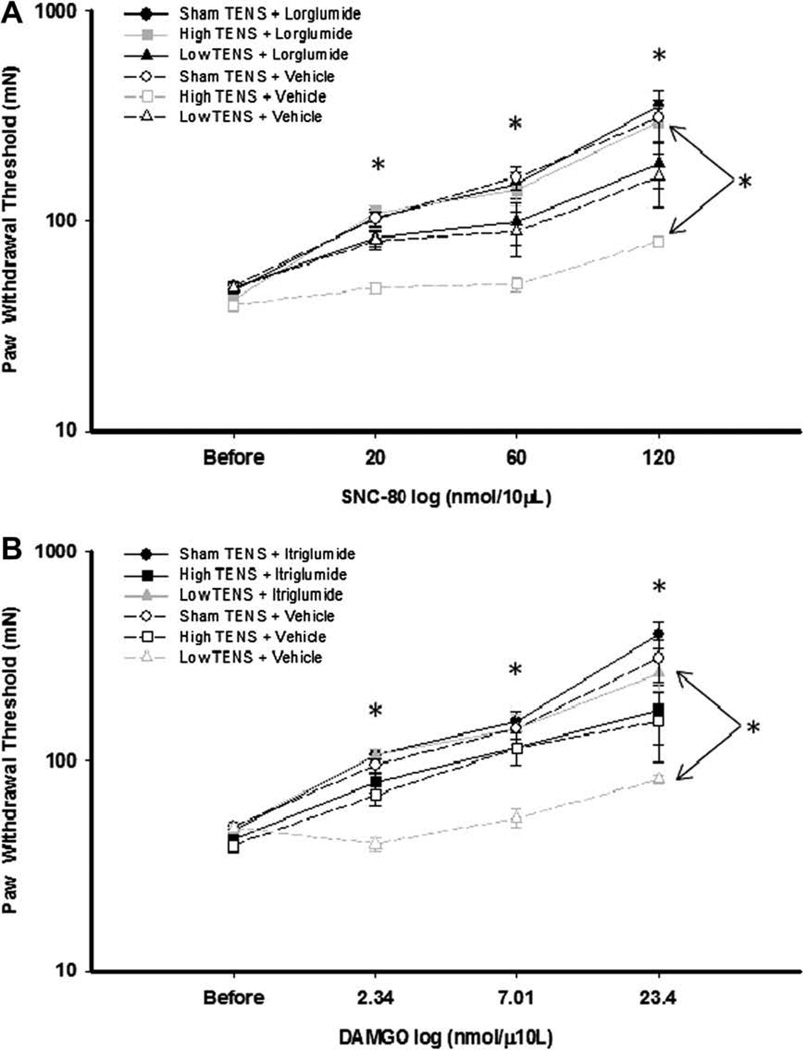
Transcutaneous electrical nerve stimulation (TENS) is a treatment for pain that involves placement of electrical stimulation through the skin for pain relief. Previous work from our laboratory shows that repeated application of TENS produces analgesic tolerance by the fourth day and a concomitant cross-tolerance at spinal opioid receptors. Prior pharmacological studies show that blockade of cholecystokinin (CCK) receptors systemically and spinally prevents the development of analgesic tolerance to repeated doses of opioid agonists. We therefore hypothesized that systemic and intrathecal blockade of CCK receptors would prevent the development of analgesic tolerance to TENS, and cross-tolerance at spinal opioid receptors. In animals with knee joint inflammation (3% kaolin/carrageenan), high (100Hz) or low frequency (4Hz) TENS was applied daily and the mechanical withdrawal thresholds of the muscle and paw were examined. We tested thresholds before and after inflammation, and before and after TENS. Animals treated systemically, prior to TENS, with the CCK antagonist, proglumide, did not develop tolerance to repeated application of TENS on the fourth day. Spinal blockade of CCK-A or CCK-B receptors blocked the development of tolerance to high and low frequency TENS, respectively. In the same animals we show that spinal blockade of CCK-A receptors prevents cross-tolerance at spinal delta-opioid receptors that normally occurs with high frequency TENS; and blockade of CCK-B receptors prevents cross-tolerance at spinal mu-opioid receptors that normally occurs with low frequency TENS. Thus, we conclude that blockade of CCK receptors prevents the development of analgesic tolerance to repeated application of TENS in a frequency-dependent manner.
Copyright 2009 International Association for the Study of Pain. All rights reserved.
Conflict of interest statement
No commercial party having a direct financial interest in the results of the research supporting this article has or will confer a benefit upon the authors or upon any organization with which the authors are associated.
Figures
References
-
- Ainsworth L, Budelier K, Clinesmith M, Fiedler A, Landstrom R, Leeper BJ, Moeller L, Mutch S, O’Dell K, Ross J, Radhakrishnan R, Sluka KA. Transcutaneous electrical nerve stimulation (TENS) reduces chronic hyperalgesia induced by muscle inflammation. Pain. 2006;120:182–187. - PubMed
-
- American Physical Therapy Association (APTA) Guide to physical therapy practice. On what concepts is the guide based? Phys Ther. 2001;81:19–25.
-
- Baber NS, Dourish CT, Hill DR. The role of CCK caerulein, and CCK antagonists in nociception. Pain. 1989;39:307–328. - PubMed
-
- Beinfeld MC, Meyer DK, Eskay RL, Jensen RT, Brownstein MJ. The distribution of cholecystokinin immunoreactivity in the central nervous system of the rat as determined by radioimmunoassay. Brain Res. 1981;212:51–57. - PubMed
-
- Bernstein ZP, Yucht S, Battista E, Lema M, Spaulding MB. Proglumide as a morphine adjunct in cancer pain management. J Pain Symptom Manage. 1998;15:314–320. - PubMed
Publication types
MeSH terms
Substances
Grants and funding
LinkOut - more resources
Full Text Sources
Research Materials
