


cGMP-phosphodiesterase 6, transducin and Wnt5a/Frizzled-2-signaling control cGMP and Ca(2+) homeostasis in melanoma cells
- PMID: 19946729
- PMCID: PMC11115744
- DOI: 10.1007/s00018-009-0214-0
cGMP-phosphodiesterase 6, transducin and Wnt5a/Frizzled-2-signaling control cGMP and Ca(2+) homeostasis in melanoma cells
Retraction in
-
Retraction Note to: cGMP-phosphodiesterase 6, transducin and Wnt5a/Frizzled-2-signaling control cGMP and Ca2+ homeostasis in melanoma cells.Cell Mol Life Sci. 2020 Mar;77(5):963. doi: 10.1007/s00018-019-03437-2. Cell Mol Life Sci. 2020. PMID: 31919573 Free PMC article.
Abstract
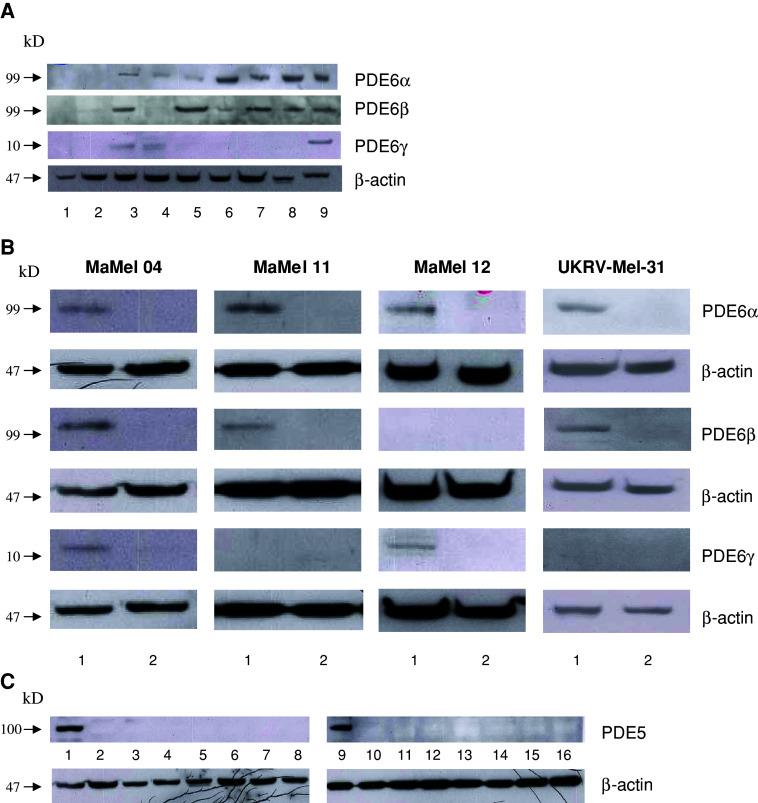
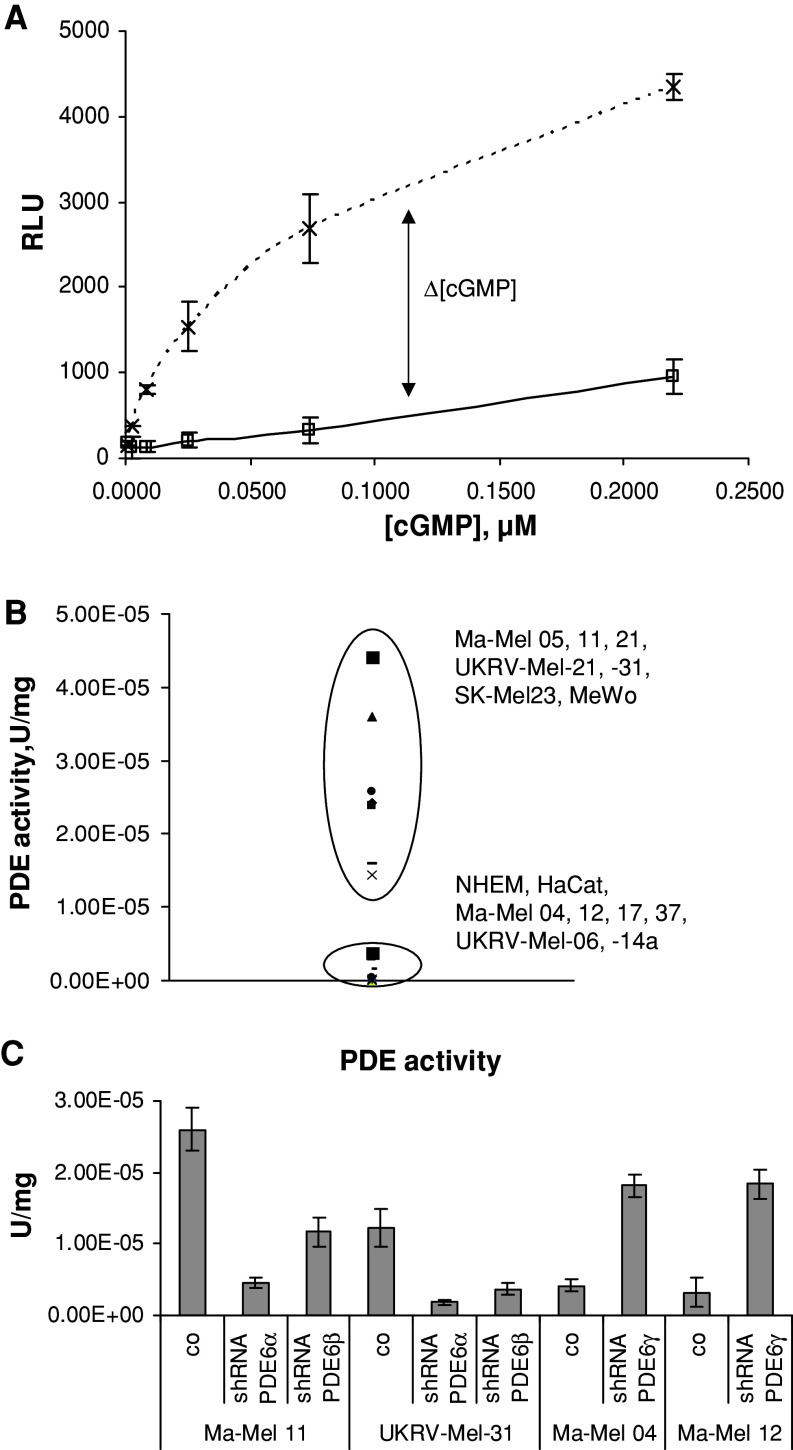
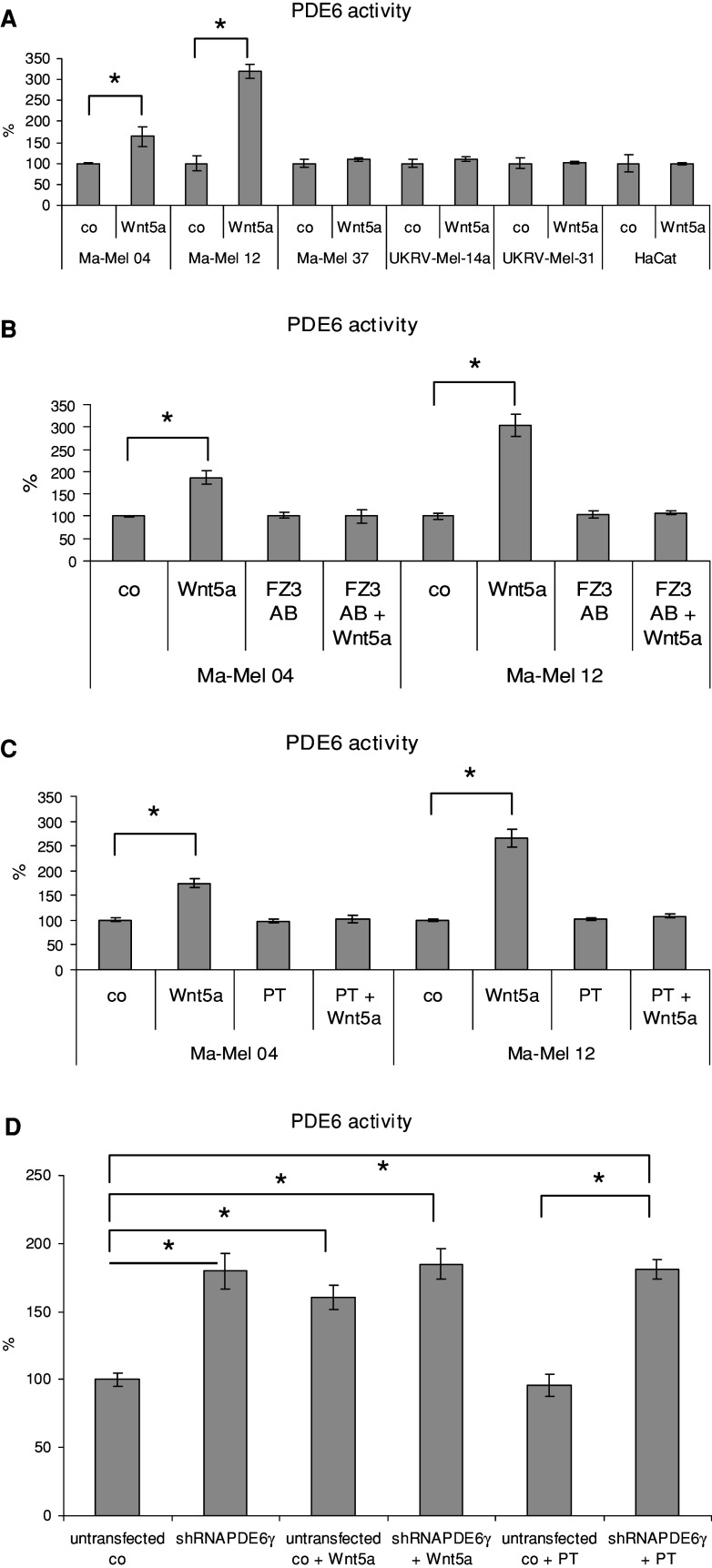
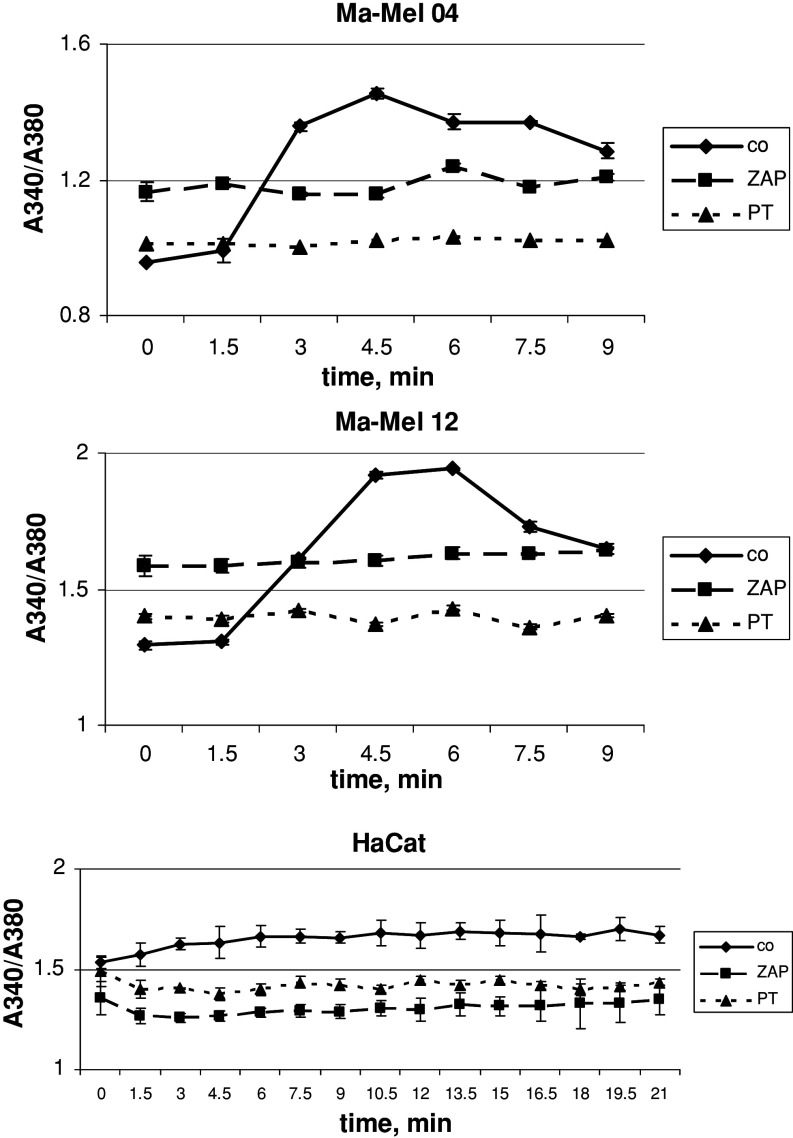
Malignant melanoma is one of the most aggressive human neoplasms which develop from the malignant transformation of normal epithelial melanocytes and share the lineage with retinal cells. cGMP-phosphodiesterase 6 (PDE6) is one of the cancer-retina antigens newly identified in melanoma cells. Normally, PDE6 hydrolyzes the photoreceptor second messenger cGMP allowing the visual signal transduction in photoreceptor cells. cGMP also play an important signaling role in stimulating melanogenesis in human melanocytes. Here, we present evidence that PDE6 is a key enzyme regulating the cGMP metabolism in melanoma cells. Decrease in intracellular cGMP leads to calcium accumulation in melanoma cells. In these cells, cGMP-phosphodiesterase 6 can be activated by another cancer-retina antigen, transducin, through Wnt5a-Frizzled-2 cascade, which leads to a lowering of cGMP and an increase in intracellular calcium mobilization. Thus, the aberrant expression of PDE6 may control cGMP metabolism and calcium homeostasis in melanoma cells.
Figures



References
Publication types
MeSH terms
Substances
LinkOut - more resources
Full Text Sources
Medical
Molecular Biology Databases
Miscellaneous
