


The novel neurotensin analog NT69L blocks phencyclidine (PCP)-induced increases in locomotor activity and PCP-induced increases in monoamine and amino acids levels in the medial prefrontal cortex
- PMID: 19948149
- PMCID: PMC2812638
- DOI: 10.1016/j.brainres.2009.11.048
The novel neurotensin analog NT69L blocks phencyclidine (PCP)-induced increases in locomotor activity and PCP-induced increases in monoamine and amino acids levels in the medial prefrontal cortex
Abstract
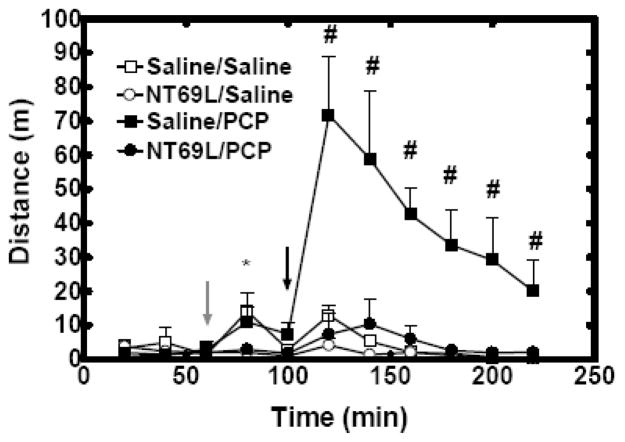
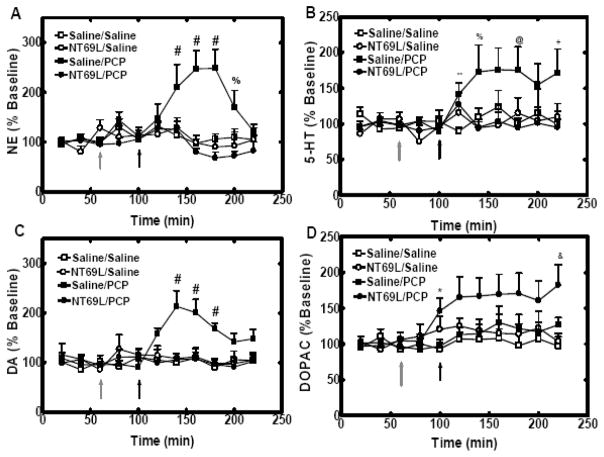
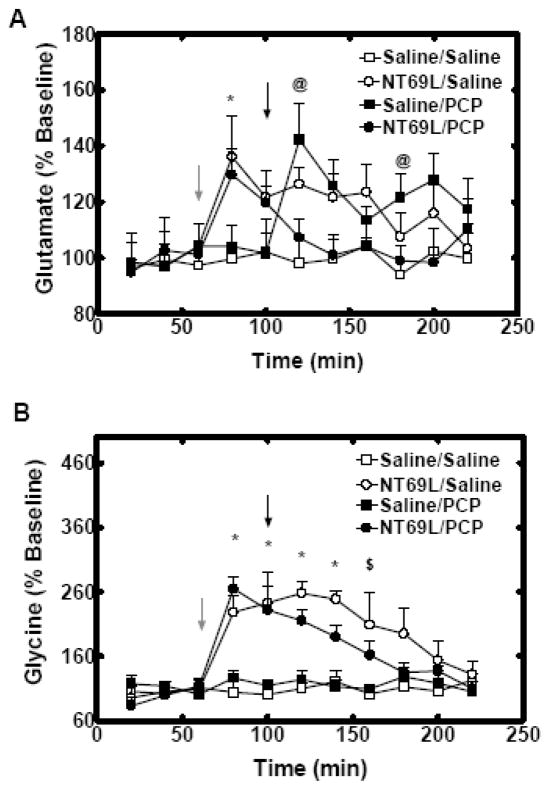
Schizophrenia is a life-long, severe, and disabling brain disorder that requires chronic pharmacotherapy. Because current antipsychotic drugs do not provide optimal therapy, we have been developing novel treatments that focus on receptors for the neuropeptide neurotensin (NT). NT69L, an analog of neurotensin(8-13), acts like an atypical antipsychotic drug in several dopamine-based animal models used to study schizophrenia. Another current animal model utilizes non-competitive antagonists of the NMDA/glutamate receptor, such as the psychotomimetic phencyclidine (PCP). In the present study, we investigated the effects of NT69L on PCP-induced behavioral and biochemical changes in the rat. The top of an activity chamber was modified to allow us to perform microdialysis in rat brain, while simultaneously recording the locomotor activity of a rat. PCP injection significantly increased activity as well as the extracellular concentration of norepinephrine (NE), 5-HT, dopamine (DA), and glutamate in the medial prefrontal cortex (mPFC). Pretreating with NT69L blocked the PCP-induced hyperactivity as well as the increase of DA, 5-HT, NE, and glutamate in mPFC. Interestingly and unexpectedly, NT69L markedly increased glycine levels, while PCP was without effect on glycine levels. Thus, NT69L showed antipsychotic-like effects in this glutamate-based animal model for studying schizophrenia. Previous work from our group suggests that NT69L also has antipsychotic-like effects in dopaminergic and serotonergic rodent models. Taken together, these data suggest that NT69L in particular and NT receptor agonists in general, will be useful as broad-spectrum antipsychotic drugs.
Published by Elsevier B.V.
Figures

References
-
- Abekawa T, Ito K, Koyama T. Role of the simultaneous enhancement of NMDA and dopamine D1 receptor-mediated neurotransmission in the effects of clozapine on phencyclidine-induced acute increases in glutamate levels in the rat medial prefrontal cortex. Naunyn Schmiedebergs Arch Pharmacol. 2006;374:177–193. - PubMed
-
- Abekawa T, Ito K, Koyama T. Different effects of a single and repeated administration of clozapine on phencyclidine-induced hyperlocomotion and glutamate releases in the rat medial prefrontal cortex at short- and long-term withdrawal from this antipsychotic. Naunyn Schmiedebergs Arch Pharmacol. 2007;375:261–271. - PubMed
-
- Amargos-Bosch M, Lopez-Gil X, Artigas F, Adell A. Clozapine and olanzapine, but not haloperidol, suppress serotonin efflux in the medial prefrontal cortex elicited by phencyclidine and ketamine. Int J Neuropsychopharmacol. 2006;9:565–573. - PubMed
-
- Angrist B, Peselow E, Rubinstein M, Corwin J, Rotrosen J. Partial improvement in negative schizophrenic symptoms after amphetamine. Psychopharmacology (Berl) 1982;78:128–130. - PubMed
Publication types
MeSH terms
Substances
Grants and funding
LinkOut - more resources
Full Text Sources
Research Materials
