


Effect of capsaicin treatment on nociceptors in rat glabrous skin one day after plantar incision
- PMID: 19948377
- PMCID: PMC2815239
- DOI: 10.1016/j.pain.2009.10.031
Effect of capsaicin treatment on nociceptors in rat glabrous skin one day after plantar incision
Abstract
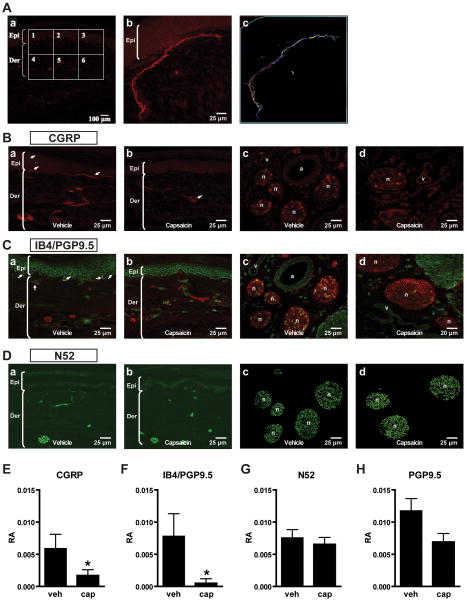
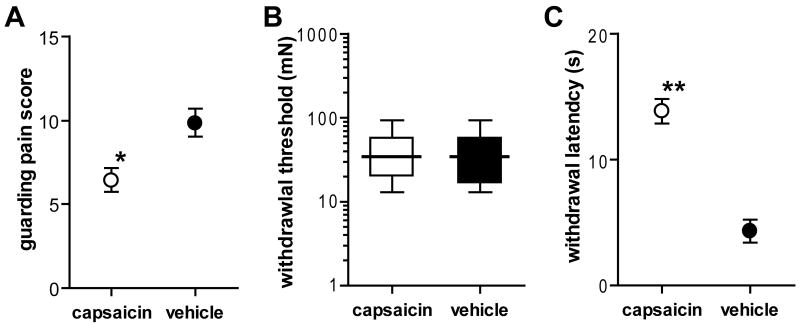
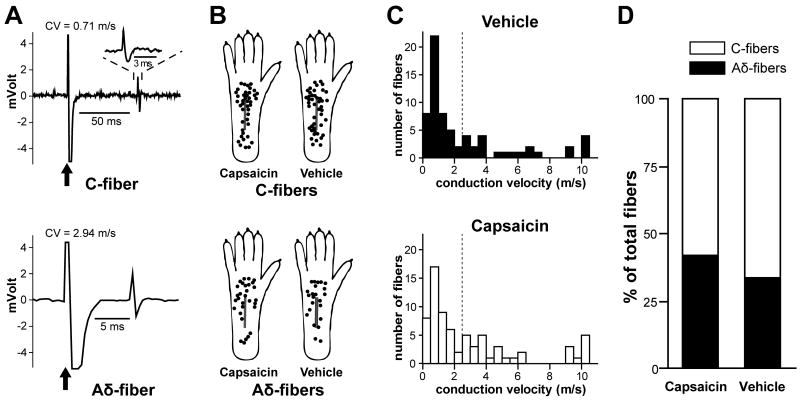
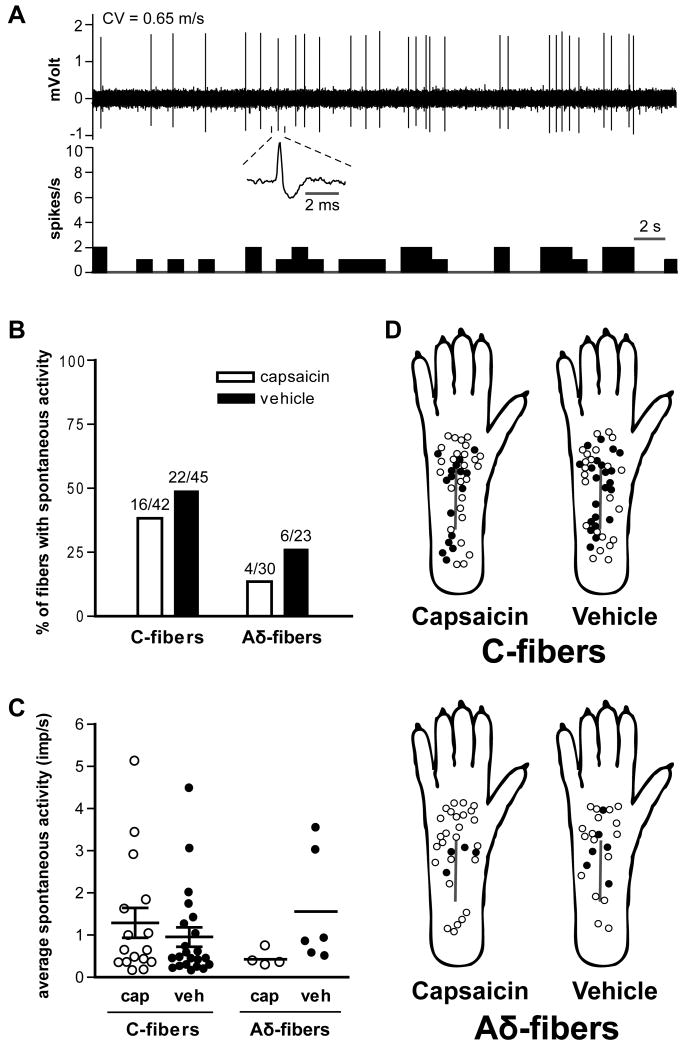
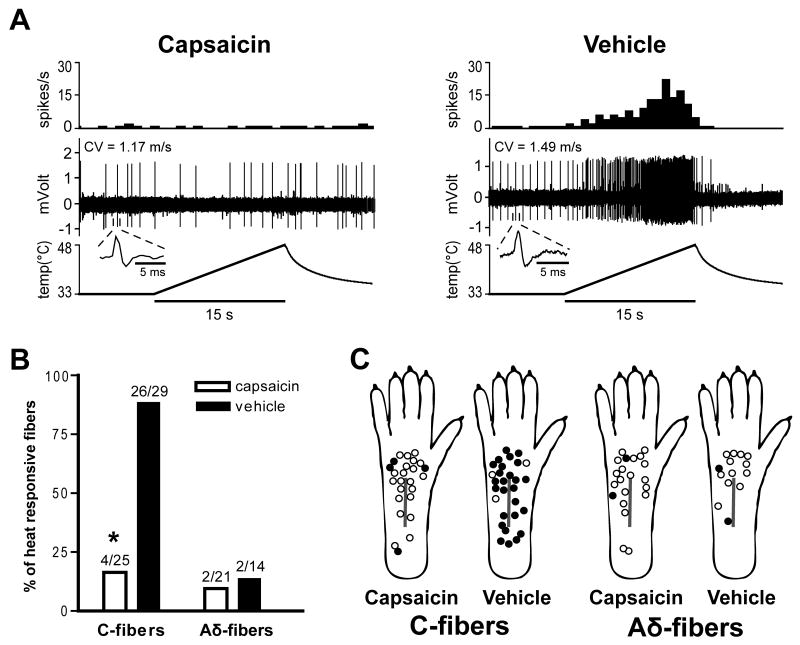
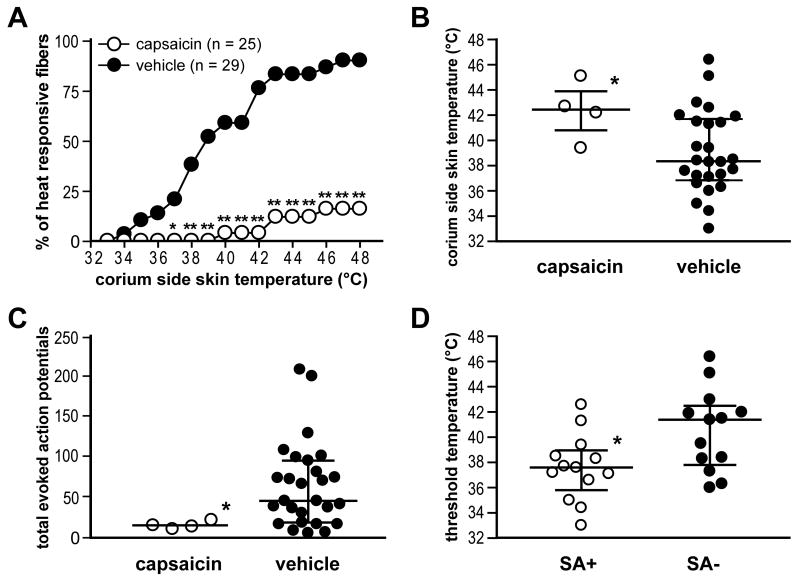
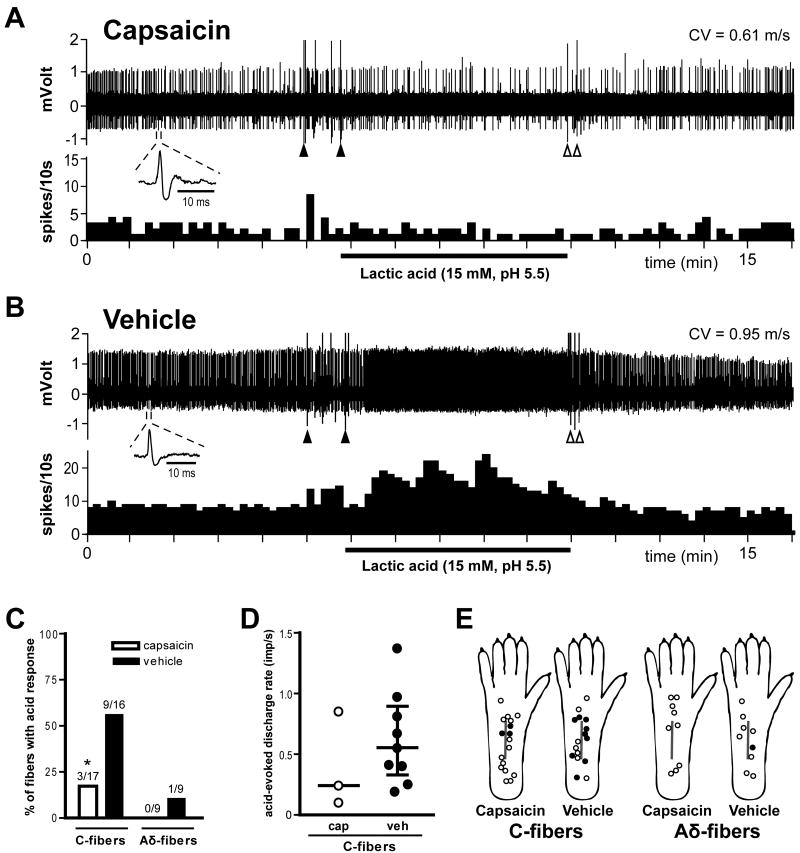
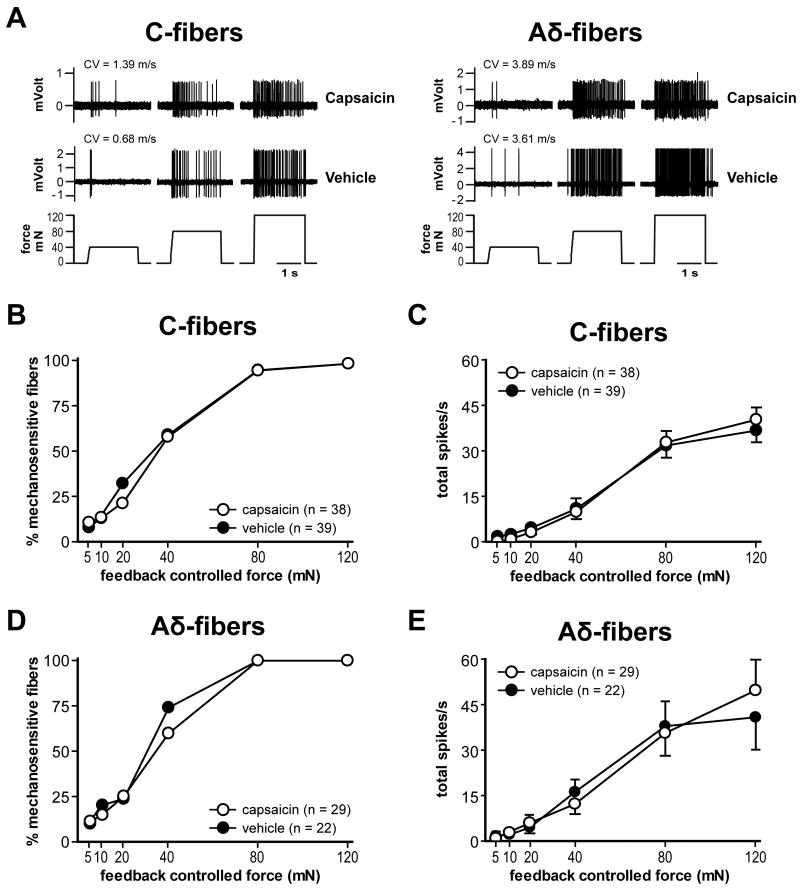
Dilute capsaicin produces a differential effect on incision-related pain behaviors depending upon the test; it reduces heat hyperalgesia and guarding pain but not mechanical hyperalgesia. This suggests that common mechanisms for heat hyperalgesia and guarding pain occur, and distinct mechanisms exist for mechanical hyperalgesia. The purpose of the present study was to evaluate the effect of capsaicin treatment on the activity of cutaneous nociceptors sensitized by incision to understand the mechanisms for the selective action of dilute capsaicin on incisional pain. We compared the effect of 0.05% capsaicin vs. vehicle treatment on pain behaviors after incision and on the activity of nociceptors from these same rats using the in vitro glabrous skin-nerve preparation. Immunohistochemical expression of protein gene product 9.5 (PGP9.5), neurofilament 200, calcitonin gene related peptide (CGRP) and isolectin B4 (IB4) in skin was also evaluated 1 week after 0.05% capsaicin infiltration. Infiltration of 0.05% capsaicin decreased CGRP and IB4/PGP9.5-immunoreactivity of nociceptors in skin. The same dose of capsaicin that inhibited heat hyperalgesia and guarding behavior interfered with chemo- and heat sensitivity of C-fibers. Neither mechanical hyperalgesia nor mechanosensitivity of nociceptors was affected by capsaicin, suggesting that the concentration of capsaicin used in this study did not cause fiber degeneration. These results demonstrate that nociceptors desensitized by capsaicin contribute to heat hyperalgesia and guarding pain after plantar incision. These putative TRPV1-expressing C-fibers are sensitized to heat and acid after incision, and the transduction of heat and chemical stimuli after plantar incision is impaired by dilute capsaicin.
Copyright 2009 International Association for the Study of Pain. Published by Elsevier B.V. All rights reserved.
Figures
References
-
- Aasvang EK, Hansen JB, Malmstrom J, Asmussen T, Gennevois D, Struys MM, Kehlet H. The effect of wound instillation of a novel purified capsaicin formulation on postherniotomy pain: a double-blind, randomized, placebo-controlled study. Anesth Analg. 2008;107:282–91. - PubMed
-
- Apfelbaum JL, Chen C, Mehta SS, Gan TJ. Postoperative pain experience: results from a national survey suggest postoperative pain continues to be undermanaged. Anesth Analg. 2003;97:534–40. table of contents. - PubMed
-
- Avelino A, Cruz F. Peptide immunoreactivity and ultrastructure of rat urinary bladder nerve fibers after topical desensitization by capsaicin or resiniferatoxin. Auton Neurosci. 2000;86:37–46. - PubMed
-
- Banik RK, Brennan TJ. Spontaneous discharge and increased heat sensitivity of rat C-fiber nociceptors are present in vitro after plantar incision. Pain. 2004;112:204–13. - PubMed
Publication types
MeSH terms
Substances
Grants and funding
LinkOut - more resources
Full Text Sources
Research Materials
