


Dynamics of choice: relative rate and amount affect local preference at three different time scales
- PMID: 19949489
- PMCID: PMC2677563
- DOI: 10.1901/jeab.2009.91-293
Dynamics of choice: relative rate and amount affect local preference at three different time scales
Abstract
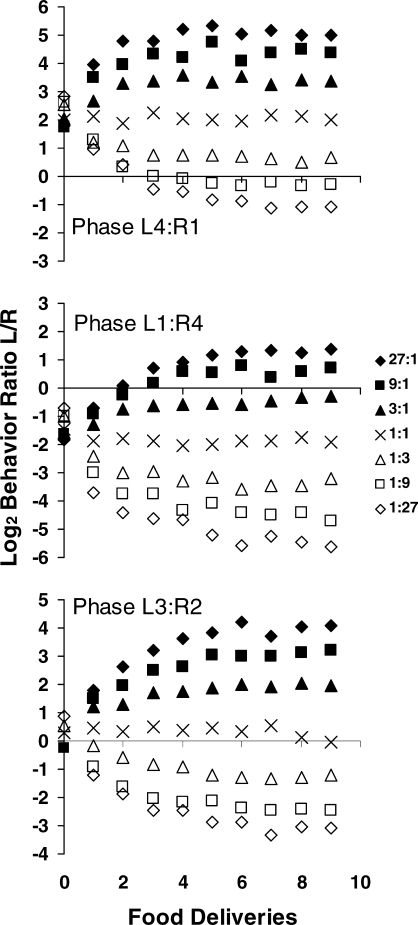
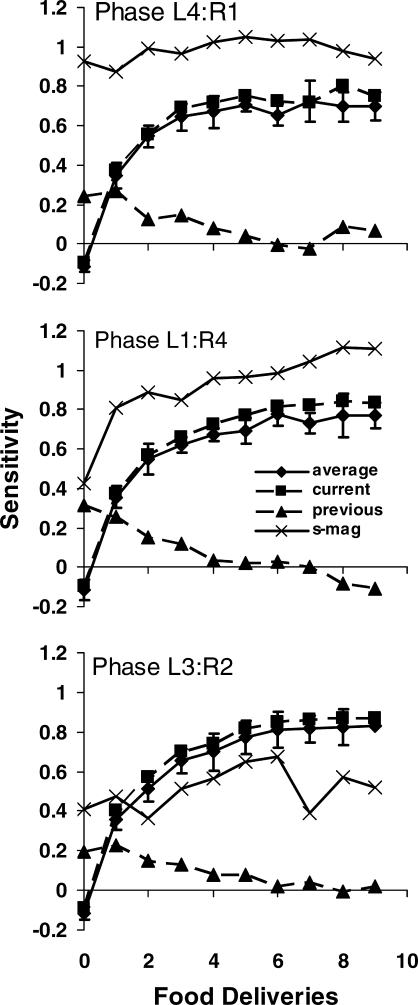
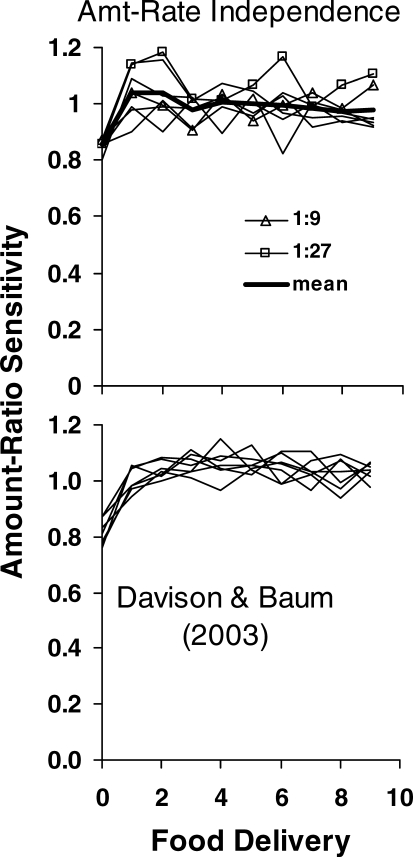
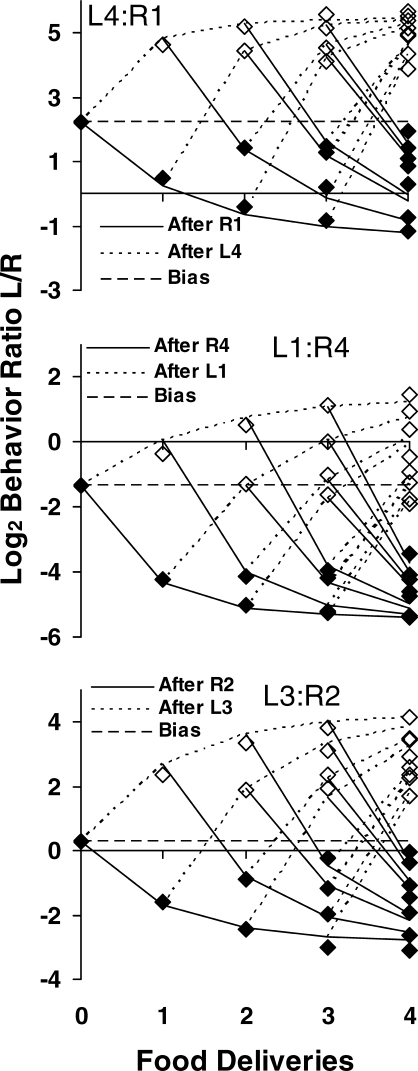
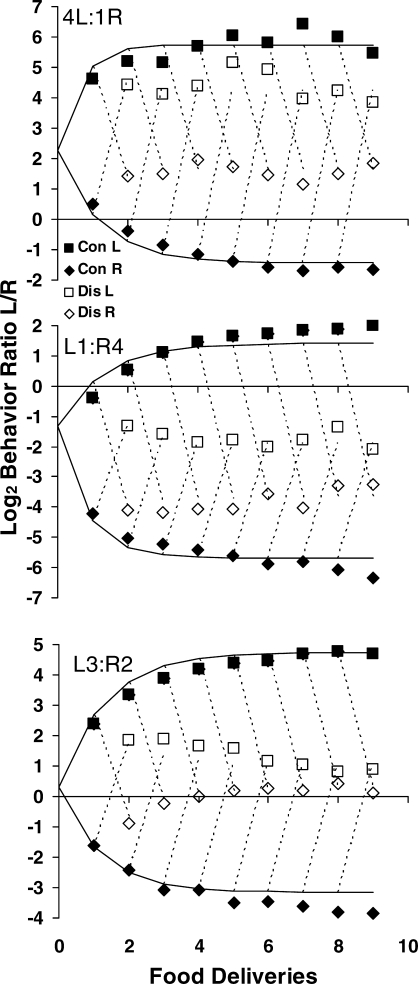
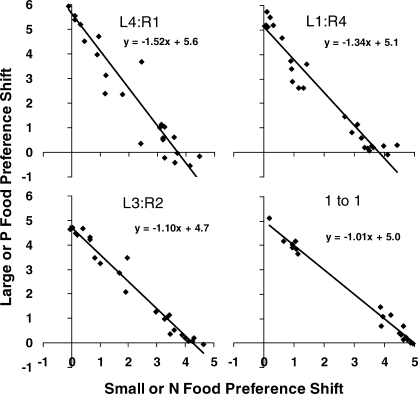
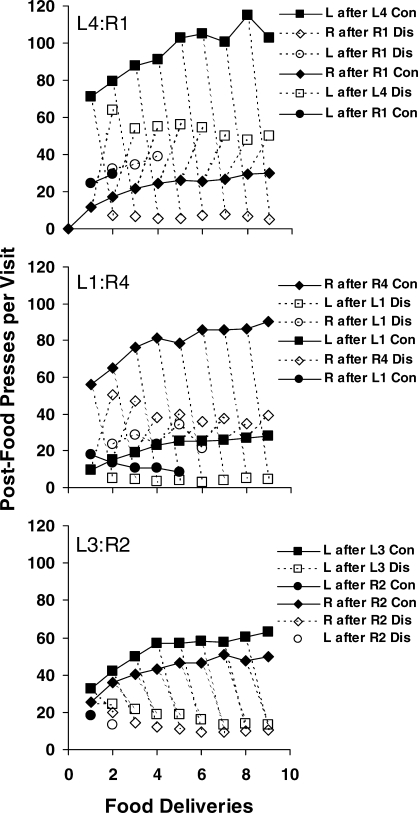
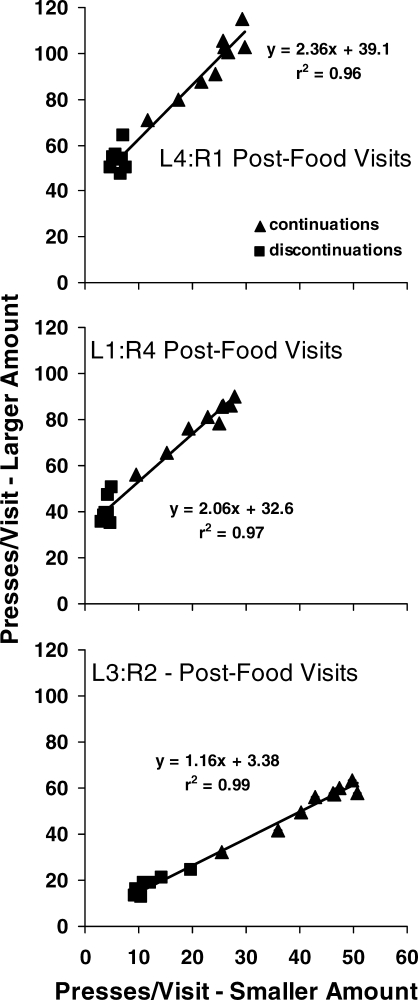
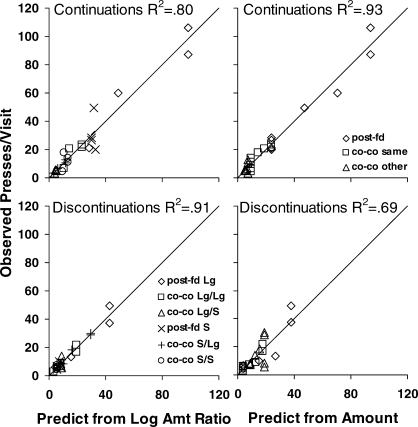
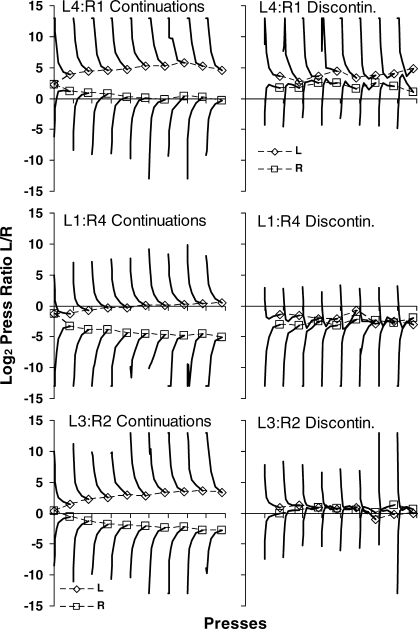
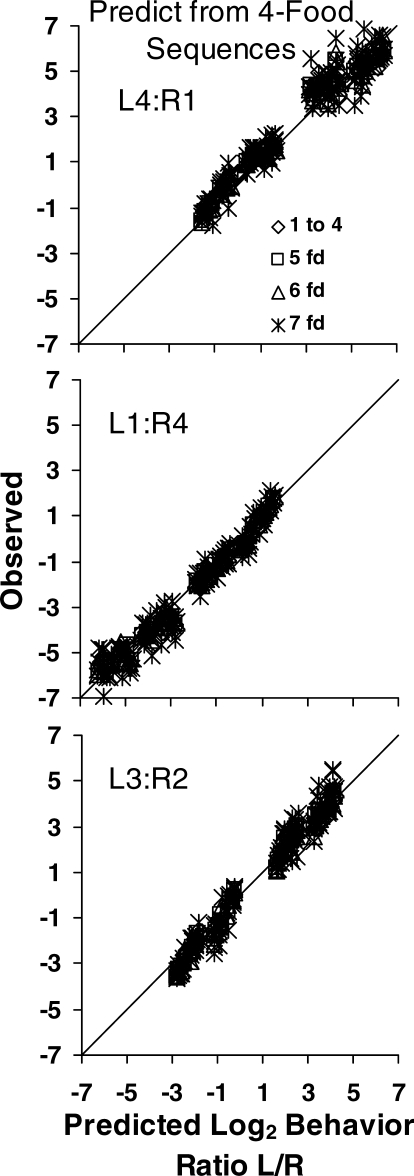
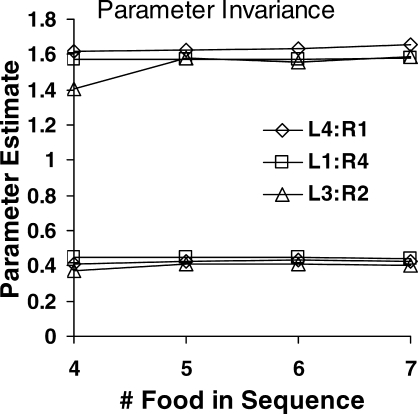
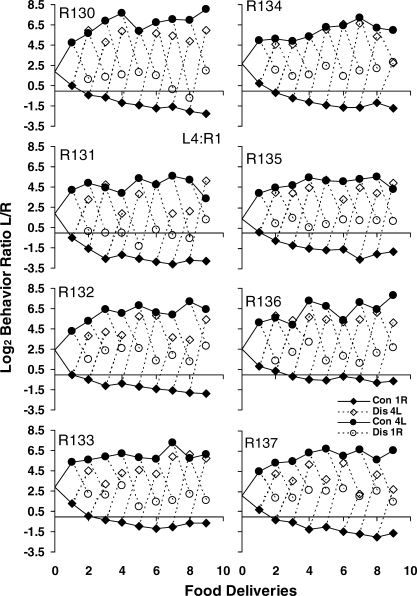
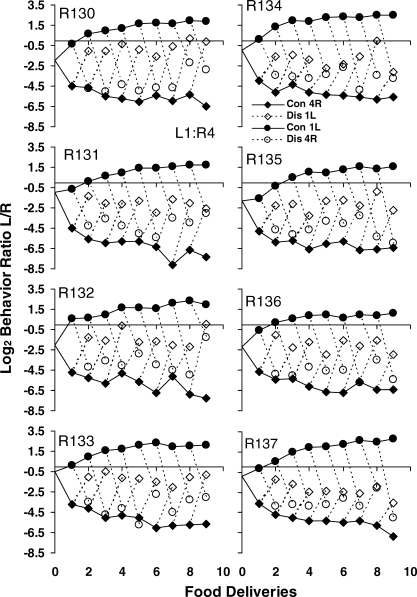
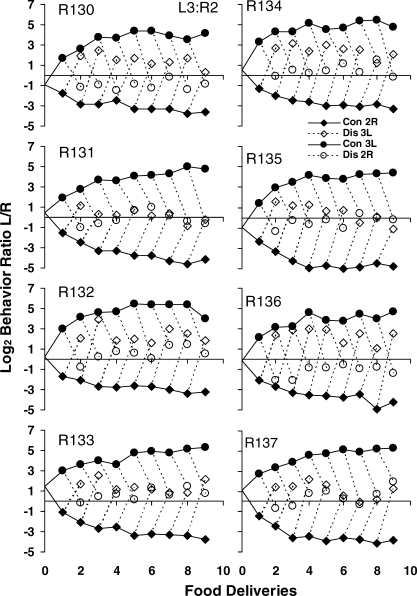
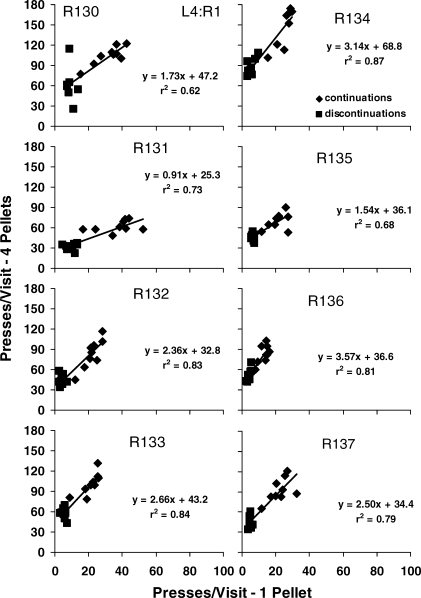
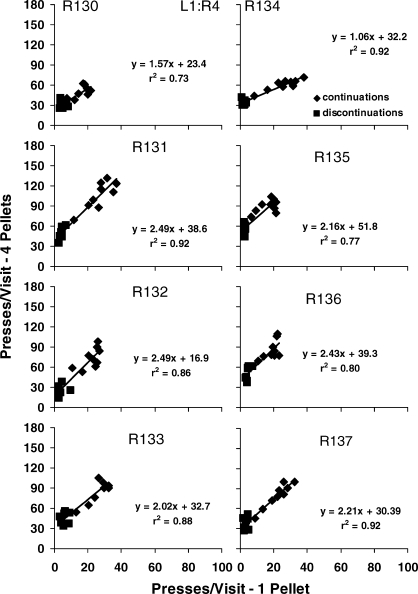
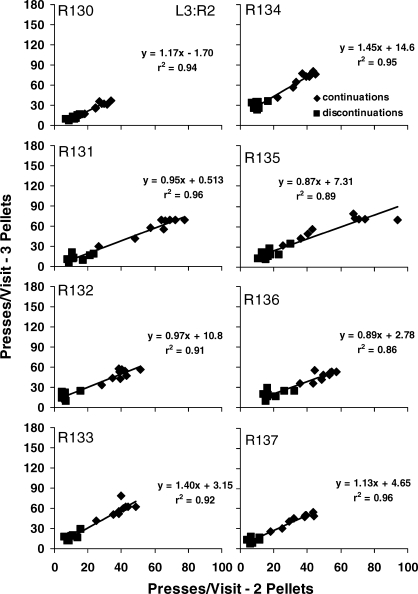
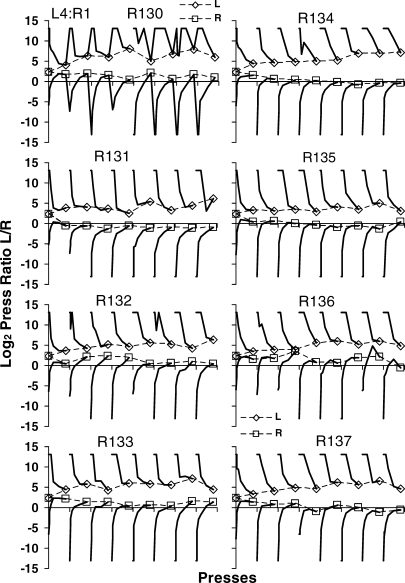
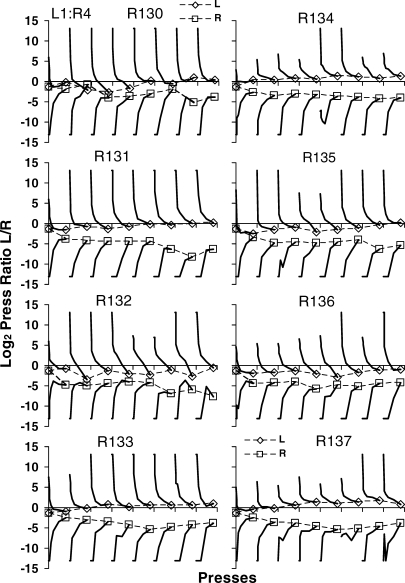
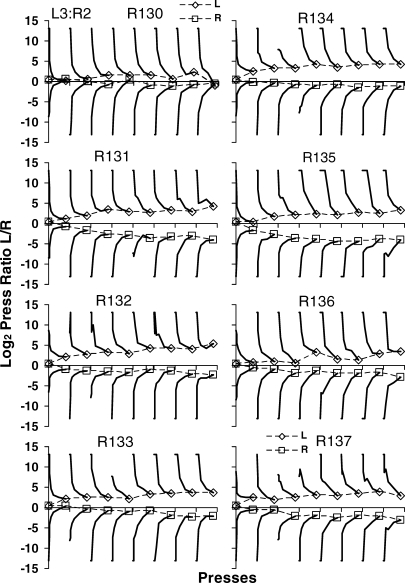
To examine extended control over local choice, the present study investigated preference in transition as food-rate ratio provided by two levers changed across seven components within daily sessions, and food-amount ratio changed across phases. Phase 1 arranged a food-amount ratio of 4:1 (i.e., the left lever delivered four pellets and the right lever one pellet); Phase 2 reversed the food-amount ratio to 1:4, and in Phase 3 the food-amount ratio was 3:2. At a relatively extended time scale, preference was described well by a linear relation between log response ratio and log rate ratio (the generalized matching law). A small amount of carryover occurred from one rate ratio to the next but disappeared after four food deliveries. Estimates of sensitivity to food-amount ratio were around 1.0 and were independent of rate ratio. Analysis across food deliveries within rate-ratio components showed that the effect of a small amount was diminished by the presence of a large amount-that is, when a larger amount was present in the situation (three or four pellets), the value of a small amount (one or two pellets) became paltry. More local analysis of visits to the levers between food deliveries showed that postfood visits following a large amount were disproportionately longer than following a small amount. Continuing food deliveries from the same source tended to make visits less dependent on relative amount, but a discontinuation (i.e., food from the other lever) reinstated dependence on relative amount. Analysis at a still smaller time scale revealed preference pulses following food deliveries that confirmed the tendency toward dependence on absolute amount with continuing deliveries, and toward dependence on relative amount following discontinuations. A mathematical model based on a linear-operator equation accounts for many of the results. The larger and longer preference following a switch to a larger amount is consistent with the idea that local preference depends on relatively extended variables even on short time scales.
Keywords: choice; dynamics; food amount; food rate; matching law; preference pulse; rats.
Figures
References
-
- Aparicio C.F. Haloperidol, dynamics of choice, and the parameters of the matching law. Behavioural Processes. 2007;75(2):206–212. - PubMed
-
- Aparicio C.F. Dynamics of choice and frequency of environment change. Behavioural Processes. 2008;78(2):165–172. - PubMed
-
- Aparicio C.F, Barajas A. Dynamic changes in reinforcement contingencies of a choice situation: Steady state concurrent performance is required. Mexican Journal of Behavior Analysis. 2002;28:67–90.
Publication types
MeSH terms
LinkOut - more resources
Full Text Sources
